
A Comprehensive Charging Cable Buyer's Guide
A defective or incompatible charging cable is more than just an annoyance—it can slow down charging, harm your battery's lifespan, or in the worst-case scenario, even pose a risk to your devices. But the market is flooded with cables whose marketing promises often hide more than they reveal. As your Joybuy Product Recommendation Officer, I'll help you identify the crucial features and avoid the typical pitfalls of buying a new cable.
The 3 Most Common Mistakes When Buying a Charging Cable
Before we dive into the technical details, let's look at the three most common issues that lead to a bad purchase. Understanding these will help you make more informed decisions.
- The "Fast Charging" Trap: Many products advertise themselves as a "fast charging cable" without specifying concrete performance data in watts (W) or amps (A). Such a cable can't fully transfer the power of a modern fast charger, leading to disappointingly long charging times.
- Weak Point: The Connector Joint: A frequent problem is cable breakage right at the connector. Poor-quality materials and a lack of strain relief reinforcement cause the cable to fail after just a few months, even if the rest of the cable is perfectly intact.
- Lack of Certification and Compatibility: Especially for an iPhone charging cable, MFi ("Made for iPhone") certification is critical. Uncertified cables can be blocked by Apple devices after a software update. Similarly, choosing the wrong connector type renders the cable useless.
What Really Matters: The Core Features of a Good Charging Cable
To avoid these mistakes, you should check three key parameters. These determine the performance, durability, and compatibility of your new cable.
1. Power and Charging Standards (Watts & Amps)
The charging speed is determined by the transferred power, measured in watts (W). This is calculated from the voltage (Volts) and the current (amps, A).
- Standard Charging: Basic phone charging cables often deliver only 5W to 12W (e.g., 5V/2.4A). This is sufficient for older smartphones or accessories but slow for modern devices.
- Fast Charging: A modern fast charging cable must support higher power levels. Standards like Power Delivery (PD) enable power outputs of 60W, 100W, or even more via a USB-C to USB-C cable, enough to charge laptops. For a Samsung charging cable, standards like Super Fast Charging are relevant, which also require high amperage.
- Data Transfer: Pay attention to the specified data rate (e.g., 480 Mbps for USB 2.0). While less critical for charging alone, it's crucial for syncing data.
2. Connector Types: USB-A, USB-C, and Lightning
Choosing the right connector is fundamental. The most common types are:
- USB-A: The classic, rectangular connector still found on many power adapters and computers.
- USB-C: The new, oval, and symmetrical standard. It's found on almost all new Android devices, iPads, MacBooks, and the iPhone 15 (and newer). A USB-C cable is the most versatile choice today.
- Lightning: Apple's proprietary connector for iPhones (up to the 14 series), older iPads, and accessories. An iPhone charging cable for these models requires this connector and, ideally, MFi certification.
A 3-in-1 charging cable can be a practical solution for households with different devices, as it combines multiple connector types into one cable.
3. Material and Construction
The longevity of a cable depends heavily on its build quality.
- Jacket: A braided cable made of nylon is generally more resistant to abrasion, kinks, and tangling than a standard cable with a PVC or TPE jacket.
- Connector Housing: Housings made of aluminium are more robust than those made of simple plastic.
- Strain Relief: Reinforced joints between the cable and the connector are the most important feature for preventing cable breakage at its most critical point.
- Cable Length: A 2m charging cable offers significantly more flexibility at your desk or while travelling than the often short, standard-issue cables.
Recommended for Your Needs
Instead of making a one-size-fits-all recommendation, we have selected products tailored to specific use cases that meet the quality criteria mentioned above.
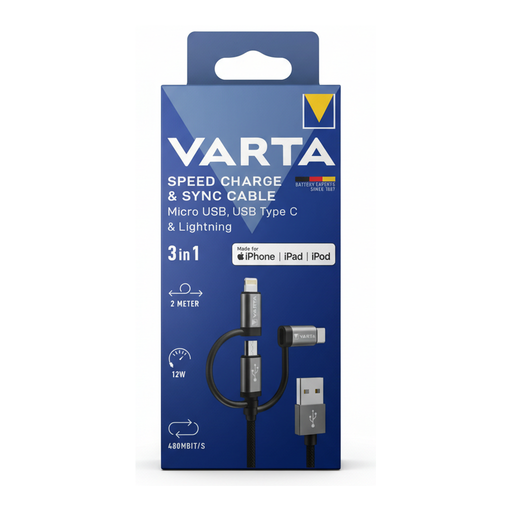
VARTA 3-in-1 Cable USB A to Micro USB, USB Type C, Lightning, 2m
Why It's a Match: Perfect for families, travellers, or anyone who owns devices with different connectors (Apple, Android, accessories). This cable reduces clutter and ensures the right connector is always at hand.
Solves the compatibility problem with three interchangeable connectors. The MFi certification for the Lightning port prevents issues with Apple devices, and the nylon jacket counteracts the problem of rapid wear and tear.
A single 3-in-1 charging cable for almost all mobile devices. The 2m length and braided cable offer maximum flexibility and durability.
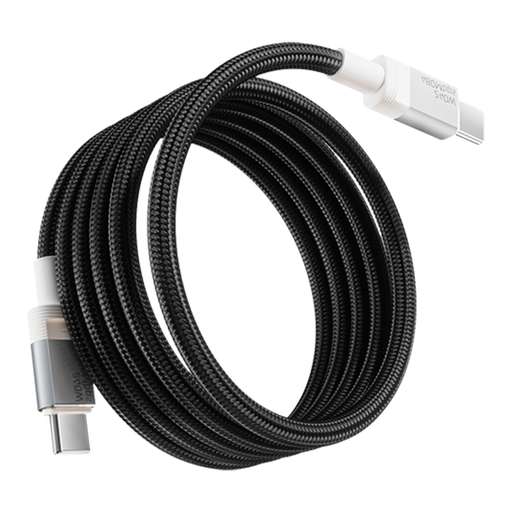
MOVESPEED 240W USB-C to USB-C Cable, 1.2M 6A Fast Charge
Why It's a Match: For users with high-power devices like laptops, tablets, or the latest smartphones who need the fastest possible charging speed and value an extremely robust construction.
This cable bypasses the "fast charging" trap with a clear specification of 240W. Its robust construction with an aluminium alloy and 48-strand nylon braid directly addresses the weakness of poor durability.
Supports extremely high charging power for demanding devices. The integrated E-Marker chip ensures safe and optimised power delivery.
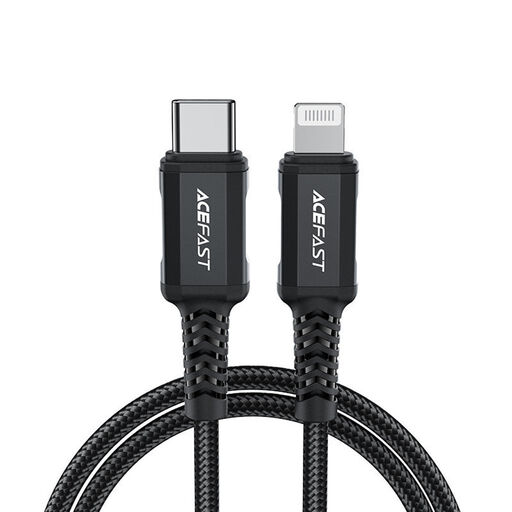
ACEFAST C4-01 USB-C to Lightning PD Cable 30W 1.8m
Why It's a Match: Specifically for users of iPhones and iPads with a Lightning port who want a reliable fast charging function (Power Delivery) and a durable, certified cable.
The official MFi certification guarantees full compatibility and safety, sidestepping the trap of non-functional, low-quality cables. The nylon jacket and reinforced connector ends prevent premature cable breakage.
Supports 30W Power Delivery for fast charging of Apple devices. The 1.8-meter length offers more convenience than standard cables.
Looking for More Options?
We have compiled a complete, up-to-date list of products that fully meet these strict selection criteria and safety regulations.
Frequently Asked Questions (FAQ)
1. How can I identify a good fast charging cable? You can identify a good fast charging cable by its explicit specifications for maximum power in watts (W) and current in amps (A). Look for compatibility with charging standards like Power Delivery (PD) or Quick Charge (QC). The cable must be able to support the power output of your charger to achieve full speed. A cable with a 100W specification is a future-proof choice for many devices, including laptops.
2. What is the average lifespan of a charging cable? The lifespan heavily depends on usage and material. A simple PVC cable can last one to two years with careful handling. A braided cable with reinforced connectors can have a significantly longer lifespan. To maximise its life, avoid sharply bending the cable at the connector or pulling on it.
3. Is a more expensive charging cable always better? Not necessarily. The price should reflect objective features. A higher price is often justified by higher performance (e.g., 100W vs. 12W), more durable materials (nylon braid vs. PVC), official certifications (e.g., MFi for Apple), or additional features (like a 3-in-1 charging cable). If a simple 12W cable meets your needs, there's no need to invest in a more expensive high-performance model.