
Upholstery Cleaner Buyer’s Guide: Avoid Costly Mistakes
By the Joybuy Product Recommendation OfficerUpdated 28 August 2026
One careless moment is all it takes: a red wine stain on the light-coloured sofa, the dog's muddy paw prints on your favourite armchair, or a puddle of coffee on the car seat. Mishaps like these are frustrating and often difficult to remove. An upholstery cleaner, also known as a spot cleaner, promises a quick and easy solution. However, the market is flooded with devices making bold advertising claims that often fail to deliver in practice.
Before you make a purchase, it's crucial to understand the common pitfalls that can lead to frustration and wasted money.
- The Exaggerated Suction Power Trap: Many manufacturers advertise high Pascal (kPa) values, but a high number alone doesn't guarantee clean upholstery. If the nozzle design or motor power isn't properly matched, the dirt is only superficially wetted but not drawn out from deep within the fibres.
- The Vague "Heating Function": Some devices advertise a heating function that, upon closer inspection, turns out to be the passive use of hot tap water. Genuine, active heating or steam systems that heat the water inside the unit offer significantly more cleaning power for stubborn grease or oil stains.
- The Impractical Water Tank Problem: Tanks that are too small, especially on devices intended for cleaning entire sofas or car interiors, lead to constant interruptions for refilling and emptying. An imbalanced ratio between the fresh and dirty water tanks can also severely disrupt your workflow.
What Really Matters in an Upholstery Cleaner
To avoid a bad purchase, you should focus on objective, technical features that determine a device's practical utility. These three parameters are crucial for effective and convenient cleaning.
1. Suction Power (kPa) Combined with Motor Power (Watts)
Suction power, measured in kilopascals (kPa), describes the negative pressure a device can generate. In principle, a higher kPa value means stronger suction to pull dirty water from the deep fibres of upholstery or carpets. This is critical for short drying times and preventing water spots or mould growth.
However, this value is only meaningful in conjunction with the motor power (in Watts). A powerful motor (e.g., 500W or more) ensures that the specified suction power remains constant even under load. For most home applications, like cleaning a sofa or spot removal, a value between 12 kPa and 18 kPa is a good benchmark for effective deep cleaning.
2. The Dual-Tank System: Capacity and Handling
A high-quality spot cleaner always features a dual-tank system. This separates the clean water (often mixed with a cleaning solution) from the extracted dirty water. This is essential for hygiene, as it prevents already-dissolved dirt from being redistributed onto the surface.
Pay attention to the capacity of both tanks. For cleaning larger areas like a sofa set or multiple car seats, freshwater tanks with over 1 litre of capacity are recommended to avoid constant refilling. An equally large dirty water tank prevents you from having to stop work to empty it. Removable and easy-to-clean tanks are another important factor for user-friendliness.
3. Active Heating or Steam Function for Stubborn Messes
For tackling dried-in or oil-based stains, an active temperature increase can make all the difference. There are two main technologies here:
- Devices with a Heating Function: These models have an integrated heating element that heats the water to a constant, high temperature. This dissolves dirt and grease more effectively than cold water.
- Devices with a Steam Function: An
upholstery cleanerwith a steam function generates hot steam that penetrates deep into the fibres to loosen even the most stubborn dirt and bacteria. This function is particularly useful for the hygienic cleaning of amattressor for eliminating strong odours, such as those caused by pets.
A portable spot cleaner with one of these functions offers a cleaning performance that comes close to professional results.
Recommended Products by Use Case
Based on the criteria above, we have identified several models that are well-suited for specific user profiles and their needs.
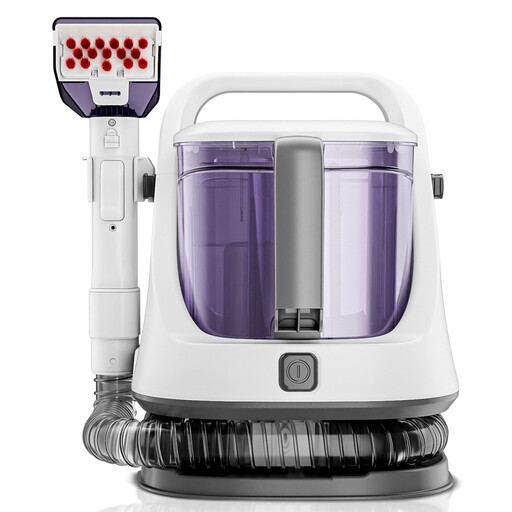
ROUNY Portable Carpet Cleaner, U2
Why This Fits Their Persona: Ideal for those who need a reliable device for occasional stains and basic cleaning without a large budget. Its compact design makes it easy to store in apartments with limited space.
This model avoids the impractical tank trap with a well-balanced dual-tank system (1400 ml fresh water, 1200 ml dirty water), which is sufficient for most household cleaning tasks without constant refilling.
Solid suction power of 12 kPa for everyday messes; great value for money and easy to handle.
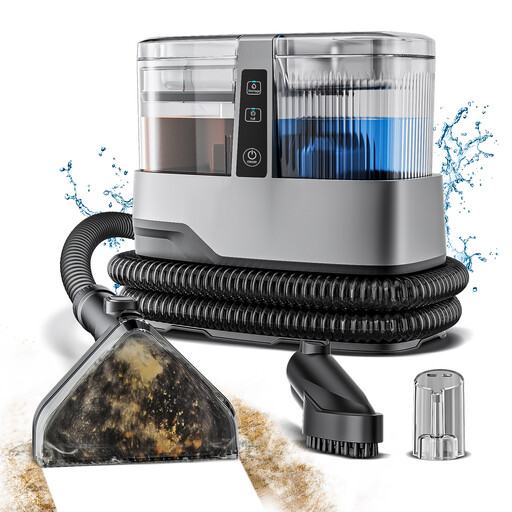
OMESER C688A Carpet Cleaner Machine
Why This Fits Their Persona: Designed for the unique challenges of households with children and pets. Its high suction power is crucial for effectively removing organic stains, odours, and deep-seated allergens like pet dander.
This device avoids the trap of exaggerated claims by delivering a verifiable suction power of 17 kPa. This force is necessary to extract moisture and dirt from deep within dense upholstery, rather than just cleaning the surface.
Very high suction for a thorough deep clean; explicitly designed to eliminate pet stains and odours.
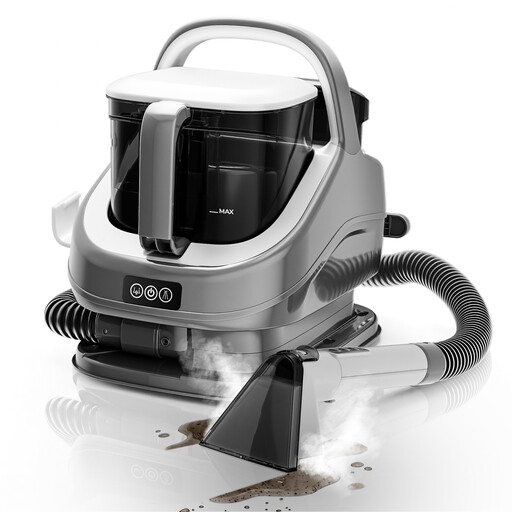
ROUNY Portable Carpet Cleaner with 3 Modes, U2 Heat
Why This Fits Their Persona: The three modes (cold water, hot water, steam) offer maximum flexibility for any type of mess—from fresh spills to old, oily residues in car seats or on heavily used furniture.
This model sidesteps the vague "heating function" trap by offering three clearly defined, active modes. The genuine steam function provides a hygienic deep clean that goes far beyond the effect of warm tap water.
Three cleaning modes, including steam, for maximum versatility; high motor power of 1300W for demanding tasks.
Looking for More Options?
We've compiled a complete, up-to-date list of products that fully meet these strict selection criteria and UK safety regulations.
Frequently Asked Questions (FAQ)
1. How long does it take for a sofa to dry after cleaning with a spot cleaner?
The drying time depends on the device's suction power, the type of fabric, and the room's ventilation. An upholstery cleaner with high suction (e.g., 15 kPa or more) can remove most of the moisture, leaving the surface often feeling dry to the touch in just 2 to 4 hours. Complete drying can take between 6 and 12 hours, depending on conditions. Good ventilation or using a fan can speed up the process.
2. Can I use any cleaning solution in an upholstery cleaner?
No, it is important to only use cleaning solutions specifically designed for use in spot cleaners or carpet cleaner machines. Standard household cleaners or dish soap can create excessive foam, which can damage the device's motor and impair suction. They can also leave sticky residues in the fabric that attract new dirt. Always follow the device manufacturer's recommendations.
3. What is the difference between an upholstery cleaner and a standard wet/dry vacuum?
A standard wet/dry vacuum is primarily designed to suck up dry debris and liquids. An upholstery cleaner or spot cleaner is a specialised wet vacuum that performs an additional step: it actively sprays a mixture of water and cleaning solution under pressure into the fabric to loosen dirt, then sucks the dirty liquid back up in the same motion. This spray-extraction method allows for a much more thorough deep clean than simply vacuuming up liquids.