
Upholstery Cleaner Buying Guide: How to Avoid Costly Mistakes
A spilled glass of red wine on the new sofa, the dirty paw prints of a pet on a favorite armchair, or the stale smell in car seats—textile surfaces are exposed to daily wear and tear. A powerful upholstery cleaner promises a quick, deep-cleaning solution. However, the market is filled with devices whose marketing promises often shine brighter than the cleaned upholstery.
Many buyers invest in a device that ends up gathering dust in a closet after just a few uses because it fails to meet expectations. Before you make a purchasing decision, it's crucial to understand the common pitfalls that lead to disappointment and unnecessary expenses.
- The Exaggerated Suction Power Trap: Manufacturers often advertise high Pascal (Pa) or Kilopascal (kPa) values. While high suction is important, without an intelligently designed nozzle that concentrates the airflow, moisture is not effectively extracted from the fabric. The result is saturated upholstery, long drying times, and, in the worst-case scenario, water stains or mold growth.
- The "Hot Water" Deception: Some models are marketed as hot water devices but lack an active heating function. They rely on the user to fill them with hot water, which rapidly cools down during the cleaning process. True upholstery cleaners with a heating function or steam function maintain a consistently high temperature to effectively dissolve grease and stubborn dirt—a critical difference.
- Lacking or Unsuitable Accessories: A spray-extraction cleaner is only as versatile as its attachments. A device without a narrow crevice tool is unsuitable for cleaning car seats. If a special brush for pet hair is missing, removing it becomes a Sisyphean task. Often, savings are made on the quality and variety of accessories, which severely limits the device's range of applications.
What Really Matters: The Crucial Parameters for an Upholstery Cleaner
To make an informed decision, you should focus on the technical features that have a direct impact on the cleaning results and handling.
1. Cleaning Technology: Steam, Hot Water, or Cold Water?
The type of water treatment is the heart of any upholstery cleaning device.
- Cold Water Devices (Wet Vacuums with Washing Function): These models are the basic option. They spray a mixture of cold water and cleaning solution and then vacuum the liquid back up. They are suitable for superficial, fresh stains but reach their limits with dried-in or greasy dirt.
- Devices with a Heating Function: A true upholstery cleaner with a heating function has an integrated heating element that heats and maintains the water at a consistently high temperature (often around 60°C). Hot water dissolves oily and greasy messes far more effectively than cold water.
- Devices with a Steam Function: These devices generate hot steam (often around 100°C) that penetrates deep into the fibers. Steam has the advantage of not only cleaning but also, at the right temperature, reducing dust mites and bacteria, which is particularly relevant for allergy sufferers and families with small children.
2. Suction Power and Water Management
High suction power, ideally in the range of 12 kPa or more, is crucial for extracting as much dirty water as possible from the upholstery. This not only significantly shortens the drying time but also prevents the formation of mildew stains. Look for a dual-tank system where fresh and dirty water are kept strictly separate. This ensures you are always cleaning with clean water. The tank size (often between 1 and 2 liters) determines how often you need to interrupt the cleaning process to refill or empty it—an important factor when cleaning large areas like a full sofa or a car's interior.
3. Accessories and Application
Think carefully about what you primarily want to use the device for.
- Car Upholstery Cleaner: For tight spaces in vehicles, a long, narrow crevice tool is essential. A more compact device is often more manageable here.
- Sofa Cleaning Device: A wider upholstery nozzle allows for quick work on large surfaces. A brush with firmer bristles helps when treating robust fabrics.
- Spot Cleaner for Upholstery: For targeted stain removal, smaller, handheld devices (so-called spot cleaners) are often more practical than large carpet cleaners.
Recommendations for Different User Profiles
Instead of making a blanket recommendation, we have identified products tailored to specific user needs.
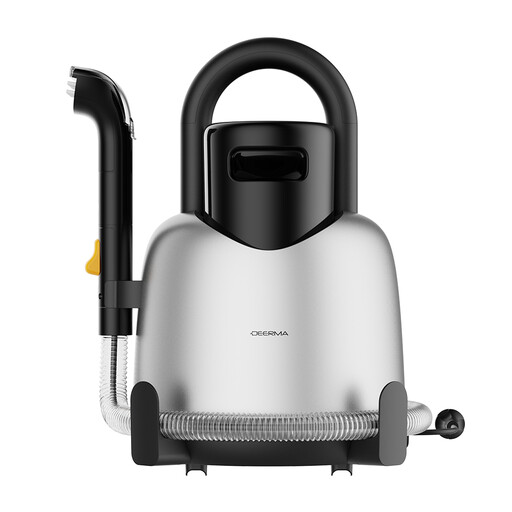
Deerma BY700 S Corded Spot Cleaner,Fabric Cleaner,Carpet Cleaner
Why This Fits Their Persona: Ideal for households with children or pets, as well as for car enthusiasts seeking an uncompromising solution for all types of textile messes, from old coffee stains to deep-seated dirt in car seats.
This device bypasses the "hot water trap" with a true instant heating system that provides either 100°C steam or 60°C hot water on demand. With 5 different brush attachments, it also avoids the trap of insufficient accessories.
The combination of 1700W total power, a strong suction of 13 kPa, and three cleaning modes (steam, hot water, cold water) offers high flexibility. The large tanks (1.7L fresh water / 1.4L dirty water) allow for uninterrupted work.
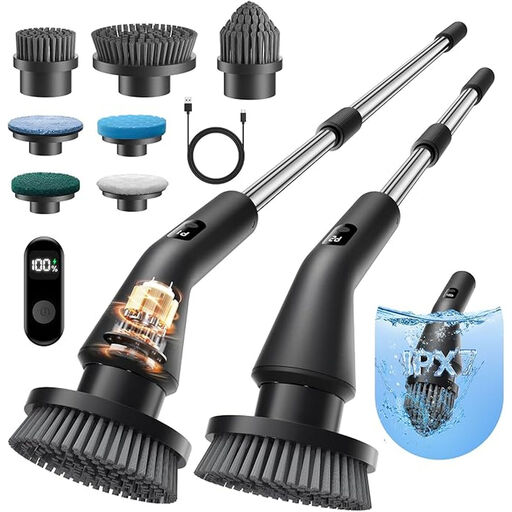
Leebein Electric Cleaning Brush, 2025 Spin Scrubber
Why This Fits Their Persona: Suitable for individuals looking for a cost-effective solution for manually treating surface stains who do not require a deep-cleaning suction device. Perfect for working in cleaning agents without getting your hands dirty.
This product is an electric cleaning brush, not a spray-extraction cleaner. It avoids false expectations as it doesn't advertise suction or heating functions. Its value lies in its mechanical cleaning power and versatility, thanks to 7 brush heads.
Its strength lies in its flexibility: the extendable handle (up to 127 cm) and IPX7 waterproof rating make the brush a versatile helper throughout the house, not just on upholstery. Two speed settings allow for adjusted scrubbing intensity.
Looking for More Options?
We have compiled a complete, up-to-date list of products that fully meet these strict selection criteria and German safety regulations.
1. Can an upholstery cleaner cause mold?
With improper use, this risk exists. A device with strong suction power is crucial to minimize residual moisture. After cleaning, the room should be well-ventilated, or the treated area should be additionally dried with a fan to speed up the drying process. With correct handling, the risk of mold is very low.
2. What is the difference between an upholstery cleaner and a simple wet/dry vac?
A simple wet/dry vac can only suck up spilled liquids. An upholstery cleaner, also known as a spray-extraction cleaner, works on the spray-extraction principle: it actively sprays a cleaning solution under pressure into the fabric and vacuums up the dissolved dirt-water mixture in the same pass. This allows for a true deep clean rather than just surface-level pickup.
3. How often should you deep-clean upholstered furniture?
For a basic hygienic clean and to preserve the value of the furniture, a deep clean with a spray-extraction cleaner is recommended once or twice a year. For households with pets, children, or allergy sufferers, more frequent use may be beneficial. Acute stains should always be treated as quickly as possible with a spot cleaner for upholstery to prevent them from setting deep into the fibers.