
Upholstery Cleaner Buyer’s Guide: Avoid Costly Stain Removal Mistakes
A spilled glass of wine on the new sofa, muddy paw prints on the carpet, or the inevitable snack stains on car seats—stains on textiles are an everyday nuisance. An upholstery cleaner promises a quick fix, but the market is flooded with devices making bold advertising claims. Many buyers only realise after their purchase that their new machine is impractical or that its cleaning performance doesn't meet their expectations.
This guide will help you identify the crucial features and avoid common purchasing traps. We focus on the technical fundamentals that truly matter, so you can make an informed decision.
The 2 Most Common Traps When Buying an Upholstery Cleaner
Before you invest, you should be aware of two widespread marketing pitfalls that often lead to disappointment:
- The Pure Suction Power Trap: Manufacturers often advertise high wattage or Pascal (Pa) values to suggest superior performance. However, high suction power alone is no guarantee of effective stain removal. Without a well-engineered interplay of water application, brush mechanics, and nozzle design, even the most powerful motor cannot efficiently loosen and extract dirt from the fibres. A device's effectiveness lies in the overall system, not in a single metric.
- The Impractical Tank System Trap: An often-overlooked detail is the design of the water tanks. Tanks that are too small (< 1 litre) require constant refilling and emptying, which makes cleaning larger areas like a sofa or multiple car seats tedious. Even more problematic are systems where fresh and dirty water are not strictly separated. This can compromise hygiene and reduce cleaning performance.
What Really Matters: The Core Parameters of a Good Upholstery Cleaner
To separate the wheat from the chaff, you should focus on three objective criteria that determine a device's functionality and practical value.
The Spray-Extraction Principle
An effective wet cleaner for upholstery, often called a carpet washer, operates on the spray-extraction principle. This process consists of three steps:
- Spraying: A mixture of water and cleaning solution is precisely sprayed onto the soiled area to dissolve the dirt.
- Brushing: An integrated brush works the solution into the textile fibres, loosening even stubborn grime.
- Extracting: The motor generates powerful suction that immediately pulls the dirty water and the dissolved dirt back out of the fabric.
This method enables a deep clean that goes far beyond what is possible with manual scrubbing or a standard vacuum cleaner.
Tank Configuration and Capacity
A crucial feature for practicality is a dual-tank system. This ensures that clean water and cleaning solution are kept separate from the extracted dirty water. This prevents re-soiling the cleaned area and simplifies handling. Look for a capacity of at least 1 litre for the fresh water tank to minimise work interruptions, especially if you plan to clean larger upholstered furniture.
Accessories and Reach
The included attachments determine the device's versatility. A wider brush is well-suited for carpets, while a narrower nozzle is ideal for spot-cleaning stains on the sofa or in the tight spaces of car seats. A sufficient length of hose (at least 1 metre) and power cord (at least 3 metres) is also important to work flexibly without constantly changing power outlets.
Upholstery Cleaners for Every Need
Here are some models that are worth considering based on their technical specifications for different user profiles.
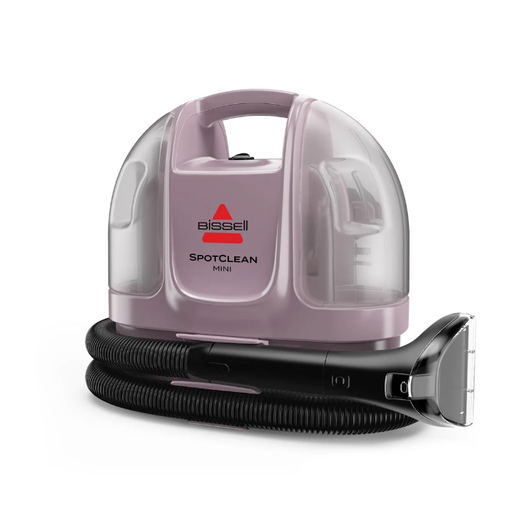
BISSELL SpotClean Mini Portable Deep Cleaner
Why This Fits Their Persona: A great choice for smaller households or individuals looking for a compact device for occasional stain removal. Its light weight and compact design make it easy to store and ready for everyday mishaps.
The device focuses on the essentials: The "Triple Action" cleaning system combines spraying, scrubbing, and suction without getting lost in exaggerated performance specs. The tank size is designed for targeted spot cleaning.
Very lightweight (approx. 3.4 kg) and compact, ideal for stairs, car interiors, and apartments with limited storage space. Based on the proven cleaning system of an established brand.
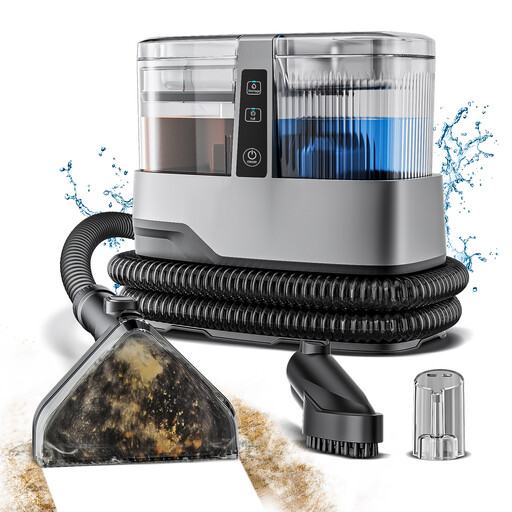
OMESER C688A Carpet Cleaner Machine 600W 17KPa
Why This Fits Their Persona: Suitable for families with children and pet owners who regularly face tough stains. The high performance is designed to effectively remove even deep-seated dirt and stains from pet hair and mud.
This model avoids the pure suction power trap by combining a high value (17 kPa) with a powerful 600W motor specifically designed for wet cleaning. It's a specialised stain remover, not a weak all-rounder.
The combination of high motor power and strong suction allows for intensive deep cleaning. The device features a dual-tank system for hygienic separation of fresh and dirty water.
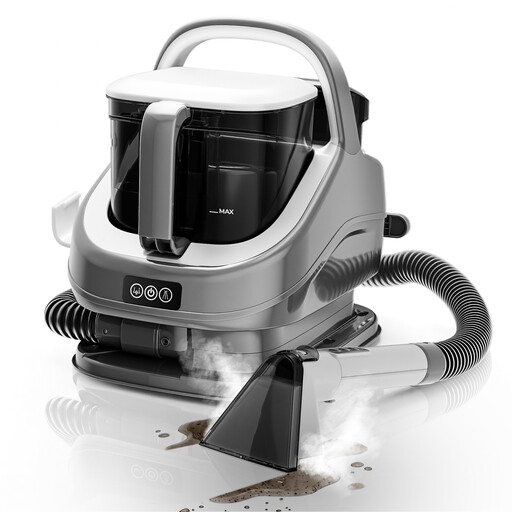
ROUNY Portable Carpet Cleaner with 3 Modes (U2 Heat)
Why This Fits Their Persona: Ideal for users looking for a versatile solution for different types of stains. The modes for cold water, hot water, and steam offer the flexibility to treat both fresh spills and dried-in or greasy stains. Also suitable as a mattress cleaner.
Instead of being a vague 'all-in-one' cleaner, this device offers clearly defined functions. The different modes are not marketing gimmicks but provide real added value for treating various types of stains.
Three cleaning modes (cold water, hot water, steam) for maximum flexibility. The device combines strong suction power (13 kPa) with a hygienic dual-tank system (1400 ml / 1200 ml).
Looking for more options?
We've curated a complete, up-to-date list of products that fully meet these stringent selection criteria and safety standards.
Frequently Asked Questions (FAQ)
1. Can I use any cleaning solution in an upholstery cleaner?
It is recommended to use low-foaming or non-foaming cleaning solutions specifically designed for carpet washers and upholstery cleaners. Conventional detergents can create excessive foam, which can impair suction performance and potentially damage the motor. Always follow the device manufacturer's instructions.
2. What is the difference between an upholstery cleaner and a steam cleaner?
An upholstery cleaner (spray-extraction device) cleans by spraying a cleaning solution and immediately vacuuming it up along with the dissolved dirt. A steam cleaner, on the other hand, uses hot steam to loosen dirt and sanitise surfaces but typically does not have a suction function to remove the loosened dirt and moisture. For targeted stain removal from textiles, a spray-extraction device is often the more effective method.
3. How often should you clean a sofa?
For general hygiene and maintenance, a deep clean is recommended every 6 to 12 months. In households with pets, children, or heavy use, more frequent spot cleaning as needed and a deep clean every 3 to 6 months can be beneficial to maintain the longevity and appearance of the upholstered furniture.