
Upholstery Cleaner Buyer’s Guide: How to Avoid Costly Mistakes
A spilled glass of wine on the new sofa, muddy paw prints on a favourite armchair, or the inevitable crumbs and stains on car seats—these situations demand an effective solution. An upholstery cleaner promises a quick fix and a deep, thorough clean. However, the market is flooded with devices whose marketing claims often fall short in practice. Many buyers invest in a machine that creates more problems than it solves.
As your Joybuy Product Recommendation Officer, I see it as my mission to protect you from these very disappointments. Instead of listening to loud advertising slogans, we will focus on the facts. In this guide, I'll show you the three most common pitfalls when buying an upholstery cleaner and which technical features you truly need to look for to make an informed decision.
The 3 Most Common Pitfalls When Buying an Upholstery Cleaner
Experience shows that many unsatisfactory purchases can be traced back to three recurring issues, often fuelled by misleading product descriptions.
-
The Watt Trap: High Power, Weak Suction Many manufacturers advertise a high wattage (W), but this figure only indicates the motor's power consumption, not its actual suction power. A 1000-watt device can have weaker suction than an efficiently designed 600-watt model. The result: dirty water isn't fully extracted from the fabric. This leaves behind unsightly water stains, significantly extends drying time, and, in the worst-case scenario, can lead to mould and odours in the upholstery.
-
The Mini-Tank Problem: Constant Interruptions Especially with compact, handheld devices, manufacturers often skimp on water tank size. A fresh water tank with a capacity of less than 0.5 litres means you'll have to interrupt your work multiple times just to clean a single sofa cushion or car seat, constantly refilling the clean water and emptying the dirty water tank. This makes the cleaning process unnecessarily tedious and time-consuming.
-
The "Wet Vac" Fallacy: Missing Spray-Extraction Some products are marketed as upholstery cleaners but are merely simple wet/dry vacuums. They lack the crucial function of a true upholstery washer: spray-extraction. A good upholstery cleaner sprays a cleaning solution under pressure into the fabric to loosen dirt, then immediately vacuums up the liquid along with the dissolved grime in the same pass. Without this function, dirt is merely spread around on the surface, not removed from deep within the fibres.
What Really Matters: The Decisive Features
To avoid these pitfalls, you should check three core parameters before buying. These determine whether a device is truly suitable for tasks like cleaning a sofa or cleaning car seats.
1. Suction Power in Pascals (Pa) – Not Watts (W)
The key metric for effectiveness is suction power, measured in Pascals (Pa) or kilopascals (kPa). This value describes the negative pressure the device generates to pull water and dirt out of the fibres.
- For light, surface-level dirt: Devices with 8–12 kPa can be sufficient.
- For deep cleaning and to effectively
remove stains from upholstery: Look for devices with at least 12 kPa, ideally 15 kPa or more. High suction power ensures a thorough clean and a significantly shorter drying time.
2. The Two-Tank System and Its Capacity
Hygienic and efficient cleaning is only possible with a two-tank system. This strictly separates the clean water and cleaning solution from the vacuumed-up dirty water. Pay attention to the capacity of both tanks:
- Fresh Water Tank: A capacity of over 1 litre is recommended to tackle a medium-sized area without refilling.
- Dirty Water Tank: A sufficiently large tank prevents dirty water from getting into the motor and damaging the device.
3. Operating Principle: Upholstery Washers vs. Steam Cleaners
It's important to understand the difference between the two most common types of devices:
- Upholstery Washer (Spray-Extraction Device): This is the classic upholstery cleaner or carpet cleaner. It washes the fibres with a cleaning solution and immediately vacuums up the dirty liquid. Ideal for removing stains and deep-seated dirt.
- Steam Cleaner: This device uses hot steam to loosen dirt and grease and to disinfect surfaces. It is an excellent chemical-free option, especially for allergy sufferers. However, a pure steam cleaner does not vacuum up the loosened dirt and moisture.
Product Picks for Different Uses
Here are some models that represent a considered choice for specific user profiles, based on their objective specifications.
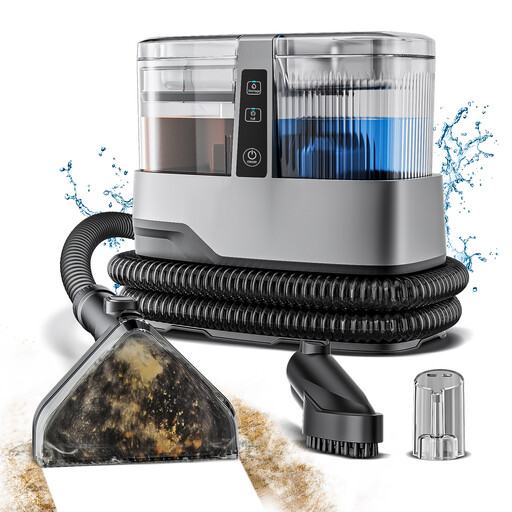
OMESER C688A Carpet Cleaner Machine 600W
Why This Fits Their Persona: Ideal for users who need a powerful yet handy solution for stubborn individual stains or for the thorough cleaning of car seats and boots. The corded design ensures consistent power without battery fade.
This model bypasses the "Watt Trap" with a clearly stated, high suction power of 17 kPa. This ensures effective extraction of dirty water and minimises the risk of water stains.
The combination of strong suction and a compact, handheld design makes it a specialist for deep cleaning in hard-to-reach areas.
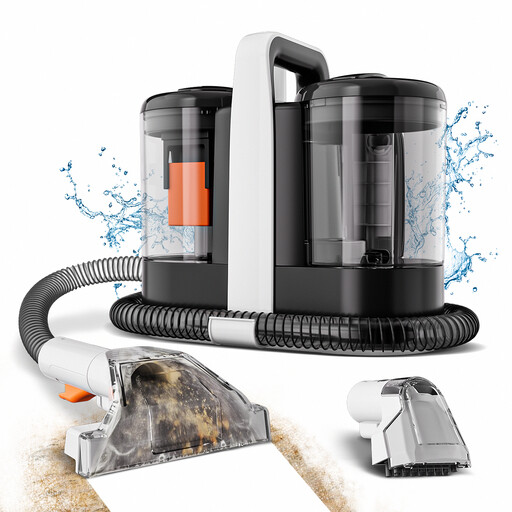
OMESER W07 Carpet Cleaner Machine
Why This Fits Their Persona: Perfect for families and pet owners who need to regularly clean larger areas like sectional sofas, carpets, or mattresses. The large tanks and long operating radius allow for a smooth workflow.
This device solves the "Mini-Tank Problem" with a 1.5 L fresh water and 0.8 L dirty water tank. This reduces work interruptions to a minimum and makes cleaning large surfaces much more efficient.
The combination of large tanks, a solid suction power of 15 kPa, and a long cord/hose offers an excellent overall package for comprehensive upholstery care throughout the home.
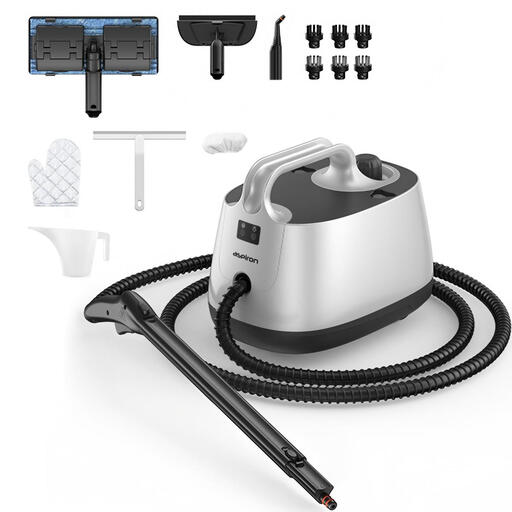
ASPIRON CA019 Steam Cleaner
Why This Fits Their Persona: An alternative for households that want to avoid chemical cleaning agents. Ideal for refreshing upholstery, mattresses, and eliminating odours and allergens with hot steam.
This device is not an upholstery washer, thus avoiding the problem of inadequate dirty water extraction. It relies on a different principle: cleaning with 4 Bar of steam pressure and steam up to 145°C to loosen dirt and disinfect.
Cleans and disinfects purely physically, without chemicals. The extensive accessory kit makes it a versatile tool for the entire household, from floors and windows to upholstery.
Looking for more options?
We have compiled a complete, up-to-date list of products that fully meet these strict selection criteria and all relevant safety standards.
Frequently Asked Questions (FAQ)
1. Do upholstery washers leave water stains? When used correctly and with a device featuring high suction power (over 12 kPa), the risk of water stains is minimal. The high suction power extracts the majority of the moisture from the fabric. To avoid water marks, you should always clean an entire section (e.g., a complete seat cushion) from seam to seam, rather than just treating a small spot in the middle.
2. Can I use an upholstery cleaner with regular tap water? Yes, in most cases, tap water can be used. However, if your water is very hard and high in mineral content, it is advisable to use distilled water to prevent limescale build-up in the device and on the upholstery. Also, pay close attention to the manufacturer's recommendations for suitable cleaning solutions—only use low-foaming detergents specifically designed for spray-extraction machines.
3. How often should I clean a sofa with an upholstery cleaner? For basic hygienic maintenance, a deep clean is recommended once or twice a year. In households with children, pets, or heavy use, more frequent cleaning may be beneficial. Stains should always be treated as quickly as possible to prevent them from setting deep into the fabric.