
TV Stand Buyer’s Guide: Find the Right Model for Your Living Room
Choosing a new TV stand is often more than just a practical decision. It's a central piece of your living room's design, one that must blend functionality with aesthetics. The challenge lies in finding a unit that not only fits your television perfectly but also offers ample storage and seamlessly integrates with your interior style.
This guide serves as an objective resource. It presents you with key criteria and a selection of models to help you make an informed decision on the right TV cabinet for your home.
What to Look for When Choosing a TV Stand
Before making a decision, consider the following three criteria to narrow your search and find a model that meets your specific needs.
1. The Right Size for Your TV and Room
Proportions are crucial. A lowboard should always be wider than the television placed on it. As a rule of thumb, allow at least 10–15 cm of space on either side. This not only creates visual balance but also ensures stability. For instance, if you're looking for a unit for a 65-inch TV, the board should be at least 160 cm wide. Also, measure the available space in your room to ensure the furniture doesn't feel overwhelming. The height of the lowboard should be chosen so that the centre of the screen is at eye level when you are sitting on your sofa.
2. Material, Design, and Styles
The material and design define the furniture's impact on the room.
- Modern TV Cabinet: Clean lines, handleless fronts, and neutral colours like white, grey, or black characterise this style. Surfaces with a high-gloss black finish reflect light and make the room appear larger.
- Wood-Look TV Unit: Models with a wood effect bring warmth and a natural feel to the space. They pair well with Scandinavian, rustic, or classic interiors.
- Industrial Style: A combination of dark wood and black metal elements creates a robust, urban look.
Choose a design that complements the existing furniture in your living room or bedroom.
3. Functionality: Storage and Extras
Consider what devices and items you need to store. Open compartments are ideal for receivers or gaming consoles, as they provide adequate ventilation and don't block remote control signals. Drawers and closed compartments, on the other hand, create a tidy appearance and protect accessories from dust. Integrated cable management with cut-outs in the back panel is an essential feature for hiding unsightly wires. Some models offer additional features like a lowboard with LED lighting, which creates an atmospheric ambiance.
Recommended TV Stands
Here is a curated selection of models that stand out for their specific design features and functional properties.
Modern Design with Accents: 160 cm TV Cabinet with Gold Feet
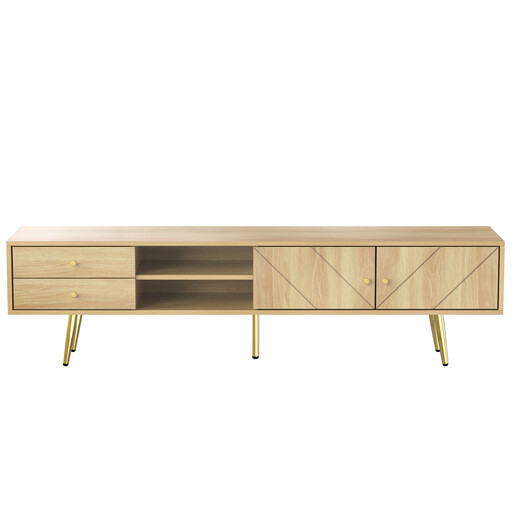
Why it stands out: This 160 cm TV board combines a natural wood look with elegant gold accents. The doors, with their slanted groove design, give the piece a unique texture, setting it apart from standard designs. The mix of open compartments, drawers, and closed doors offers a flexible storage solution.
Advantages:
- Dimensions: At 160 cm long, 36 cm wide, and 42 cm high, it's ideal for medium to large televisions.
- Storage: Two drawers, two doors, and two open compartments for organised storage.
- Design: The combination of wood colour and golden metal feet creates a modern yet timeless aesthetic.
- Material: Made from MDF and particleboard for a sturdy structure.
Who it's for: For those seeking a minimalist yet characterful piece of furniture. It fits perfectly into modern living concepts that favour light colours and subtle elegance.
Rustic Charm, Farmhouse Style: Parrot Uncle TV Unit with Barn Door
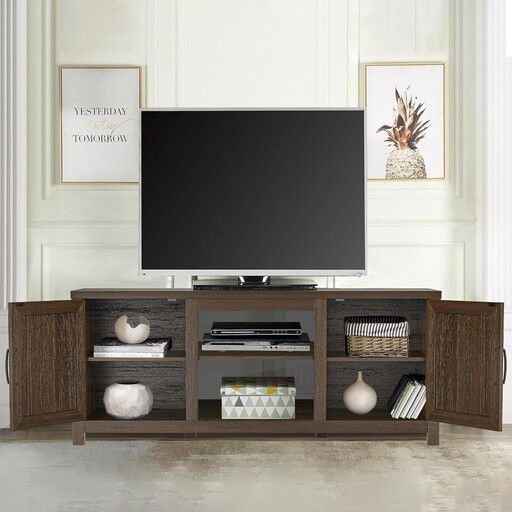
Why it stands out: The most striking feature of this TV cabinet is its barn door design, which brings a touch of modern farmhouse style. The brown wood-look TV unit and its sturdy, slightly taller build make it a solid sideboard for a TV.
Advantages:
- Load Capacity: Supports TVs up to 65 inches with a maximum weight capacity of 54 kg.
- Flexible Storage: Two open compartments and two closed sections with adjustable shelves.
- Optimal Viewing Height: The height of 61.7 cm ensures a comfortable viewing position.
- Style: The farmhouse-style design fits well in rustic or eclectic interiors.
Who it's for: Ideal for fans of the farmhouse or industrial style who are looking for a robust and spacious piece of furniture that is also suitable for larger TVs.
Futuristic and Functional: SONNI Black High-Gloss Lowboard with LED
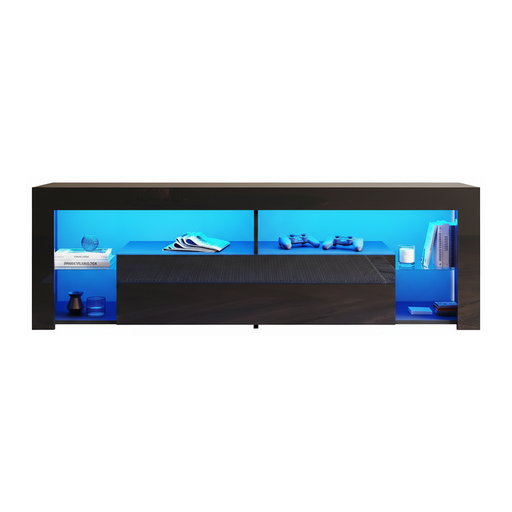
Why it stands out: This lowboard with LED is a clear statement piece for modern living. The black high-gloss finish, combined with integrated LED lighting that can be set to 16 different colours, makes it a focal point in any room.
Advantages:
- Atmospheric Lighting: The LED system with 16 colours and various modes creates a customisable light ambiance.
- Modern Finish: The high-gloss black finish looks elegant and contemporary.
- Storage Layout: A drawer and open glass shelves provide space for media devices and decor.
- Size: At 160 cm wide, it is suitable for TVs up to 65 inches.
Who it's for: For anyone who prefers an ultra-modern, almost futuristic look. It's the right choice if you want your TV cabinet to be modern and serve as a central design element with a touch of tech sophistication.
Didn't Find the Right Fit? Discover More Options
Choosing the perfect piece of furniture heavily depends on individual taste and spatial constraints. If the models presented here don't quite match your vision, there are countless other designs and configurations to explore.
Browse our entire collection of TV Consoles and find the piece that perfectly matches your style.
Frequently Asked Questions (FAQ)
How high should a TV stand be?
The ideal height of a TV stand depends on your seating height. As a guideline, the centre of the television screen should be at eye level when you are sitting relaxed on your sofa or armchair. This is typically at a height of about 90 to 110 cm from the floor. Lowboards usually have a height between 40 and 60 cm, which works well in most living rooms.
How wide should a TV stand be in relation to the TV?
For aesthetic and practical reasons, a TV stand should always be wider than the television. A good rule is that the board should extend at least 10 to 15 cm beyond the TV on each side. This creates visual balance and provides additional surface space.
What's the difference between a lowboard and a sideboard for a TV?
The main difference is the height. A TV lowboard, as the name suggests, is significantly lower than a classic sideboard. It is specifically designed to place the television at an optimal viewing height. While a sideboard for a TV is also an option, its greater height (usually from 70 cm) can result in the screen being positioned too high, which can lead to neck strain over time.