
TV Mount Buyer’s Guide: How to Find the Right Model for Your Home
A new television can be the centrepiece of your living room, but its stand often takes up valuable space on your media console, or the position isn't ideal for every seat. The right TV mount solves these problems by securely attaching the screen to the wall or ceiling, creating a clean, clutter-free look and enabling flexible viewing angles.
However, choosing the right mount depends on several factors: the size and weight of your TV, the construction of your walls, and your personal viewing habits. This guide will help you understand the technical requirements and make an informed decision.
What to Look for When Choosing a TV Mount
Before you decide on a model, three technical aspects are crucial for ensuring compatibility and safety.
1. VESA Standard and Load Capacity: The Foundation of Compatibility
Every modern TV has standardised threaded holes on the back for mounting. The distance between these holes is defined by the VESA mount standard (Video Electronics Standards Association) and is specified in millimetres (e.g., 200 x 200 mm or 400 x 400 mm).
- VESA Compatibility: Check your TV's manual for its VESA pattern or measure the horizontal and vertical distance between the mounting holes. The TV mount must support these dimensions.
- Load Capacity: Every mount has a maximum weight capacity. Your TV's weight (without the stand) must be well below this limit. This is especially critical for a TV mount for large TVs over 65 inches, as significant leverage forces are at play.
2. Mounting Location: TV Wall Mount or TV Ceiling Mount?
The choice between a wall or ceiling mount depends on your room's architecture and your intended use.
- TV Wall Mount: The most common solution for living spaces. It's ideal for positioning the TV at eye level while saving space. Stability depends heavily on the wall's construction (concrete, brick, wood stud). Drywall alone is not strong enough and requires special anchoring into the underlying structure.
- TV Ceiling Mount: A flexible option for rooms with sloped ceilings, limited wall space, or for use in commercial settings like gyms or restaurants. A height-adjustable TV ceiling mount allows you to lower the screen to the precise desired viewing height.
3. Functionality: Fixed, Tilting, or Full-Motion?
The mount's functionality determines how flexibly you can position the screen.
- Fixed: The slimmest and most discreet mounting style. The TV hangs on the wall like a picture. Ideal if your seating position is always directly in front of the screen.
- Tilting: A tilting TV mount allows you to angle the screen vertically. This is useful for reducing glare from windows or lamps, or when the TV is mounted higher than eye level (e.g., above a fireplace).
- Full-Motion: A swivelling TV wall mount offers the greatest flexibility. With an articulating arm, the TV can be pulled out from the wall and swivelled horizontally. Perfect for large or complex room layouts where you want to watch from different positions—like the dining table and the sofa.
Recommended TV Mounts
Based on functionality, material quality, and use cases, we've selected a few models for different needs.
Vogel's TVM 1649 Full-Motion+ Large Wall Mount
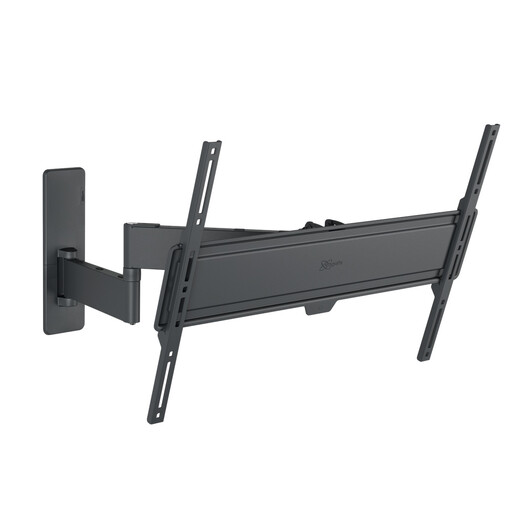
Why it stands out: The Vogel's TVM 1649 is designed for large TVs and offers an exceptionally wide swivel range thanks to its long articulating arm. According to the manufacturer, its One-Finger Movement technology allows for incredibly smooth motion, even with heavy screens. The integrated cable management ensures a clean and professional look.
Pros:
- 180° swivel range for maximum positioning flexibility.
- High compatibility with VESA patterns from 100x100 to 600x400 mm.
- Smooth positioning thanks to an optimised bearing system.
- Integrated cable routing to prevent cable clutter.
Who it's for: For users with large TVs (40-77 inches) who need a flexible solution for open-plan living areas or complex room layouts and value effortless adjustment and a tidy aesthetic.
Vogel's TVM 1619 Tilt Large Wall Mount
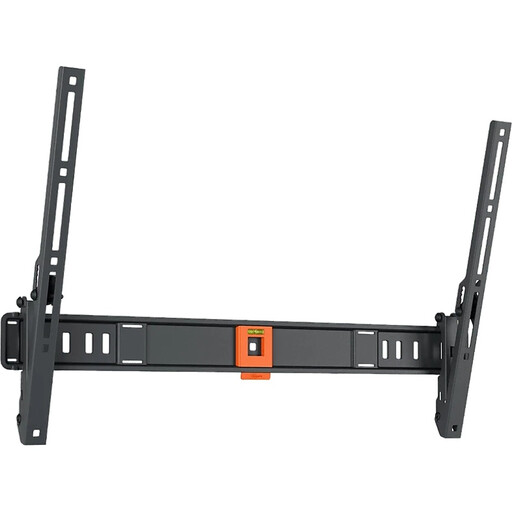
Why it stands out: This model is engineered for the safety and stability of very large and heavy screens. With a load capacity of up to 75 kg and support for TVs up to 100 inches, it offers a robust solution. The tilt function of up to 15° helps minimise glare. According to the manufacturer, the ClickLoc safety system provides an audibly secure locking mechanism.
Pros:
- Suitable for very large screens up to 100 inches and 75 kg.
- 15° tilt to reduce light reflections.
- ClickLoc system for securely locking the TV in place.
- Robust construction made of reinforced steel.
Who it's for: For owners of very large TVs who require a secure and stable wall mount. It's ideal for home cinemas where the TV is mounted slightly elevated and a tilt is needed to optimise the viewing angle.
ELIVED Ceiling TV Bracket Height Adjustable
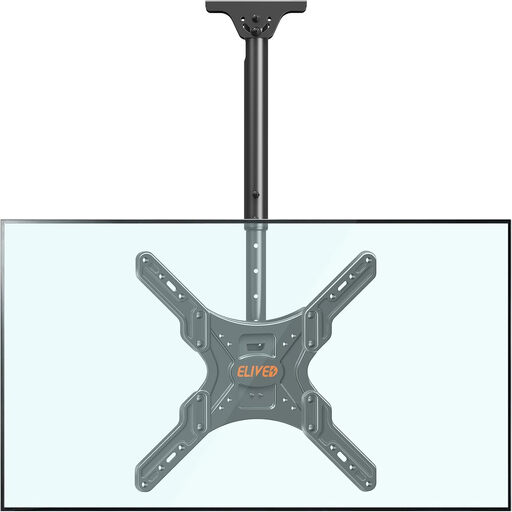
Why it stands out: This TV ceiling mount is a versatile solution for situations where wall mounting isn't possible or desired. It offers a six-level height adjustment and a full 360° swivel range, making it highly adaptable. The cable management inside the pole ensures a neat appearance.
Pros:
- Height-adjustable (516.5 mm to 766.5 mm) for an optimal viewing height.
- Full range of motion with 360° swivel and +5°/?10° tilt.
- Suitable for ceiling mounting, including on sloped ceilings (with an adapter).
- Internal cable management for a clean installation.
Who it's for: For living spaces with sloped ceilings, floor-to-ceiling windows, or for commercial use in bars, offices, or gyms. It's ideal when the TV needs to be positioned freely within a room.
Didn't Find the Right Fit?
The selection of mounts is vast and covers many specific requirements. If you're looking for a solution with even more range of motion, you can find more models in our category.
? Explore more full-motion TV wall mounts here
Frequently Asked Questions (FAQ)
1. What is the VESA standard and how do I find mine? The VESA standard describes the standardised distance between the four threaded mounting holes on the back of your TV, measured in millimetres (width x height). You can find this specification in your TV's manual or by measuring the distance yourself. Common patterns include 200x200, 400x200, or 600x400.
2. Can I install a TV mount on any wall? No. The wall must be able to safely support the combined weight of the TV and the mount. Solid concrete or brick walls are ideal. For wood stud walls, the mount must be securely screwed into the studs. Mounting directly onto drywall alone is not safe and is not recommended. If in doubt, check your wall's construction or consult a professional.
3. How high should a TV be mounted? As a rule of thumb, the centre of the screen should be at eye level when you are in your usual seating position. In most living rooms, this corresponds to a mounting height of about 90 cm to 120 cm from the floor to the screen's centre. For higher installations, a tilting mount can improve viewing comfort.