
TV Backlighting: A Guide to Choosing the Right One
Dynamic backlighting can dramatically transform the viewing experience for movies, TV series, and video games. It extends the image beyond the screen's edges, creating an immersive atmosphere. However, the market for TV backlighting is vast, and the technical differences are often unclear. This guide will help you understand how various systems work and make an informed decision that suits your needs and your television.
What to Consider When Buying TV Backlighting
Before you decide on a model, several technical aspects should be considered. These criteria will help you find the right smart TV lighting for your home.
Technology: The Difference Between RGB and RGBIC
The type of LEDs largely determines the visual effects.
- RGB (Red, Green, Blue): Conventional LED strips for TVs use RGB technology. With this, all LEDs on the strip can only display a single color at a time. While you can change the color of the entire strip, you cannot create multi-color, flowing effects.
- RGBIC (Red, Green, Blue + Independent Control): Modern RGBIC LED strips feature an integrated chip (IC) that allows multiple segments of the strip to be controlled independently. The result is dynamic, multi-color light effects that can move across the strip simultaneously. This is the foundation for systems that synchronize with on-screen colors in real time.
Compatibility and Size
The length of the LED strip must match the perimeter of your television. Most manufacturers specify which screen sizes (e.g., 55-65 inches) their product is suitable for. Before buying, measure the back of your TV to ensure the strip covers the edges completely without overhanging. Also, check whether the system is suitable for flat or curved screens (Curved TV).
Control and Smart Home Integration
Modern lighting systems offer flexible control options. App control via Wi-Fi or Bluetooth is now standard and allows for detailed adjustments of colors, brightness, and effects. For smart home users, compatibility with voice assistants is a key factor. Alexa-compatible lighting or integration with Google Home enables voice control and inclusion in automated routines.
Our Recommended Lighting Solutions
Here, we present a few products that take different approaches to enhancing ambient lighting.
Govee TV Backlight 3 Lite for 55-65 Inch TVs
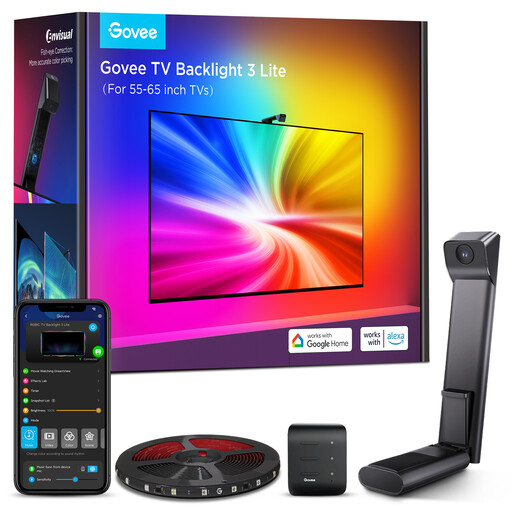
Why It Stands Out The Govee TV Backlight 3 Lite uses a camera to capture the colors on the screen's edge in real time and project them onto the LED strip. This method allows you to retrofit a dynamic lighting effect similar to Ambilight without relying on an HDMI sync box. Its RGBICW technology provides not only vibrant colors but also a dedicated warm white light source.
Pros
- RGBICW Technology: Enables segmented color control and additional warm white light.
- Real-Time Color Sync: A camera captures on-screen colors and dynamically adjusts the lighting.
- Comprehensive Control: Operable via app, a manual control box, or voice assistants (Google Home, Amazon Alexa).
- For Common TV Sizes: Specifically designed for televisions with a screen size of 55 to 65 inches.
Who Is It For? This system is ideal for home cinema enthusiasts and gamers who want immersive, screen-synchronised lighting to intensify the experience of movies and games.
Vivreal RGB Neon LED Strip
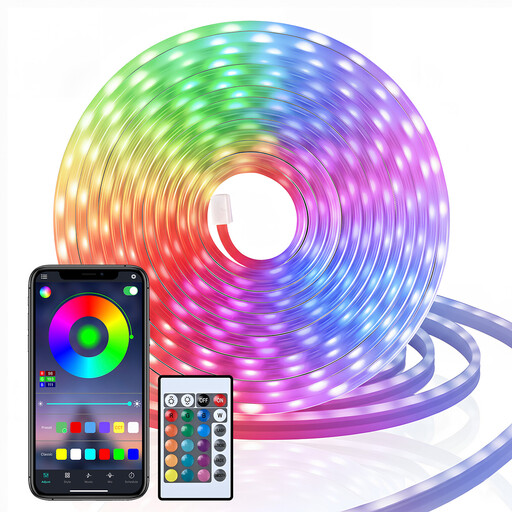
Why It Stands Out The Vivreal LED Strip stands out for its high flexibility and neon-like appearance. The silicone material ensures an even, diffused light distribution without visible individual LED dots. A built-in microphone allows the light effects to sync with music or ambient sounds, making it a great choice for gaming room lighting.
Pros
- Music Sync: The built-in microphone lets the lights pulse to the beat of the music.
- Flexible Design: The material is easy to bend and can be used for creative DIY projects or for accenting furniture.
- Dual Control: Can be controlled via a remote or a mobile app.
- Energy-Efficient: Operates on a safe 5V low voltage.
Who Is It For? This product is aimed at creative users looking for a flexible lighting solution for their bedroom, gaming setup, or party rooms, who also value music synchronization.
Yeelight Cube 4 Matrix LED Light
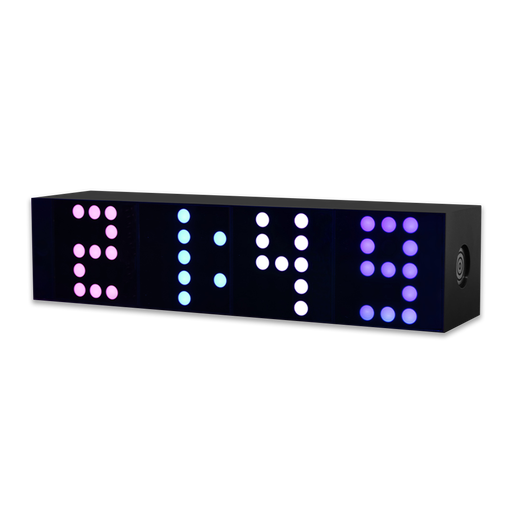
Why It Stands Out The Yeelight Cube system takes a modular approach. Instead of a strip, it consists of individual cubes that can be configured and connected together. The Matrix cube can display pixel art patterns and dynamic effects customized via the app. It's less of a direct TV backlight and more of an accent ambient light for a desk or shelf.
Pros
- Modular System: Cubes can be flexibly arranged and expanded.
- Customizable Effects: Supports pixel art and dynamic light patterns through app control.
- Gaming Integration: Compatible with popular gaming platforms for synchronization with in-game action.
- Modern Design: The cube shape fits well into modern desk and gaming setups.
Who Is It For? Ideal for gamers and tech enthusiasts who want highly customizable and decorative lighting for their desk or gaming room and enjoy experimenting with light effects.
Discover More Options
The products featured here cover a range of use cases. If you are looking for more specialized solutions or accessories, you may find the right product in our broader selection.
Discover more solutions in our Smart LED Controllers category.
Frequently Asked Questions
What is the difference between TV backlighting and Ambilight?
Ambilight is a proprietary technology developed by Philips that is integrated directly into their televisions. It analyzes the video signal internally and projects matching colors onto the wall behind the TV. A retrofit TV backlight, like those from Govee, achieves a similar effect but uses an external camera or an HDMI sync box to capture the on-screen colors. So, you can retrofit an Ambilight-like experience, even though the underlying technology is different.
How is an LED strip for a TV installed?
Installation is usually straightforward. First, the back of the television should be thoroughly cleaned of dust and grease to ensure the adhesive strip sticks properly. Then, the LED strip for the TV is adhered along the outer edges. After connecting it to the power supply and, if applicable, the control box, the system is paired with your smartphone via the corresponding app using Wi-Fi or Bluetooth and then calibrated.
Is TV backlighting compatible with any television?
Most LED strips are universally compatible, as long as the size is correct. They are powered by their own plug and operate independently of the TV model. For systems with a camera, ensure that the top or bottom bezel of the screen is thin enough to attach the camera without obstructing the picture. Compatibility here primarily relates to the screen size and the physical shape of the television.