
How to Choose the Right Travel Tripod
A good travel tripod is crucial for sharp photos and stable videos on the go. But the market is flooded with models whose marketing promises often disappoint more than they deliver. A tripod that's too heavy gets left in the hotel, while a wobbly model ruins your shot. Before you make a decision, it's important to know the typical pitfalls that can lead to a bad buy.
- Pitfall 1: Misleading Weight Specs. Many manufacturers advertise an extremely low weight, but this often refers only to the tripod legs without the essential tripod head. The total weight in your backpack then ends up being unexpectedly higher.
- Pitfall 2: Unstable Leg Sections and Locks. Especially on budget-friendly models with many sections, the lowest, thinnest segments are prone to vibrations. Cheap lever or twist locks can also lose their gripping power after a short time.
- Pitfall 3: Lack of Functionality. A tripod that doesn't allow for low-angle shots (macro position) or whose head can't perform smooth panoramic pans severely limits your creative options on the road.
What Really Matters in a Travel Tripod
To avoid the problems mentioned above, you should base your choice on objective technical parameters. These three criteria are crucial for a tripod's performance and longevity.
Material: Carbon Tripod or Aluminium?
The choice of material significantly impacts weight and stability.
- Carbon: Offers higher rigidity at a lower weight. It dampens vibrations more effectively, which is advantageous for long exposures or in windy conditions. It's also less sensitive to temperature fluctuations. The downside is the higher price. A carbon tripod is the choice for anyone who needs to save every gram.
- Aluminium: Is more cost-effective and more robust against impacts that could cause carbon to splinter. However, for the same level of stability, it is significantly heavier, which is a critical factor for a lightweight tripod for travel.
Load Capacity and Self-Weight: The Right Ratio
A stable tripod doesn't have to be heavy, but it must securely support your gear.
- The maximum load capacity indicates how much weight the tripod can safely hold. It should be at least 1.5 times the weight of your heaviest camera-lens combination to provide a stability buffer. A camera tripod for a mirrorless camera with a telephoto lens requires a higher load capacity than a smartphone tripod.
- The self-weight is just as important for a tripod for travel. A good travel tripod, including the head, should ideally weigh under 1.5 kg.
Packed Size, Working Height, and Tripod Head
Functionality and comfort should not be underestimated when travelling.
- A compact tripod should have a packed size of under 45 cm so it can easily fit in or on a backpack.
- The maximum working height should allow you to work comfortably without bending over. Make sure this height is achieved without the center column fully extended, as this reduces stability.
- A tripod with a ball head is usually the most flexible solution for travel photography. It allows for quick camera alignment in any direction. An Arca-Swiss compatible quick-release system is a de facto standard and makes swapping accessories easier.
Top Recommendations For You
Instead of an overwhelming list, we present models tailored to specific user profiles and their requirements.
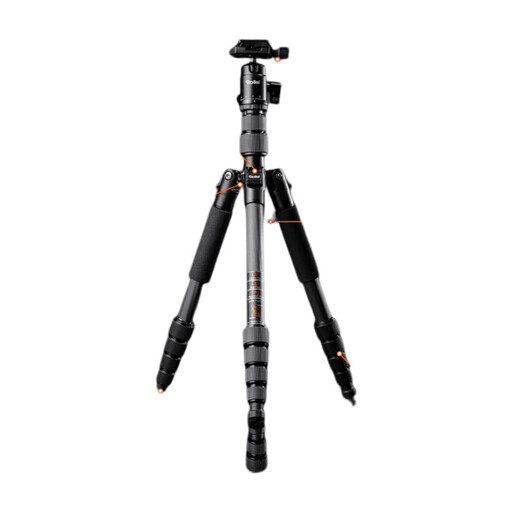
Rollei Compact Traveler No. 1 Carbon Fiber Travel Tripod 8kg Load 142cm Height
Why this model is a good fit: Ideal for photographers who travel with mirrorless or DSLR cameras and don't want to compromise on stability and weight. Its low weight is easy on the back during long hikes.
The total weight of under 1 kg (961 g) is realistic and includes the ball head. The carbon construction prevents vibrations, and the high load capacity of 8 kg provides security even for heavy gear.
Can be converted into a full-fledged monopod and offers flexibility for low-angle shots thanks to the reversible center column. Includes spikes for a secure footing on any surface.
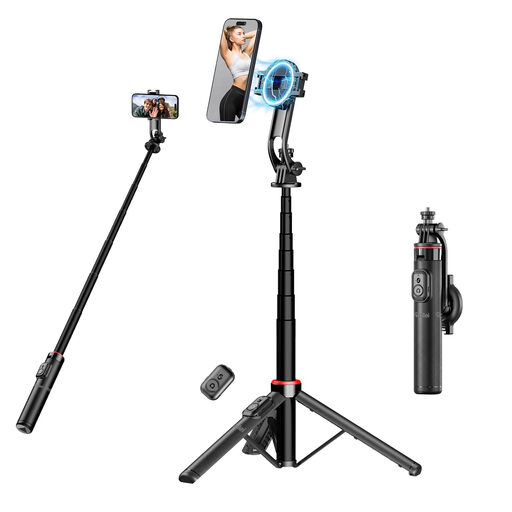
Rollei Easy Creator MagPod Magnetic All-in-One Tripod 130cm Bluetooth Remote
Why this model is a good fit: Perfect for vloggers and smartphone videographers looking for an extremely fast, flexible, and multifunctional solution for their vlogging tripod.
It avoids the pitfall of lacking functionality with its all-in-one design. The magnetic mount, two accessory shoes for a light/microphone, and the Bluetooth remote offer tremendous versatility.
Extremely compact (22.7 cm packed size) and lightweight (281 g), combined with a magnetic mount for quick setup and 360° rotation for portrait and landscape formats.
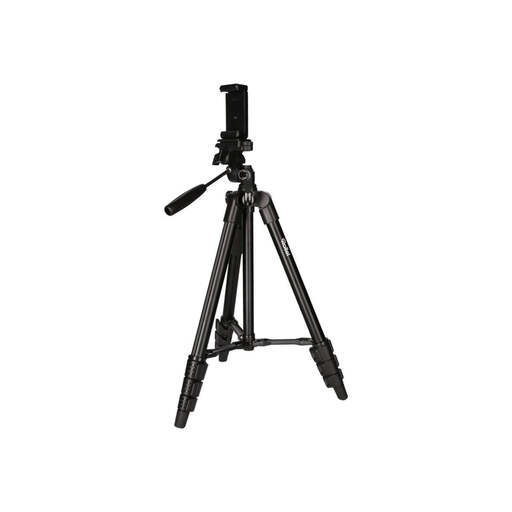
Rollei Smartphone Traveler Tripod
Why this model is a good fit: A solid and affordable choice for holidaymakers who primarily shoot with a smartphone and need a reliable, lightweight tripod for group photos and stable videos.
It offers honest performance for its purpose. At 595 g, it's a genuinely lightweight tripod, and the 2 kg load capacity is adequately sized for smartphones and small compact cameras without making false promises.
Complete starter package: Includes a smartphone holder and Bluetooth remote shutter. The integrated spirit level helps with precise alignment.
Looking for more options?
We have compiled a complete, up-to-date list of products that fully meet these strict selection criteria and German safety regulations.
Frequently Asked Questions (FAQ)
How important is the monopod function on a travel tripod?
A monopod function offers additional flexibility. It's useful in places where tripods are prohibited (e.g., in museums or at events) or when you need to be quick, such as in sports photography. The detachable leg is lighter than the entire tripod yet still provides more stability than shooting handheld.
Are twist locks or lever locks preferable for a travel tripod?
Both systems have their pros and cons. Twist locks are generally more compact, have fewer protruding parts, and are less likely to snag in a backpack. They are also better sealed against dirt and sand. Lever locks (or Flip Locks) are often quicker to operate, and you can see at a glance if a section is locked. The choice is often a matter of personal preference.
How do I know if a tripod head is suitable for my vlogging setup?
For a vlogging tripod, a head with smooth movement and easy handling is important. A ball head allows for quick switches between portrait and landscape orientation. Look for a separate panning axis for clean pans. If you want to attach accessories like a microphone or an LED light, models with integrated accessory shoes (cold shoe mounts) are a practical choice.