
Top-Load Washing Machines: Avoid Costly Slimline Appliance Mistakes
In many homes, space for large appliances is limited. A conventional washing machine often fits neither in a narrow bathroom nor in a compact kitchenette. A top-load washing machine is frequently the obvious solution here. However, the selection process has several pitfalls that can quickly turn a space-saving purchase into a costly mistake. As your Joybuy Product Recommendation Officer, I'll help you identify the crucial features and distinguish marketing hype from genuine benefits.
The 3 Most Common Traps When Buying a Top-Load Washing Machine
Before you decide on a model, you should be aware of the typical problems that often only become apparent after the purchase.
- Misleading Efficiency Claims: It's easy to advertise an appliance with Energy Efficiency Class A. However, this rating alone says little about the actual running costs. Some models only achieve this class under laboratory conditions or in extremely long eco-programmes, while consumption in standard programmes is significantly higher. The decisive value is the weighted energy consumption in kWh per 100 cycles.
- Underestimated Operating Noise: In a small apartment, a loud washing machine quickly becomes a nuisance. Many buyers focus primarily on washing performance and overlook the decibel rating (dB) for the spin cycle. An appliance that sounds like a jet engine taking off during the spin cycle not only disturbs you but potentially your neighbours as well. A quiet washing machine is not a luxury, but a necessity for home comfort.
- Overloaded and Impractical Programmes: Manufacturers often advertise a multitude of special programmes. In practice, however, most households only use a handful of them. A machine with 20 programmes is not necessarily better than one with 10. More important are practical features like a reliable short programme, an effective stain removal cycle, or a washing machine with a steam function to reduce ironing.
What Really Matters: The Decisive Parameters
To avoid these traps, focus on the following objective criteria. These define the quality and everyday usability of a top-load washing machine.
1. Dimensions and Capacity
A slimline washing machine with a 40 cm width is the standard for top-loaders, which is what makes them so space-saving. However, don't just measure the width of the niche, but also the depth and, above all, the height. Remember that the lid opens upwards, and there must be sufficient clearance for it. The capacity, usually specified as 6kg top-loader or 7kg top-loader, should match your household size:
- 1-2 people: 6 kg is generally sufficient.
- 3-4 people: A 7 kg model offers more flexibility for larger laundry loads.
2. Energy Consumption and Spin Performance
Always compare the specific values on the EU energy label:
- Energy Consumption: Stated in kWh per 100 cycles for the Eco 40-60 programme. A lower value means lower electricity costs.
- Water Consumption: Stated in litres per cycle. Modern appliances are very economical here.
- Spin-Drying Efficiency Class: Class A or B ensures drier laundry and shortens drying time, which in turn saves energy.
- Noise Emission Class: This ranges from A (very quiet) to D (very loud) for the spin cycle. For apartments, Class A or B is recommended.
3. Motor and Additional Features
The motor is the heart of the machine. An inverter motor operates without brushes, making it quieter, more durable, and more energy-efficient than conventional motors. When it comes to features, you should look for real added value. Practical examples include:
- SoftOpening: A mechanism that opens the lid gently.
- Drum Positioning: The drum automatically stops with the opening facing upwards.
- Anti-Stain Programmes: Remove stubborn dirt at low temperatures.
- Steam Function: Refreshes clothes and reduces wrinkles.
Recommended Products for Every Need
Here are some models that represent a considered choice for different user profiles based on objective criteria.
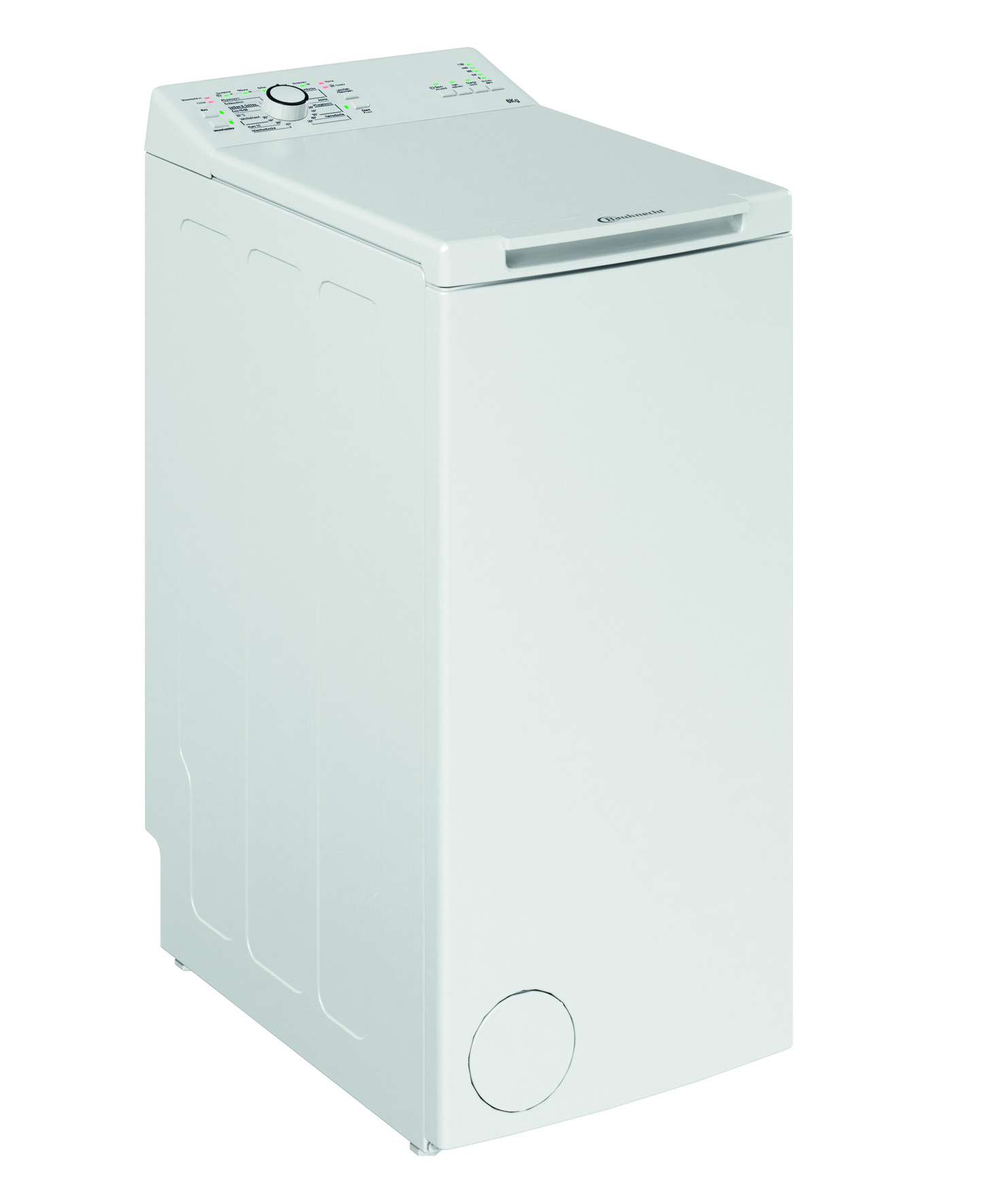
Bauknecht WAT Prime 6 L3 Top-Load Washing Machine
Why This Fits Their Persona: Ideal for singles or couples looking for a reliable and straightforward appliance for everyday use. The focus is on solid basic features without costly extras.
This model avoids an overloaded programme selection and focuses on essential wash cycles. The Noise Emission Class B (76 dB) is solid for its price range and prevents extreme noise pollution.
Compact Design: At 40 cm wide, it fits into tight niches.
Multiple Water Protection+: Provides security against water damage.
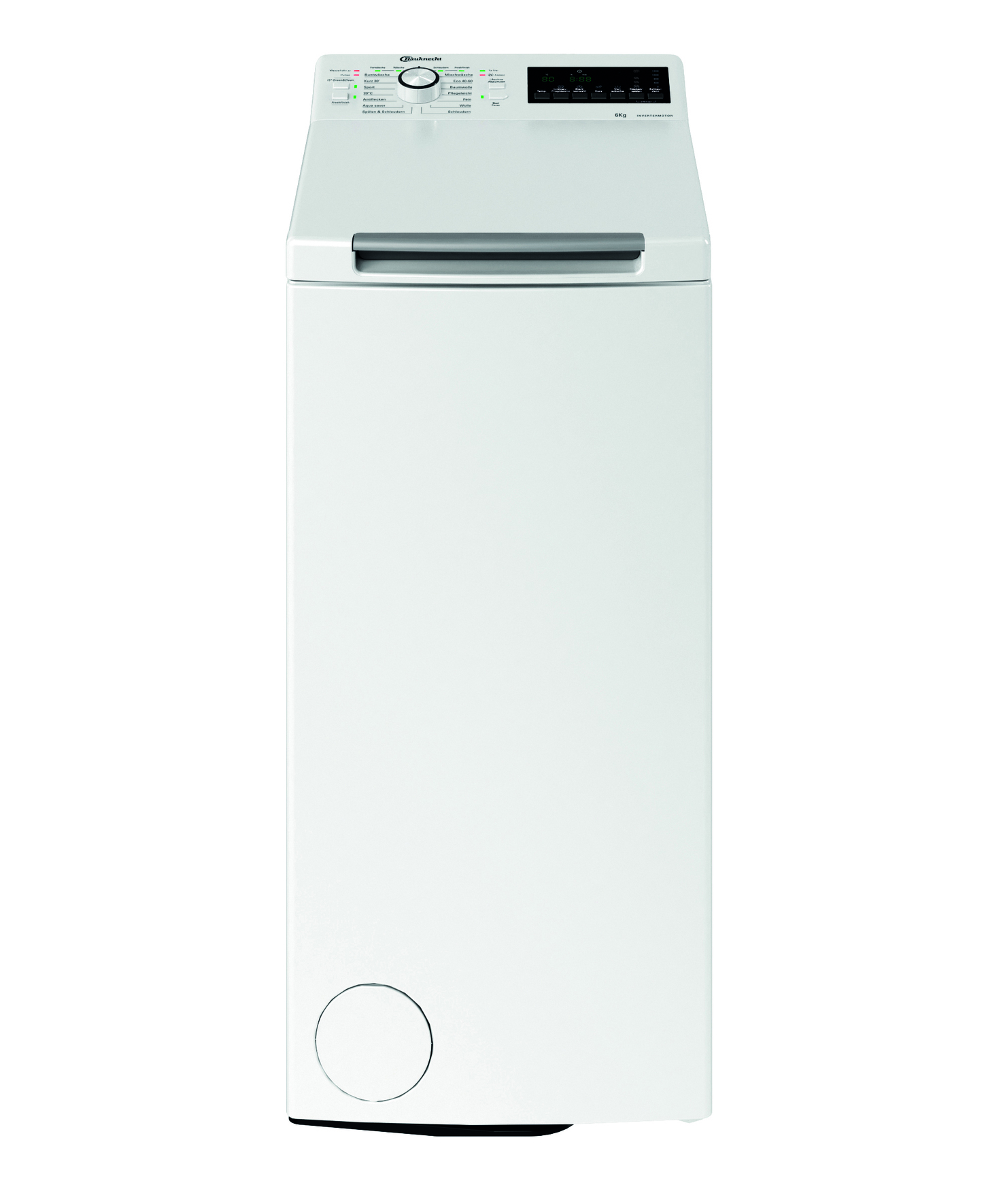
Bauknecht WMT Eco Shield 626 A Top-Loader
Why This Fits Their Persona: Perfect for environmentally and cost-conscious households looking to save in the long run. The quiet inverter motor and high efficiency are ideal for living in limited space.
With Energy Efficiency Class A and a very low consumption of 42 kWh/100 cycles, this model directly addresses the cost trap. The Anti-Stain programme offers real added value over useless gimmick programmes.
High Energy Efficiency: Saves on electricity costs in the long term.
Anti-Stain Programme: According to the manufacturer, removes over 100 types of stains at just 20°C.
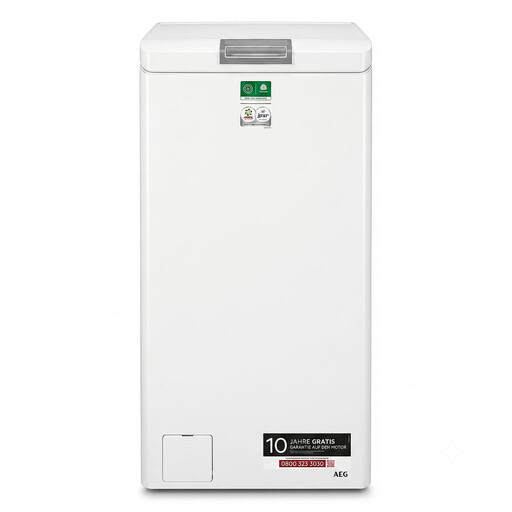
AEG 8000 PowerCare Top-Load Washing Machine
Why This Fits Their Persona: For small families or users who value advanced fabric care, time savings, and a larger capacity. The steam function is a clear plus for anyone who wants to iron less.
Instead of many useless programmes, this AEG model offers PowerCare technology and a genuine steam function that refreshes clothes in 25 minutes. With Energy Efficiency Class A and a 7 kg capacity, it is both efficient and practical.
PowerClean 59 Min. Programme: Complete cleaning at 30°C in under an hour.
7 kg Capacity: More space for a small family's laundry.
Looking for more options?
We have compiled a complete, up-to-date list of products that fully meet these strict selection criteria and German safety regulations.
Frequently Asked Questions (FAQ)
1. How long does a top-load washing machine last? The lifespan of a top-load washing machine depends on the intensity of use, water hardness, and regular maintenance. On average, you can expect a lifespan of 8 to 12 years. Models with an inverter motor often have a longer life expectancy as these motors have fewer wearing parts.
2. Is a top-loader or a front-loader better? Neither type is universally "better"; it depends on your priorities.
- Top-loaders: The first choice for very limited space, as they are only 40-45 cm wide. Loading from the top is more ergonomic and easier on your back.
- Front-loaders: Are usually suitable for under-counter installation (e.g., under a kitchen worktop) and you can stack a dryer on top of them. They often offer larger drum capacities (8 kg and more).
3. What does an inverter motor in a washing machine mean? An inverter motor is a brushless DC motor whose speed is electronically controlled. Compared to conventional motors, it has several advantages: it is significantly quieter in operation, consumes less energy, allows for more precise drum movements to protect the laundry, and is more durable due to less mechanical wear. Many manufacturers like Bauknecht and AEG rely on this technology.