
Toddler Learning Tablet Buyer's Guide: How to Avoid a Bad Purchase
The search for a meaningful gift for 3-year-olds can be a challenge. The market for educational toys is vast, and many products promise more than they deliver. Especially in the realm of learning tablets for toddlers, it's difficult to keep track and make an informed decision. Many parents and grandparents want to support a child's development without immediately exposing them to a digital screen.
As a Joybuy Product Recommendation Officer, I see every day which products offer real value and which are merely capitalizing on short-lived trends. Before you make a purchase, you should know the three most common pitfalls that often lead to disappointment and unnecessary expenses.
- The "Pseudo-Interactivity" Trap: Many toys advertise interactive features that, upon closer inspection, turn out to be a simple sequence of lights and sounds without any educational context. True interactivity fosters an action-reaction loop that encourages the child to think, rather than just passively consuming content.
- Poor Material Quality: Toddlers explore the world with all their senses—and not always gently. Thin cardboard cards, brittle plastic, or poorly made parts often only survive a few weeks of daily use. A good learning toy for ages 3 and up must be robust, safe, and durable.
- Hidden Follow-up Costs and Unsuitable Content: Some systems require the purchase of additional content or are designed in a way that quickly becomes boring because the learning curve is too steep or too flat. The content must be precisely tailored to the developmental stage of children between 3 and 5 years old.
What Really Matters When Making Your Choice
To avoid a bad purchase, you should focus on objective and verifiable criteria. These three parameters are crucial for the quality and utility of a learning tablet for toddlers.
1. Material, Safety, and Workmanship
The child's safety is the top priority. Look for products made from high-quality, non-toxic materials like ABS plastic. The cards should be made of thick, coated cardboard to withstand bending and moisture. A key feature is the CE marking, which confirms that the product meets EU safety standards. Always pay attention to the manufacturer's age recommendation and warnings, especially the notice "Warning! Small parts – Choking hazard," if the toy is not suitable for children under 3 years.
2. Educational Concept and Depth of Interaction
A good screen-free learning toy is characterized by a well-thought-out educational concept. Instead of random sounds, the device should provide targeted feedback. An interactive learning pen that plays the correct pronunciation when it touches pictures or words on the toddler flashcards is a great example. Look for systems that offer structured content, such as a word learning game or activities that promote logical thinking through simple matching tasks.
3. Screen-Free Design and User-Friendliness
The deliberate omission of a glowing screen is one of the biggest advantages of this toy category. It promotes concentration, stimulates the imagination, and avoids the overstimulation often associated with digital devices. The device should be intuitive and operable by a toddler independently. A long battery life and easy charging (e.g., via USB-C) also make the toy practical for everyday use and portable.
Our Picks for Different Needs
Based on these criteria, we have identified some products that are suitable for different needs and learning styles.
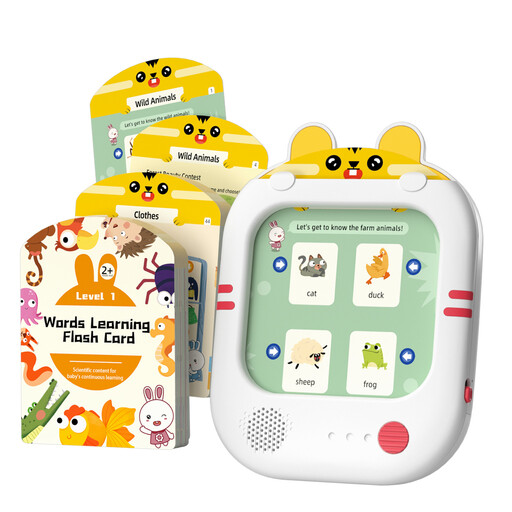
alilo Kids Learning Tablet for Toddlers 3-5
Why This Fits Their Persona: Ideal for parents seeking a focused, screen-free tool to expand vocabulary and promote logical thinking. It offers a clear entry point into interactive learning.
With over 180 words and logic games, it provides structured content instead of random noises. The materials are designed for durability.
The combination of an interactive pen and 47 double-sided learning cards creates a comprehensive, self-contained learning system.
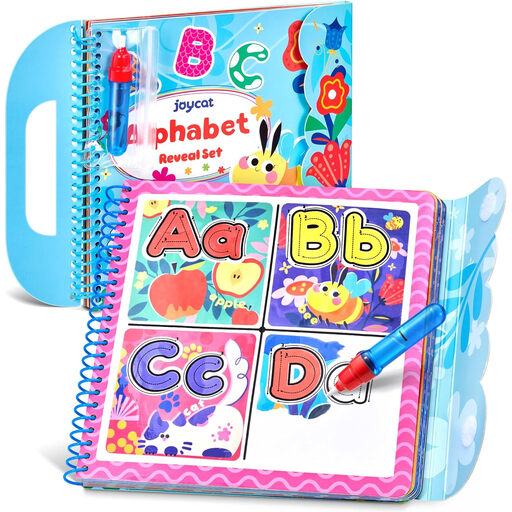
Alphabet Water Coloring Book for Toddlers 3-5
Why This Fits Their Persona: Perfect for children who love creative activities but whose parents want to avoid the mess of paints and markers. Ideal for travel and on-the-go fun.
It's reusable and works only with water, eliminating the cost and waste of disposable craft supplies. The cardboard is designed for repeated use.
Combines mess-free creativity with early literacy by tracing letters and matching words.
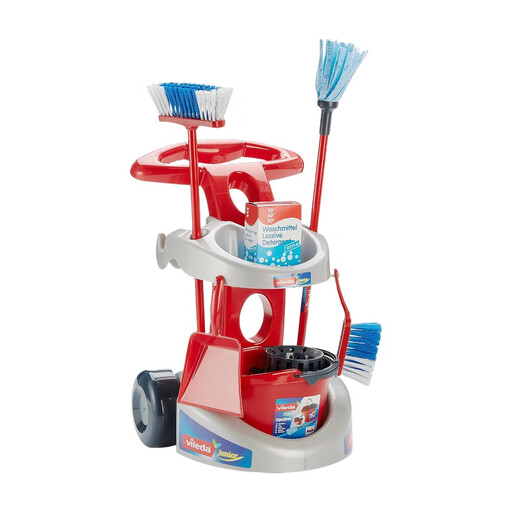
Theo Klein 6721 Vileda Cleaning Trolley
Why This Fits Their Persona: For children who learn by imitating adults and enjoy practical role-playing. Encourages active participation in family routines.
This is a tangible, sturdy toy that promotes motor skills and imagination, unlike digital games that simulate similar tasks without physical interaction.
Encourages role-playing and the development of motor skills through realistic accessories like a mop, broom, and bucket.
Looking for more options?
We have compiled a complete, up-to-date list of products that fully meet these strict selection criteria and German safety regulations.
Frequently Asked Questions (FAQ)
At what age is a learning tablet suitable for toddlers?
Most of these products are designed as learning toys for ages 3 and up. At this age, children begin to understand more complex concepts, and their fine motor skills are developed enough to, for example, handle an interactive pen. However, it is important to check the manufacturer's specific age recommendation and base the decision on the child's individual developmental stage.
How do I care for electronic learning toys and their cards?
Cleaning should always be done carefully to avoid damaging the electronics. Wipe the device's plastic housing with a soft, dry cloth. Absolutely avoid water, liquid cleaners, or abrasive materials. The learning cards can also be gently dusted with a dry cloth. Store the toy in a cool, dry place away from direct sunlight.
What type of power supply is needed?
The power supply varies by product. Many modern devices, like the alilo learning tablet, are equipped with a rechargeable battery and are conveniently charged via an included USB-C cable. Other toys may require standard batteries (e.g., AA or AAA). You will always find this information in the product details. Rechargeable models are often more practical and cost-effective in the long run.