
Tempered Glass Screen Protector Buyer's Guide
By Joybuy Product Recommendation Officer, July 28, 2026
A new smartphone like the Samsung Galaxy S25 or the iPhone 17 is a significant investment. The thought of a scratch on its pristine display—or worse, a crack after an unfortunate drop—is a nightmare for any owner. A high-quality tempered glass or protective film seems like the logical solution. But the market is flooded with products whose marketing promises often obscure more than they clarify.
Before you make a decision, it's crucial to understand the most common pitfalls that can lead to the wrong choice and unnecessary expense.
The 3 Most Common Traps When Buying a Screen Protector
-
The Myth of Indestructible "9H Hardness": Nearly every manufacturer advertises a 9H hardness rating. This creates the impression of extreme durability, comparable to diamonds. In reality, this value refers to the pencil hardness scale, not the Mohs scale of mineral hardness. A 9H tempered glass is highly scratch-resistant against everyday objects like keys or coins, but it is not unbreakable. A hard impact at the wrong angle can still shatter it.
-
"Full Cover" Protection That Isn't Compatible with Cases: A full-coverscreen protector that covers the display from edge to edge sounds ideal. The reality is often different. Many of these protectors are not case-friendly. As soon as a protective case is installed, its edges press against the glass, lifting it at the sides and causing bubbles or peeling.
-
The "Bubble-Free" Guarantee and the Reality of Installation: The promise of a simple, bubble-free application is a key selling point. In practice, this often fails due to low-quality accessories or imprecise instructions. Dust particles trapped under the film or a crooked alignment lead to unsightly air bubbles that are nearly impossible to remove.
What Really Matters: The Decisive Features of a Screen Protector
To avoid these problems, you should focus on objective product features. Three parameters are crucial for selecting the right protection.
Material and Hardness: Glass, Hybrid, or Film?
The choice of material determines the level of protection and the user experience.
- Tempered Glass: Offers the highest scratch resistance (typically 9H hardness) and a feel that is closest to the original display. It is more rigid and can break upon a hard impact, but in doing so, it absorbs the energy and protects the actual screen.
- Flexible Hybrid Glass: A blend of glass and plastic. They are more pliable, don't shatter as easily as pure glass, and are often easier to apply to curved displays. Scratch resistance is generally good, but often not quite on par with tempered glass.
- TPU Films (Thermoplastic Polyurethane): These are classic protective films. They are very flexible, offer good protection against scratches, but only minimal protection against impacts. Some models have self-healing properties, where minor scratches disappear on their own.
Fit and Compatibility: Full Cover vs. Case-Friendly
The fit is critical, especially for devices with curved edges like the Samsung Galaxy S25 series.
- Full Cover: These protectors cover the entire front, including the curved edges. They offer a seamless look but require precise manufacturing to be case-friendly. Look for product descriptions that explicitly mention "Case-Friendly".
- Case-Friendly (2.5D): These screen protectors are cut slightly narrower, ending just before the edges of the display. This creates enough space for the lips of most protective cases and prevents the glass from lifting.
Special Features: Privacy Screens and Camera Protection
Depending on your usage profile, additional features can be useful.
- Privacy Screen: This special type of tempered glass contains a louvered layer that limits the viewing angle. The screen content is only clearly visible when viewed head-on, appearing black or heavily obscured from the side. Ideal for use on public transport or in the office.
- Camera Protector: The camera lenses on modern smartphones are complex and expensive to repair. A separate camera protector made of tempered glass shields the lenses from scratches without visibly affecting photo quality.
Recommendations for Various Needs
Based on these criteria, we have identified some products that represent a considered choice for specific user groups.
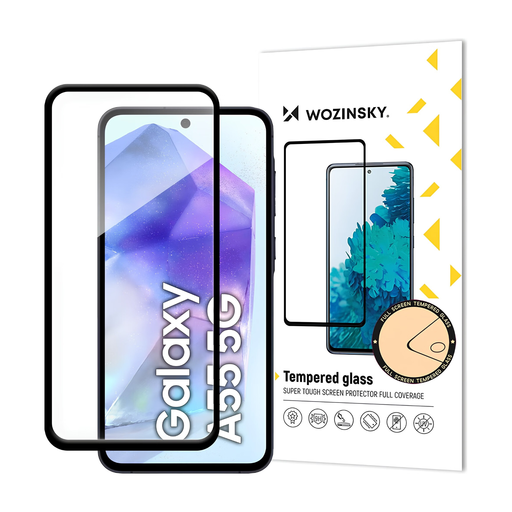
Wozinsky Super Strong Full Glue Tempered Glass for Samsung Galaxy S25 Full Screen
Why This Fits Their Persona: Ideal for owners of a new device like the Samsung Galaxy S25 who are looking for a straightforward and robust solution for daily protection against scratches and bumps.
The full-glue adhesion ensures a secure fit without air pockets at the edges and is designed to be case-friendly, which prevents lifting caused by a case.
Offers a 9H hardness rating for high scratch protection and comes with a complete installation kit to facilitate a bubble-free application.
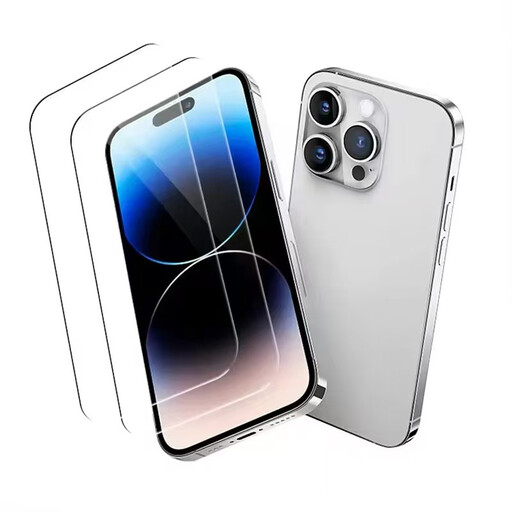
VoxorAI iPhone 17pro Max KP technology protection
Why This Fits Their Persona: Perfect for users of an iPhone 17 Pro Max who frequently use their device on public transport, in cafes, or in open-plan offices and want to protect sensitive data from prying eyes.
This is a dedicated privacy screen that effectively limits the viewing angle. The included applicator simplifies the often tricky, precise installation and minimises the risk of bubbles.
Combines an effective privacy filter with the resilience of 9H tempered glass. The oleophobic coating also reduces fingerprints.
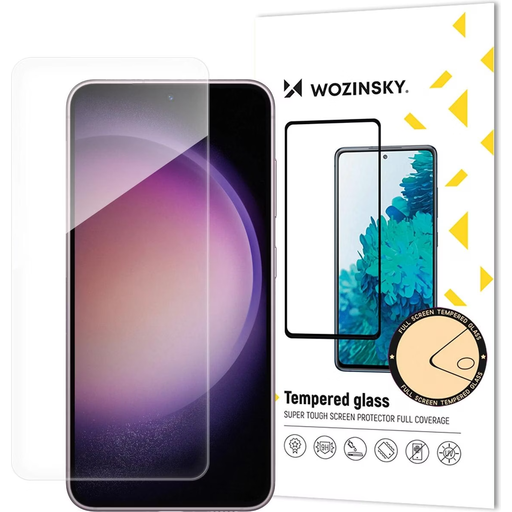
Wozinsky Full Cover Flexible Glass Hybrid Glass for Samsung Galaxy S25 Ultra
Why This Fits Their Persona: For users of premium devices with heavily curved edges, like the Samsung Galaxy S25 Ultra, who want a perfect fit that covers the entire screen without the rigidity of traditional glass.
Its flexible hybrid material adapts perfectly to curved edges, bypassing the problem of incompatible full-cover glass protectors. The adhesive-free application is simpler than with rigid glass.
Provides complete front coverage and high resistance to scratches. Its flexibility makes installation significantly easier.
Looking for More Options?
Explore our full range of screen protection solutions. We've curated a selection focused on precise fit, material quality, and easy installation.
Frequently Asked Questions (FAQ)
1. How long does a tempered glass screen protector last?
The lifespan of a tempered glass protector depends heavily on usage. With normal use and no major drops, a high-quality protector can last for several years. However, it is a wearable item. After a drop that causes the glass to crack or shatter, it should be replaced immediately, as its protective capability is no longer fully guaranteed.
2. Can you really install a tempered glass protector completely bubble-free?
Yes, a bubble-free application is possible, but it requires care. The key is in the preparation: work in a dust-free environment, thoroughly clean the display with the provided wipes and a dust-removal sticker. Align the glass precisely before laying it down. Many manufacturers now include installation frames, which make alignment significantly easier.
3. Does a tempered glass protector affect the touch function or the fingerprint sensor?
With high-quality, model-specific screen protectors, there should be no noticeable impairment. The glass is manufactured to be thin enough to maintain touch sensitivity. For smartphones with an in-display ultrasonic fingerprint sensor (like many Samsung models), it is crucial to choose a protector that is explicitly designated as compatible. Sometimes, it can help to re-register your fingerprint after applying the glass.