
Stainless Steel Kitchen Utensils: A Buyer's Guide to Smart Choices
As a Joybuy Product Recommendation Officer, I see the vast number of options available for kitchen utensils every day. Choosing the right stainless steel kitchen utensils can be the difference between years of cooking joy and short-lived frustration. However, the market is flooded with products whose quality is difficult to assess at first glance. This guide will help you identify the crucial features and avoid common purchasing pitfalls.
The 3 Most Common Problems with Low-Quality Utensils
Before we turn to the solutions, it's important to understand the most prevalent defects, which often only become apparent after a few weeks of use:
- Misleading Material Claims: A spoon advertised as "rust-proof" begins to show the first signs of rust after just a few dishwasher cycles. This is often due to the use of low-grade stainless steel alloys with low chromium or nickel content, making them susceptible to corrosion.
- Unstable Construction: The handle of a soup ladle loosens or breaks at the joint. Weak points are especially common in multi-part designs where the handle and the functional head are merely glued or inadequately riveted together.
- Hygiene Flaws from Poor Design: Food residue and dishwater collect in cracks and crevices between the handle and the spoon's head. Such areas are difficult to clean and can become a breeding ground for bacteria.
These problems not only lead to frustration but also to unnecessary expenses. A conscious choice based on objective criteria is therefore essential.
What Truly Matters in Material and Craftsmanship
To avoid the problems mentioned above, you should check three key aspects before buying. These parameters are crucial for the longevity and functionality of your new kitchen accessories.
Stainless Steel Quality: A Look at the Numbers
Not all stainless steel is created equal. For food contact and frequent cleaning, 304 stainless steel, also known as 18/10 stainless steel, has established itself as the standard. The "18/10" designation indicates that the alloy contains 18% chromium and 10% nickel.
- Chromium forms a passive protective layer that shields the material from rust and acids (e.g., from tomatoes or citrus fruits).
- Nickel further enhances corrosion resistance and gives the steel a subtle shine.
Look for this marking to ensure your utensil set maintains its quality even with intensive use.
Construction and Handle Design: Stability and Handling
A well-thought-out construction is just as important as the material. Favour models that are forged from a single piece. This seamless design eliminates weak points and prevents dirt from accumulating.
When it comes to handles, two factors are relevant:
- Ergonomics: The handle should fit comfortably in your hand and provide a secure grip, even when wet.
- Heat Protection: A heat-insulating handle is particularly important for utensils used with hot foods like soups or fried items. Hollow handles or handles made from materials like polypropylene can effectively reduce heat transfer.
Everyday Functionality: Dishwasher Safety and Storage
For easy and hygienic cleaning, being dishwasher-safe is essential. Always check the manufacturer's instructions, especially if the handle is made of a material other than stainless steel. A practical addition is a hanging loop at the end of the handle. It allows for space-saving and accessible storage on a kitchen rail.
Picks for Every Cooking Need
Based on the criteria above, we have selected a few products for specific user profiles.
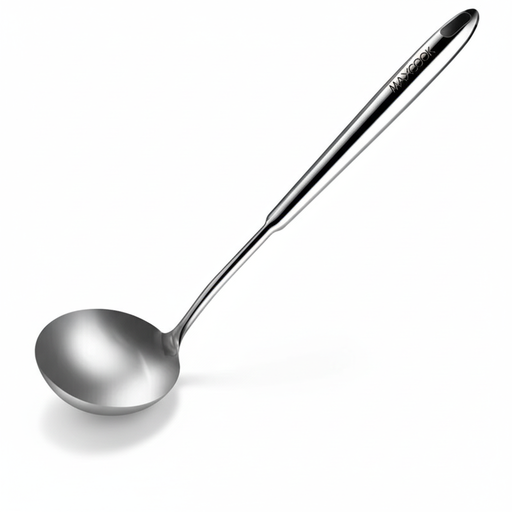
Maxcook Soup Ladle 36cm 304 Stainless Steel
Why This Fits Their Persona: Ideal for home chefs who enjoy preparing dishes in deep pots, woks, or for hot pot. The long handle provides safety from heat and splashes, while the robust construction stands up to intensive use.
The 304 stainless steel construction prevents rust. The hollow handle specifically addresses the problem of heat transfer and prevents burns, a typical weakness of simpler ladles.
Heat-reducing hollow handle; Smoothly polished edges to protect cookware; Hanging loop for easy storage.
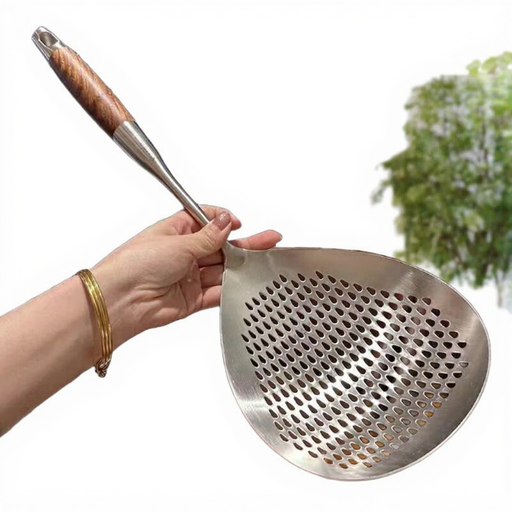
Large Stainless Steel Slotted Spoon
Why This Fits Their Persona: A versatile tool for everyday use. Perfect for lifting vegetables, dumplings, or fried foods from liquids. The robust, straightforward design makes this slotted spoon a durable companion for daily cooking tasks.
The single-piece construction avoids the typical weak point between the handle and the head, where dirt often collects or breakages occur. The high-quality stainless steel material is corrosion-resistant and easy to clean.
Generous bowl for efficient work; Long handle for a safe distance from hot liquids; Durable and rust-resistant stainless steel construction.
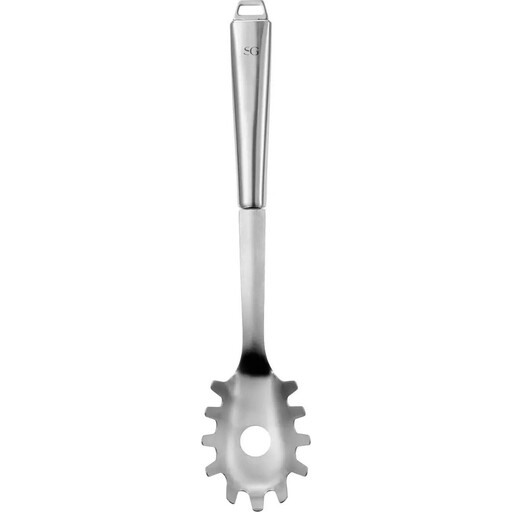
5five Stainless Steel Pasta Spoon
Why This Fits Their Persona: For anyone who regularly cooks pasta, a dedicated pasta spoon is essential. This model, with its serrated edges, is designed to securely lift long noodles like spaghetti or linguine from the pot without breaking them.
The stainless steel functional part is seamless, preventing starch residue from getting trapped in crevices—a clear plus for hygiene. The sturdy polypropylene handle is firmly attached to the stem, preventing wobbling or breaking.
Serrated edge for an optimal grip on pasta; Ergonomic handle for secure handling; Includes a hanging loop.
Looking for More Options?
We have compiled a complete, up-to-date list of products that fully meet these strict selection criteria and safety standards.
Frequently Asked Questions
What type of stainless steel is best for kitchen utensils?
For kitchen utensils, 304 stainless steel, also known as 18/10 stainless steel, is an excellent choice. The high content of chromium (18%) and nickel (10%) ensures outstanding resistance to rust and food acids. This material is durable, hygienic, and approved for food contact.
Are all stainless steel kitchen utensils dishwasher-safe?
Not necessarily. While the stainless steel itself is usually dishwasher-safe, handles made from other materials like wood or certain plastics can be sensitive to the high temperatures and harsh detergents in a dishwasher. Therefore, always check the manufacturer's care instructions. An explicit dishwasher-safe label is an important quality indicator.
How can I identify high-quality craftsmanship in a ladle or skimmer?
Look for a seamless design, ideally forged from a single piece of metal. The edges of the functional head should be smooth and cleanly polished to prevent scratching your cookware. The transition from the handle to the head should be sturdy and free of gaps. A solid, well-balanced handle is also an indicator of quality.