
Stainless Steel Food Containers: A Buyer's Guide to Avoiding Pitfalls
Finding the right stainless steel food containers can quickly become overwhelming. Many health- and eco-conscious households are choosing stainless steel as a durable, plastic-free alternative. However, not all products live up to their promises. As your Joybuy Product Recommendation Officer, I'll help you identify the key features and sidestep marketing traps, so you can make an informed decision.
The 3 Most Common Pitfalls When Buying Stainless Steel Containers
Before you invest, it's important to know the typical issues that often only become apparent after purchase.
- Misleading "Leak-Proof" Claims: Many containers are advertised as leak-proof, but fail in real-world tests with soups or sauces. The problem often lies in an inadequate sealing system. A simple plastic lid without a separate silicone gasket rarely provides the necessary protection for transport.
- Unspecified Material Quality: The term "stainless steel" alone isn't enough. Cheaper alloys can be more susceptible to corrosion from acidic foods (like tomato sauce) or salt. Without a specific grade like 304 stainless steel or 316, you might be buying a less durable product.
- Poor Practical Design: Some stainless steel boxes with lids cannot be nested when empty, wasting valuable kitchen cabinet space. Others have sharp edges or hard-to-clean corners where food residue can get trapped.
What Really Matters: The Key Selection Criteria
To avoid buyer's remorse, focus on these three objective parameters. They are the key to a functional and long-lasting product.
1. Stainless Steel Grade: 304 vs. 316
Material quality is the most important criterion for stainless steel food containers. The two most common types are:
- 304 Stainless Steel (also known as 18/8): This is the industry standard for kitchenware and most stainless steel storage containers. It's robust, rust-resistant, and food-grade. For everyday storage of most foods, this material is an excellent choice.
- 316/316L Stainless Steel: This grade contains added molybdenum, making it even more resistant to corrosion from salts and acids. If you regularly store highly salty or acidic foods (like salads with vinegar dressing or marinated dishes), 316 stainless steel offers superior longevity and is a worthwhile investment.
2. Lid Design and Seal Material
A good lid is crucial for functionality, especially for a stainless steel lunch box that will be transported. Look for these features:
- Gasket: A removable silicone gasket is the key to a truly leak-proof seal. Silicone is flexible, durable, and temperature-resistant. Lids without a separate gasket are usually only suitable for solid, dry foods.
- Lid Material: The lids themselves are often made of BPA-free plastic (e.g., PP - Polypropylene) or also stainless steel. Plastic lids are often lighter and allow for a better seal due to their flexibility. Stainless steel lids offer a completely plastic-free solution but are often not 100% leak-proof.
3. Form Factor and Functionality
The practical aspects will determine how often you'll actually use your containers:
- Nestability: Check if the containers can be nested inside one another to save space.
- Dishwasher-Safe: Most stainless steel containers are dishwasher-safe. For lids with silicone gaskets, hand washing is often recommended to extend the life of the seal.
- Freezer-Safe: Stainless steel is ideal for freezing food. The containers are robust and do not absorb odours.
Recommended Picks for Different Needs
Here are some product recommendations tailored to specific user profiles that meet the criteria mentioned above.
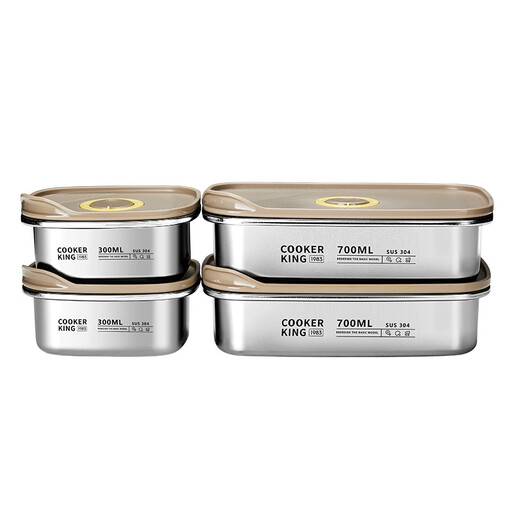
COOKER KING Food Storage Container Set, 4-Piece, 304 Stainless Steel
Why it's a great fit: Ideal for anyone looking to switch their kitchen from plastic to stainless steel. With two different sizes, the set provides a solid starter kit for storing leftovers or dry goods.
The product description clearly specifies food-grade 304 stainless steel, avoiding vague material claims. The nestable design solves the problem of space-consuming storage.
Excellent value for a 4-piece set. The rust-resistant and easy-to-clean surface is perfect for daily use.
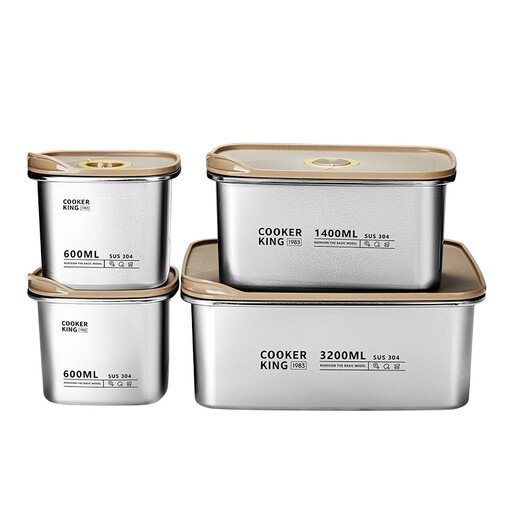
COOKER KING Bento Box Set, 4-Piece, Leak-Proof
Why it's a great fit: This set is designed as a meal prep container system. The different sizes (600 ml, 1400 ml, 3200 ml) are perfect for preparing and transporting entire meals, from salads to main courses.
It directly addresses the "leak-proof" myth: the combination of PP lids and silicone gaskets ensures a tight seal suitable for transporting liquids.
The versatility of sizes makes it an all-in-one solution for weekly meal prepping. The containers are stackable, saving space in the fridge and your bag.

Maxcook Food Storage Container Set, 3-Piece, 316 Stainless Steel
Why it's a great fit: For users who demand the highest standards in material and durability. Ideal for storing acidic and salty foods, or for anyone seeking a long-term, no-compromise solution.
This set goes beyond the standard by explicitly using 316 stainless steel. This bypasses the pitfall of unspecified material claims and offers demonstrably higher corrosion resistance.
The superior material quality ensures maximum hygiene and longevity. The containers are freezer- and dishwasher-safe, making them an extremely robust and low-maintenance companion.
Looking for More Options?
We've compiled a complete, up-to-date list of products that fully meet these strict selection criteria and German safety regulations.
Frequently Asked Questions (FAQ)
1. Are stainless steel food containers microwave-safe? No, metal should never be placed in a microwave, as this can cause arcing and severely damage the appliance. To heat the contents, transfer them to a microwave-safe plate or bowl.
2. What is the best way to clean stainless steel boxes with lids to ensure their longevity? The stainless steel containers themselves are generally dishwasher-safe. To preserve the elasticity and seal of the silicone gaskets in the lids, it is recommended to wash the lids by hand with mild dish soap. Dry all parts completely before storing to prevent water spots.
3. Can odours or stains stick to stainless steel? One of the major advantages of stainless steel over plastic is its non-porous surface. This makes it extremely resistant to absorbing odours, flavours, and stains, even from strongly coloured foods like curry or beetroot.