
Soundbar Buyer’s Guide: How to Find the Right TV Speaker
Modern TVs offer impressive picture quality, but the sound often can't keep up with the visual experience. Their slim design leaves little room for powerful speakers, resulting in thin and underwhelming audio. A soundbar is an effective and space-saving solution to significantly upgrade your TV's sound.
This guide is here to help. It explains the key technical features and presents a selection of models for different needs and budgets, so you can make an informed decision for your home cinema system.
What to Look for When Buying a Soundbar
The market for TV speakers is diverse. To find the right device for you, there are a few technical aspects to consider.
1. Channel System and Subwoofer: The Foundation of Great Sound
Number combinations like 2.1 or 3.1.2 describe the speaker configuration. The first digit represents the number of main channels (left, right, centre), the second indicates the number of subwoofers, and the third (if present) refers to the number of up-firing speakers for 3D sound.
- 2.1 Systems: Consist of two main channels and one subwoofer. They are a solid entry-point and significantly improve sound depth compared to built-in TV speakers.
- Systems with a Centre Channel (e.g., 3.1): A dedicated centre speaker greatly enhances dialogue clarity, which is especially beneficial for dialogue-heavy films and series.
- Soundbar with Subwoofer: An external subwoofer delivers noticeably more powerful and deeper bass than a woofer integrated into the soundbar. This is often crucial for an immersive film and gaming experience. However, models with an integrated subwoofer are more compact and easier to install.
2. Immersive Sound: Dolby Atmos and DTS:X
For a true cinema experience at home, 3D audio formats like Dolby Atmos and DTS:X are key. A Dolby Atmos soundbar features additional, up-firing speakers. These project sound towards the ceiling, from where it reflects down to the listener. This creates the impression that sound is coming not just from the front, but also from above—ideal for effects like rain or helicopters flying overhead. This elevates a simple setup to the level of a modern home cinema system.
3. Connectivity: Wired and Wireless
The connectivity options determine how flexibly the soundbar can be integrated into your existing setup.
- HDMI ARC/eARC: The standard for connecting to your TV. A single HDMI cable transmits audio signals from the TV to the soundbar. eARC (enhanced Audio Return Channel) offers higher bandwidth and is necessary for the lossless transmission of formats like Dolby Atmos.
- Wi-Fi Soundbar: A Wi-Fi connection enables music streaming via services like Spotify Connect or AirPlay 2 and allows for integration into multi-room systems. It also makes it easy to install software updates.
- Bluetooth: Convenient for quick and easy music playback from a smartphone or tablet.
Top Soundbar Recommendations
Here is a selection of models that cover a range of needs—from compact all-in-one solutions to high-performance systems for home cinema enthusiasts.
1. ULTIMEA Poseidon M20: Compact All-in-One System
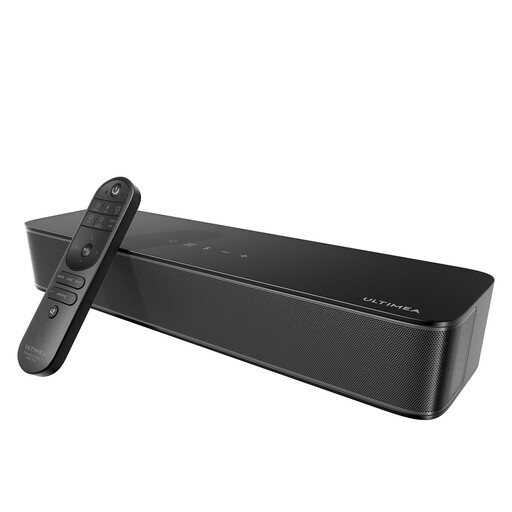
The ULTIMEA Poseidon M20 is designed as a straightforward plug-and-play solution that improves TV sound without much fuss.
- Why it stands out: This device combines speakers and an integrated subwoofer into a single unit. A particular highlight is the app control, which allows for detailed sound customisation via a 10-band equalizer—a rare feature in this price range.
- Advantages:
- All-in-One Design: Compact build with an integrated 76mm subwoofer and side bass reflex ports.
- BassMX Technology: This Ultimea-developed technology is designed to deliver deeper, customisable bass.
- Versatile Connectivity: Offers optical, AUX, USB, and Bluetooth 5.4 connections. A SUB-OUT port also allows for optional expansion with an active subwoofer.
- App Control: Allows for the selection of EQ modes and fine-tuning of the sound.
- Who it's for: Budget-conscious users and beginners looking for a simple and compact sound upgrade for small to medium-sized rooms, who also value individual sound customisation.
2. Samsung Q-Series HW-QS710GF: Immersive 3D Audio
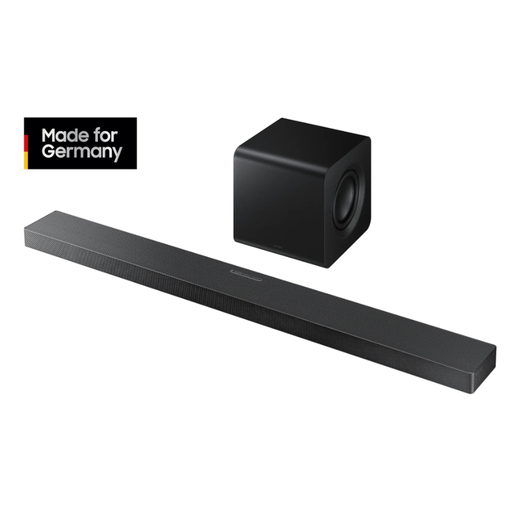
The Samsung HW-QS710GF from the Q-Series is a high-performance system designed for an immersive home cinema experience.
- Why it stands out: This model offers a true 3.1.2-channel system with up-firing speakers for wireless Dolby Atmos and DTS:X. The seamless integration into the Samsung ecosystem, through features like Q-Symphony, creates a particularly harmonious soundscape when paired with a compatible Samsung TV.
- Advantages:
- True 3D Sound: Eight integrated speakers and a wireless 6.5-inch subwoofer produce room-filling surround sound.
- Q-Symphony: The TV speakers and soundbar play in sync to create a wider soundstage.
- SpaceFit Sound Pro: The audio playback is automatically adapted to your room's acoustics.
- Comprehensive Connectivity: Supports dual-band Wi-Fi, Bluetooth 5.2, AirPlay 2, Chromecast, and Spotify Connect.
- Who it's for: Home cinema enthusiasts and gamers looking for a powerful system with convincing 3D sound. It's especially advantageous for owners of a compatible Samsung TV to unlock the full potential of Q-Symphony.
3. Apple HomePod (2nd Generation): The Smart All-Rounder

The Apple HomePod is more than just a speaker—it's a smart speaker for TV and a central hub for your smart home, all while delivering high-quality sound.
- Why it stands out: The HomePod is deeply integrated into the Apple ecosystem and features advanced computational audio. It analyses its position in the room and adjusts the sound in real-time to create an immersive 360° listening experience. When paired with an Apple TV 4K, a HomePod (or a stereo pair) can function as the primary audio system and play Dolby Atmos.
- Advantages:
- High-Quality 360° Sound: A high-excursion woofer and five tweeters ensure detailed, room-filling sound.
- Seamless Apple Integration: Easy setup and control via the Home app, Siri voice commands, and AirPlay 2.
- Stereo Pair Functionality: Two HomePods can be linked as a stereo pair to create an even wider and more nuanced soundstage.
- Smart Home Hub: Serves as a control hub for HomeKit-compatible accessories.
- Who it's for: Users who are already invested in the Apple ecosystem and are looking for a versatile speaker that serves as both a music streaming device and a high-quality TV audio solution in conjunction with an Apple TV.
To the Apple HomePod (2nd Gen.)
Looking for a Different Solution?
For some home cinema setups, especially in larger rooms or for those with audiophile demands, a system of separate components can be the more flexible choice. If you want to customise your system, passive speakers combined with an AV receiver could be an interesting alternative.
Frequently Asked Questions (FAQ)
1. Do I need a soundbar with a subwoofer? A subwoofer is responsible for reproducing low frequencies (bass). For watching movies with lots of effects or listening to bass-heavy music, a soundbar with a subwoofer is highly recommended as it provides a much more intense and full-bodied sound experience. For primarily dialogue-driven content like news broadcasts, a soundbar without a separate subwoofer may be sufficient.
2. What is the difference between HDMI ARC and eARC? Both technologies allow sound to be transmitted from the TV to the soundbar via an HDMI cable. The main difference lies in the bandwidth. eARC (enhanced Audio Return Channel) has significantly higher bandwidth and can transmit uncompressed, high-resolution audio formats like Dolby TrueHD and DTS-HD Master Audio, which are required for the full quality of Dolby Atmos. ARC is limited to compressed audio formats.