
Solar Garden Lights: How to Avoid 3 Common Buying Mistakes
Solar lights promise a simple and cost-effective way to bathe your garden, balcony, or patio in an atmospheric glow. With no wiring required and no extra electricity costs, they are an attractive solution for many homeowners. But the reality is often different: lights that fail after a single summer, a disappointingly weak brightness, or water damage after the first heavy rain.
To help you make an informed decision when choosing your next solar garden lighting, we'll show you the three most common pitfalls and which technical features you should look out for.
The Hidden Flaws: Why Cheap Solar Lights Often Fail
Many products on the market lure you in with attractive pictures but disappoint in practice. Pay attention to these three critical points to avoid a bad purchase:
- Misleading Water Resistance Claims: Inadequate sealing is a common problem. A light that is only described as "weatherproof" without specifying a specific IP rating often won't stand up to typical weather conditions. Moisture ingress quickly leads to corrosion and complete failure.
- Inferior Batteries and Solar Panels: The runtime of a light depends directly on the quality of the battery and the solar module. Many budget-friendly models use small, low-capacity (mAh) batteries and inefficient amorphous solar panels that can barely store enough energy for a full night, even on sunny days. The result is a light that goes out after just a few hours.
- Focus on Design Over Function: Technology is often sacrificed, especially with decorative lights. A visually appealing decorative garden light is useless if it only produces a faint, barely perceptible glow. The number of LEDs alone is no guarantee of brightness.
Key Parameters for a Reliable Choice
To avoid these pitfalls, you should check three technical specifications before buying. These provide objective information about the quality and longevity of LED solar lights.
1. The IP Rating: The Decisive Value for Longevity
The IP (Ingress Protection) rating indicates how well an electrical device is protected against the ingress of foreign objects and water. For waterproof outdoor lighting, two values are particularly relevant:
- IP44: Protection against splashing water from all directions. This is the minimum standard for lights placed in sheltered locations, such as under an eave, on a covered balcony with solar lights, or between plants.
- IP65: Complete protection against contact and protection against water jets from any angle. These lights are significantly more robust and are suitable for unprotected locations exposed to heavy rain.
2. Battery Capacity (mAh) and Solar Panel Type
The performance of a solar light is largely determined by the interplay between the battery and the solar panel.
- Battery Capacity: Specified in milliampere-hours (mAh), it determines how long the light can shine on a full charge. A NiMH (Nickel-Metal Hydride) battery with a capacity of 200 mAh or more is a good benchmark for a reliable runtime of 8 hours or more.
- Solar Panel: Polycrystalline silicon panels generally have higher efficiency than amorphous panels, especially in diffuse light on cloudy days. They ensure faster and more reliable charging.
3. Light Colour (Kelvin) and Luminous Flux (Lumen)
The atmosphere a light creates depends on its light colour.
- Warm White (approx. 2700 K - 3000 K): Creates a cosy, inviting atmosphere. Ideal for seating areas, patios, and decorative outdoor solar string lights.
- Cool White (approx. 6000 K - 6500 K): Appears brighter and more functional. Well-suited for solar path lights to avoid tripping hazards and ensure clear visibility.
- RGB (Colour-Changing):Colour-changing solar lights offer dynamic effects and are a great choice for parties or as playful garden decoration lights.
Product Picks for Different Applications
Based on these objective criteria, we have identified some products that are well-suited for specific needs and locations in gardens and on balconies.
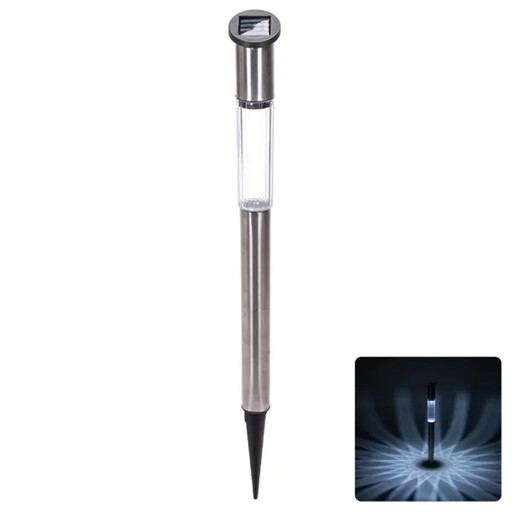
Aigostar Solar Lawn Light for Pathways, Stainless Steel
Why it's a good fit: Ideal for users seeking functional and reliable lighting for garden paths or driveways. The cool white light (6500 K) ensures clear visibility and safety. The stainless steel housing is robust and weather-resistant.
The light has a clearly declared IP44 rating, which is sufficient for use as a path light. The polycrystalline solar panel ensures efficient charging.
Focused on function: Provides bright, clear light for orientation. According to the manufacturer, the lifespan is 15,000 hours.
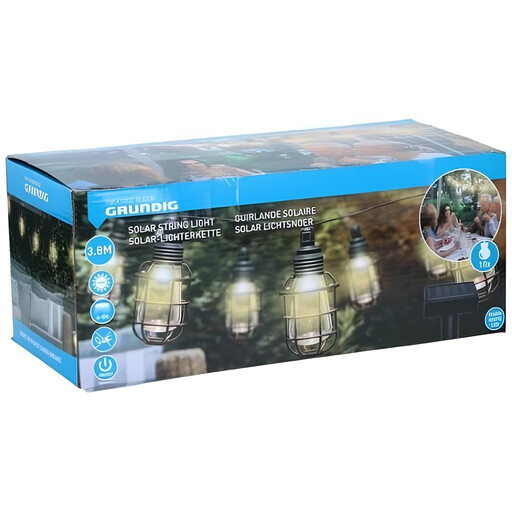
Solar String Light with 10 Lanterns
Why it's a good fit: Perfect for anyone wanting to create a cosy atmosphere on the balcony, patio, or for garden parties. The warm light from the lanterns creates an inviting mood.
The product is explicitly designed to be weather-resistant for outdoor use. The expectation is clearly set for decorative ambient light, not bright illumination.
Easy to use with automatic on/off via a light sensor and straightforward installation. Ideal as an outdoor solar string light.
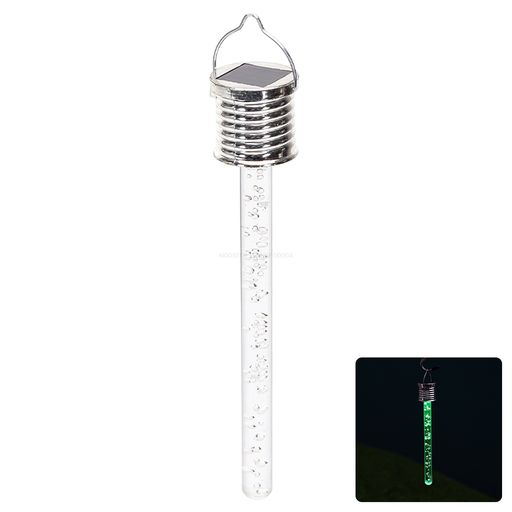
Aigostar Solar Ambient Light with RGB Colour-Change
Why it's a good fit: For those who want to liven up their garden with dynamic colours. The "Bubble Stick" design and RGB colour-changing function make it a real eye-catcher in flowerbeds or pots.
The IP44 certification is sufficient for its intended use as a decorative accent light. The focus is clearly on the visual effect, not high brightness, which keeps expectations realistic.
As a colour-changing solar light, it brings playful and vibrant lighting effects to the garden without requiring any manual control.
Looking for more options?
We have compiled a full, up-to-date list of products that fully meet these strict selection criteria and safety regulations.
Frequently Asked Questions about Solar Lights
Do solar lights work in winter or on cloudy days?
Yes, solar lights do work in less-than-optimal light conditions, but with limitations. On cloudy days or during the shorter days of winter, the charging performance of the solar panel is reduced. This results in a shorter runtime at night. To maximise performance, you should place the lights in a location that receives as much direct sunlight as possible and regularly clean the solar panel of dirt or snow.
What does the IP rating mean for solar garden lighting?
The IP rating classifies how well a light's housing is protected against the ingress of dust and water. The first digit represents protection against foreign objects (like dust), and the second represents protection against water. For outdoor use, IP44 (protection against splashing water) is a common minimum standard. For locations exposed to heavy rain, IP65 (protection against water jets) offers greater security and longevity.
What is the lifespan of LED solar lights?
The lifespan of a solar light is determined by two main components: the LED and the battery. The LEDs themselves are very durable, often with a manufacturer-stated lifespan of 15,000 hours or more. The limiting factor is usually the rechargeable battery. Depending on its quality and the intensity of use, the battery's capacity can diminish after 1 to 3 years, leading to a shorter runtime. However, on many models, the battery can be easily and inexpensively replaced.