
Choosing Solar Garden Lighting: What Matters for Run Time, Weather Resistance and Installation
Solar garden lighting can illuminate paths, flower beds, balconies, patios and house walls without any power cables. Yet not every solar light suits every outdoor space. More often than not, it’s not the design but location, IP rating, light colour and battery capacity that determine whether the lighting can be used effectively over the long term.
Common Pitfalls When Buying
1. IP rating is mistaken for full waterproofing
A rating such as IP44 describes protection against solid objects and splashing water. It does not mean a light can be left standing in water or fully submerged. For sheltered paths, flower beds and lawns, IP44 can be suitable, provided no standing water collects there.
For more exposed areas, such as open fences or under trees, weather-resistant solar lights with IP65 may be a better fit for the location. Even these should be installed according to the manufacturer’s instructions.
2. The stated run time does not apply in all conditions
Claims such as 8 to 12 hours refer to suitable charging conditions. In the British autumn and winter, overcast skies, short days, shading and dirty solar panels all reduce charging performance. A solar garden light should therefore receive several hours of direct sunlight whenever possible.
A common mistake is installing it under an overhang or near tall shrubs. The design may still be visible, but the battery may not get enough energy.
3. Brightness and light colour are not chosen according to purpose
Solar lights for the garden are often intended for orientation or decoration, not for fully illuminating large areas. Warm white light around 2700 Kelvin feels more subtle in seating areas and along paths. Cool white light around 6500 Kelvin appears more clinical and offers greater contrast. RGB solar lights, on the other hand, change colour and are best suited for decorative accents.
The Most Important Buying Criteria
IP rating and location
Before buying, check whether the stated IP rating matches the location:
- IP44: Protection against splashing water; suitable for many sheltered outdoor areas, but not for submersion.
- IP65: Higher protection against dust and water jets; often more practical for string lights and more exposed areas.
- Temperature range: Some products are designed for a range of, for example, -10 to 50 °C. The specification should match the intended use.
The IP rating does not replace correct installation. Solar panels and lights should not sit in puddles, and damaged housings should not be used.
Charging time, battery and run time
Pay attention to the combination of charging time, battery type and stated run time. The products featured here use, among others, Ni-MH batteries. The actual run time depends on sunlight, panel orientation, ambient temperature and battery age.
Before first use, the on/off switch – if present – should be activated according to the instructions. The solar panel should be kept free of leaves and dust. A soft, dry cloth is usually sufficient for cleaning.
Installation, dimensions and light effect
For paths, solar path lights and solar ground lights with a ground spike are ideal. Check whether the soil is soft enough for installation and whether the light will be placed somewhere it could be damaged when mowing the lawn.
Solar string lights offer more flexibility but need a suitable spot for the separate panel. Solar wall lights, on the other hand, must be securely fixed to a house wall, gate or similar surface. For seating areas, solar lights with warm white light are often more suitable than very cool light colours.
Recommendations by Usage Profile
The following selection groups products by real-life situations. The technical details correspond to the respective product descriptions.
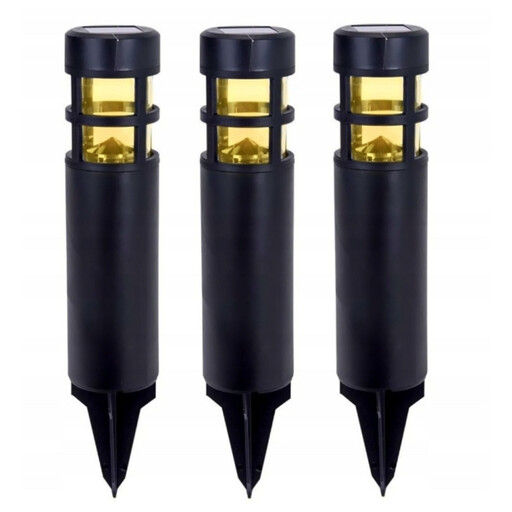
SOLAR LIGHT SET OF 3PCS
Why this product fits the profile: The set of three solar lights is designed for simple marking along paths, flower beds or property boundaries and requires no external power connection.
Automatic activation at dusk reduces the need for manual operation. For sufficient run time, the location must still receive direct sunlight.
Three lights per set; cable-free installation and automatic activation in the dark.
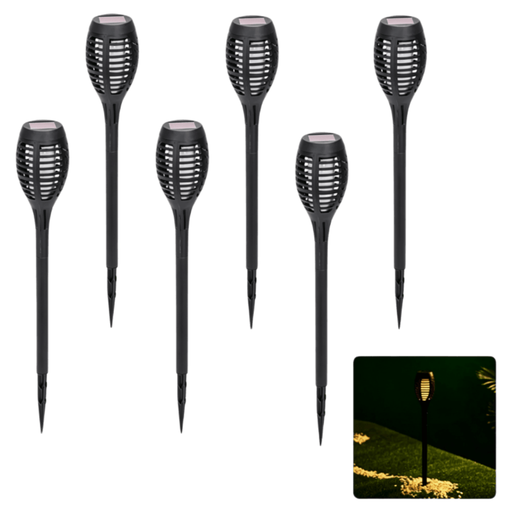
Aigostar Solar Garden Lights Torch Design Flickering Light 2700K IP44 Garden Path Lighting 6-Pack
Why this product fits the profile: The six lights combine a flame effect with warm white light at 2700 K and are suitable for paths, lawns and patio areas.
The product description clearly states charging time, run time and IP44 rating. This makes it easier to assess the location and expected usage.
According to product specifications: 4–6 hours charging time, 8–12 hours run time and a Ni-MH battery with 200 mAh.
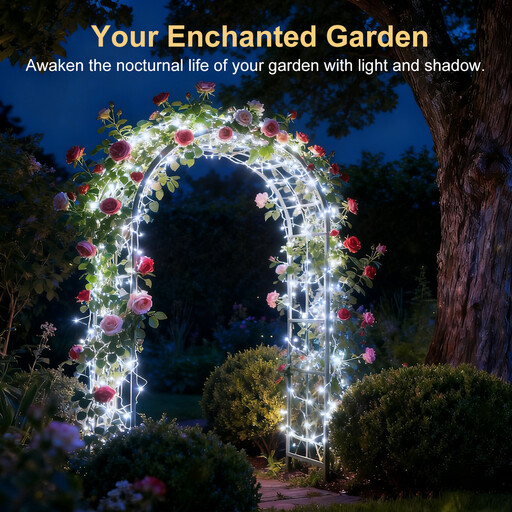
VIVREAL 2PCS Solar Copper Wire String Lights – 8M
Why this product fits the profile: Two solar string lights, each 8 metres long with 80 LEDs, can be flexibly arranged along railings, trees, fences or on balconies.
The IP65 rating and separate panel positioning help with planning for more exposed outdoor areas. The panel must be placed in a sunny, unobstructed spot.
Eight light modes, memory function, 6–8 hours charging time and, according to the product specification, 8–14 hours of illumination.
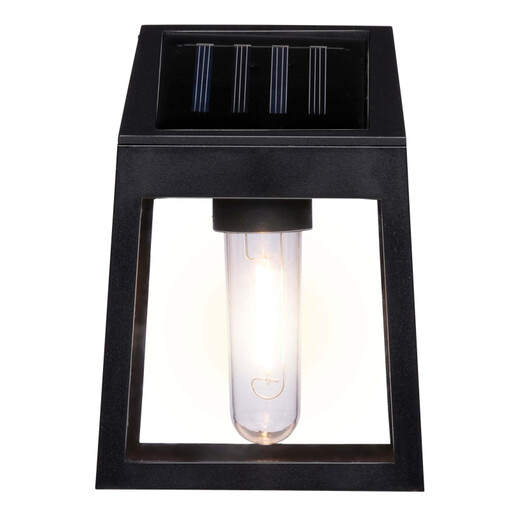
Solar Light Wall Warm White
Why this product fits the profile: The compact solar wall light is designed for exterior walls, gates and entrance areas where no wiring is to be installed.
The intended wall mounting prevents a ground light from accidentally sitting in the walkway on a balcony or patio.
Warm white light, integrated solar panel and integrated AA Ni-MH battery with 600 mAh according to the product description.
Installation and Maintenance in Practice
- Choose a spot with as much direct sunlight as possible and little shade.
- Charge the product before first use according to the instructions.
- Point the panel upwards or towards the sun.
- Check that ground spikes are firmly in place before leaving the light permanently in a flower bed or lawn.
- Clean the panel regularly with a soft cloth.
- Remove the light if damaged and dispose of the battery and electronics according to local regulations.
In rented properties, solar garden lights and solar string lights are practical because no permanent electrical installation is required. For solar wall lights, check before installation whether drilling is permitted.
Looking for more options?
We have put together a complete, regularly updated list of products that fully meet these strict selection criteria and the safety regulations in force in the EU.
Frequently Asked Questions About Solar Garden Lighting
How long does a solar light need to charge in the sun?
That depends on the panel, battery and weather. For the products mentioned, the manufacturer specifications are, for example, 4–6 hours or 6–8 hours of direct sunlight. In winter or when shaded, the charging time can be longer.
How long does a solar garden light last?
The run time is often stated as around 8–12 hours, and for some solar string lights as 8–14 hours. These values depend on the charging conditions. The battery life is also limited and can be shortened by extreme cold, heat or persistently insufficient charging.
Do solar lights use electricity?
During operation, they do not need to be connected to the mains. The solar panel charges the integrated battery during the day. The ongoing energy costs from the grid are therefore low; however, the purchase price, battery wear and possible replacement parts should still be considered when looking at the overall cost.