
Smartwatches with Long Battery Life: A Practical Buying Guide
A smartwatch that needs daily charging often fails to serve its purpose as a practical everyday companion. For many users, the search for a smartwatch with long battery life is therefore the most critical factor. However, the market is flooded with marketing promises that often don't hold up in practice. This guide will help you separate the wheat from the chaff and correctly interpret technical specifications to find a model that truly meets your needs.
Before we look at specific recommendations, let's highlight the most common pitfalls that can lead to a purchase you'll regret:
- Unrealistic Battery Life Claims: Many manufacturers advertise "standby times" of several weeks or even months. However, this value is measured without active use, no Bluetooth connection, and with sensors disabled. The actual usage time in daily life—with notifications, heart rate monitoring, and occasional GPS use—is often 80–90% lower.
- Hidden Feature Compromises: An impressive battery life can sometimes be achieved at the cost of inferior components. A dim, hard-to-read display, a sluggish processor, or inaccurate heart rate sensors are common drawbacks in models optimised solely for longevity.
- Misleading "Waterproof" Claims: It's easy to call a fitness watch waterproof, but the certification is what matters. An IP68 rating typically only protects against sweat, rain, and brief immersion in shallow water. For swim training, an ATM classification (e.g., 5 ATM) is required, which accounts for pressure at greater water depths.
What Really Matters When Making Your Choice
To make an informed decision, you should focus on a few crucial technical parameters. These will give you an objective basis for comparing different models.
Battery Capacity and Real-World Usage
Battery capacity is specified in milliampere-hours (mAh). A higher value is generally better, but it's not the only factor. The efficiency of the processor and the type of display (AMOLED vs. LCD) play an equally important role. Pay attention to the manufacturer's stated typical usage time and check which features (e.g., Always-On Display, continuous heart rate monitoring, GPS) were included in that estimate. A smartwatch with a phone function via Bluetooth will naturally consume more power with frequent calls. A good heart rate monitor with GPS will also have a significantly shorter battery life with active GPS tracking than in normal watch mode.
Water Resistance: IP Rating vs. ATM Specification
The choice depends on your usage profile.
- IP68: Sufficient for everyday use. The watch is dust-tight and protected against continuous immersion in clear water (usually up to 1.5 metres for 30 minutes). Showering and washing hands are not an issue.
- 5 ATM: Necessary for swimmers. This classification means the watch can withstand pressure equivalent to a water depth of 50 metres. It is suitable for swimming in pools or the ocean.
Compatibility and Software Ecosystem
Ensure the watch is fully compatible with your smartphone. Nearly every modern sports watch for Android and iOS works with both systems, but the full functionality of the companion app is crucial. A well-designed app that clearly presents your health and fitness data and offers reliable synchronisation is an essential part of the user experience.
Recommended Picks for Every User
Here are some models that, based on their objective features, are suitable for different requirement profiles.
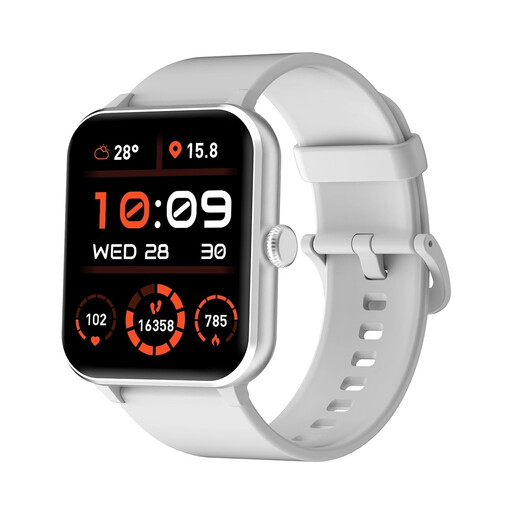
Blackview R50 Smartwatch
Why This Fits Their Persona: Ideal for users looking for an affordable smartwatch but who don't want to sacrifice core features like Bluetooth calls, notifications, and basic fitness tracking. It offers a solid overall package for getting started.
The model avoids the trap of unrealistic battery promises by providing a clear typical usage estimate of 5–7 days, which is a realistic figure for daily use.
Excellent value for money; over 100 sports modes; Bluetooth calling function; IP68 certification for everyday durability.
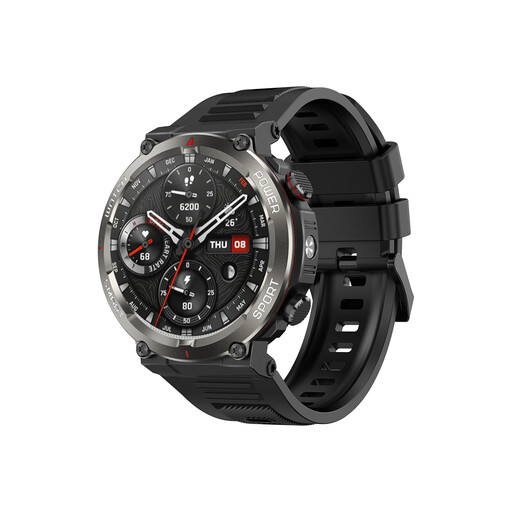
Blackview W50 Pro Smartwatch
Why This Fits Their Persona: Perfect for users whose top priority is battery life. Ideal for multi-day trips, hikes, or simply for those who want to minimise charging.
This model directly addresses the main criticism of battery life with an exceptionally high battery capacity of 960 mAh. The stated usage time of around 30 days is a clear statement against unrealistic standby figures.
Extremely high battery capacity; integrated LED torch and compass; robust construction with aluminium alloy.
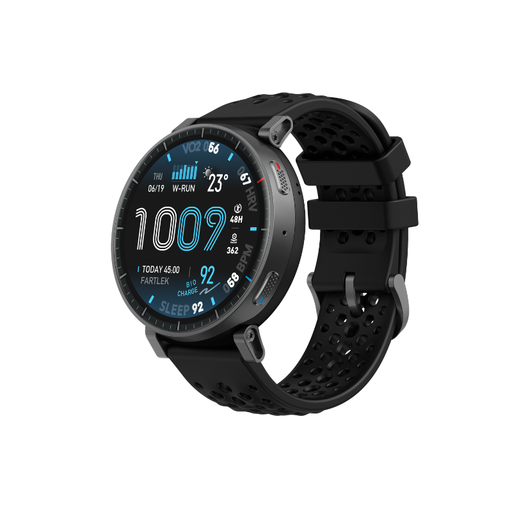
Amazfit Active Max
Why This Fits Their Persona: Offers a comprehensive package for athletes who need precise tracking. With integrated GPS, 5 ATM water resistance, and smart extra features like contactless payments, it's a powerful training partner.
This model goes beyond the basic IP68 standard, offering reliable 5 ATM water resistance for swim training. The integrated GPS works independently of the smartphone, providing precise route data without draining your phone's battery.
Integrated GPS; 5 ATM water resistance; NFC for contactless payments (Zepp Pay); bright AMOLED display; up to 25 days of battery life.
Frequently Asked Questions (FAQ)
1. How accurate is the heart rate monitoring on more affordable smartwatches?
The accuracy of optical heart rate sensors (photoplethysmography, PPG) has improved significantly in recent years, even on budget-friendly models. For everyday use and general fitness tracking, most current watches provide reliable data. However, discrepancies can occur during high-intensity interval training or for medical purposes. For the highest precision during sports, a chest strap is still recommended.
2. Can I make calls with any smartwatch that has a phone function without my phone nearby?
No, a distinction must be made here. Most smartwatches in this price range use Bluetooth Calling. This means the watch acts as a hands-free device for your connected smartphone, which must be within Bluetooth range (approx. 10 metres). Models with their own SIM card (eSIM), which allow for completely standalone calls, are typically much more expensive and have significantly shorter battery life.
3. What does an IP68 certification mean for my watch in practice?
An IP68 certification means the device is dust-tight and protected against the effects of continuous immersion in water under conditions specified by the manufacturer. In practice, this means washing your hands, heavy rain, or accidentally dropping it in water is not a problem. However, it is not designed for activities like swimming, diving, or water sports involving high water pressure. For that, you need a watch with an ATM rating.