
Smartwatch with health monitoring: how to compare features and avoid a poor purchase
A smartwatch with health monitoring can conveniently track steps, heart rate, sleep stages and sporting activities from your wrist. However, the choice can be confusing: terms such as “blood pressure monitoring”, “ECG” and “blood oxygen” suggest clinical precision, even though many models only provide indicative readings. Before buying, it is therefore worth checking the actual sensors, compatibility and usage instructions.
Common pitfalls when buying a health smartwatch
1. A health feature is not the same as a medical measurement
A smartwatch with blood pressure monitoring or smartwatch with ECG is no substitute for a blood pressure monitor, a medical examination or laboratory diagnostics. Depending on the model, body movement, how the watch is worn, skin contact and individual factors can affect the displayed reading.
A smartwatch with SpO2 monitoring generally also displays an indicative value determined optically. If symptoms are unusual or persist, the reading should be checked using suitable medical equipment and medical advice should be sought.
2. Long standby time is often confused with long battery life
A claim such as “up to 30 days on standby” does not automatically describe battery life when health monitoring, display use and notifications are active. The following details are more important:
- Operating time with monitoring features switched on
- Charging time and charging connector
- Power-saving mode
- Use of GPS, Bluetooth or eSIM
- Whether the battery can be replaced or is built in
A smartwatch with long battery life can be practical for sleep tracking and travelling. With frequent GPS use or the display permanently switched on, battery life is usually shorter than the standby figure.
3. Water protection is often interpreted too broadly
IP67, 5 ATM and water resistance to 50 metres are not the same thing. IP67 describes protection against temporary immersion under specified test conditions. This does not automatically mean that the watch is suitable for swimming.
With a waterproof smartwatch, you should therefore check the manufacturer's specific information. According to the product description, the HUAWEI WATCH 5 is protected to 5 ATM and intended for swimming, but not for diving, hot showers or use in a sauna. The VoxorAI GTL2 is listed as having IP67 protection; long-term use in water should not be assumed.
These technical specifications are crucial before buying
Sensors and measurement methods
A smartwatch with heart-rate monitor often uses optical sensors. These readings can be useful for tracking everyday trends and managing workouts, provided the watch sits snugly but comfortably on your wrist. An ECG, on the other hand, requires electrical contact and is usually activated by a specific touch or body position.
You should also check whether the function you want is actually available in Germany and with the app version you use. Information about blood pressure, blood sugar, uric acid or blood lipids should be understood as trend-based estimates unless medical approval and a suitable measurement method are stated.
Smartphone compatibility and app
A smartwatch for iPhone and Android should not merely claim compatibility with both systems in its product name. Important factors include:
- Supported iOS and Android versions
- Required app
- Language of the app and user manual
- Bluetooth version and range
- Availability of notifications, calls and health features
- Possible restrictions when used with a different operating system
According to the product information, the VoxorAI GTL2 supports iOS 9.0 or later and Android 5.0 or later. The HUAWEI WATCH 5 is compatible with iPhone and Android smartphones. The Apple Watch Series 12, on the other hand, requires an iPhone 11 or later running iOS 27 or later.
Sleep tracking and sports features
A sleep-tracking smartwatch should not only display how long you slept, but also explain which data is recorded and how often the watch needs charging. For sports enthusiasts, GPS, workout modes, step counting, distance, calorie tracking and notifications are also relevant. A sports watch with health features is particularly useful when activity tracking and health data are brought together in one app.
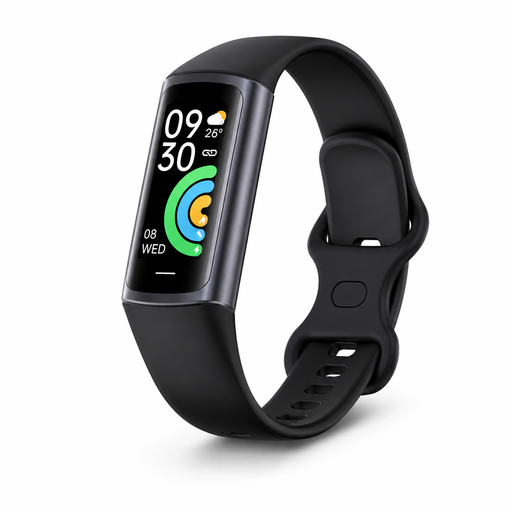
VoxorAI GTL2 Black Smart Watch/Bracelet
Why this product suits this profile: This model combines essential activity and health features with iOS and Android compatibility. It is suitable for people who want to monitor steps, sleep, heart rate and notifications in everyday life.
The product data gives separate figures for operating time and standby time: up to 7 days of operation and up to 30 days on standby. IP67 should not be confused with unrestricted suitability for swimming.
1.1-inch AMOLED display, Bluetooth 5.0, several sports modes and support for 13 languages.
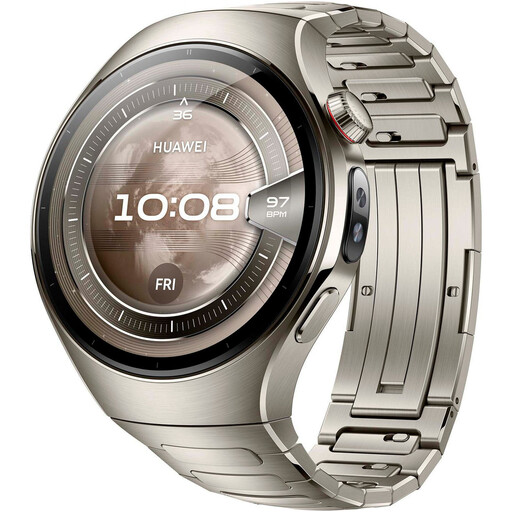
HUAWEI Watch 5 46mm (Rates-L29M) Titanium Strap
Why this product suits this profile: This model is aimed at people looking for premium materials, a high-quality display, mobile connectivity and an extensive range of sensors in one device.
The water-protection rating is 5 ATM; the restrictions covering diving, saunas and hot showers still apply. The stated battery life distinguishes between 168 hours of operation and a maximum of 264 hours.
Titanium case, 1.5-inch AMOLED display, ECG function, SpO2 monitoring, GPS, eSIM and compatibility with iOS and Android.
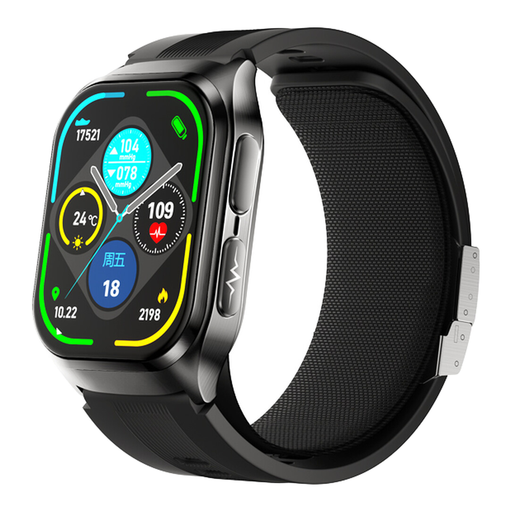
Dido G80S Pumping-Type Health Monitoring Smartwatch
Why this product suits this profile: This model is aimed at people who want to view trend-based information about additional body measurements in one app, alongside heart rate, ECG, SpO2 and sleep data.
The safety information makes it clear that the readings are not intended for diagnosis or treatment. Information about blood sugar, uric acid and blood lipids should be understood as estimates, not as a substitute for laboratory testing.
Heart-rate monitoring, ECG, SpO2, sleep and sports tracking, plus several trend-based health readings.
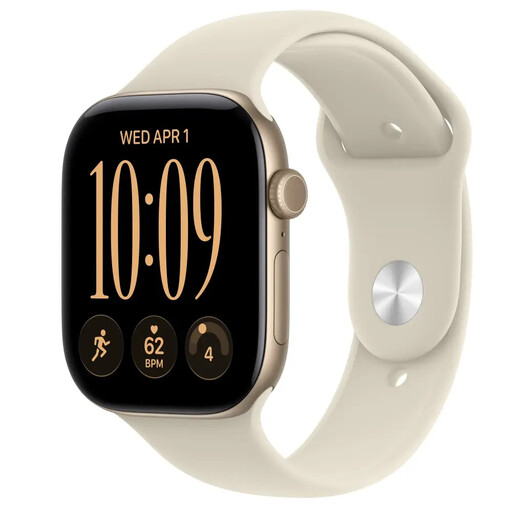
Apple Watch Series 12 GPS + Cellular 46mm
Why this product suits this profile: For iPhone users, the GPS and Cellular version offers features for training, communication and health monitoring without needing to remain close to a smartphone.
The compatibility requirement is clear: an iPhone 11 or later and iOS 27 or later are required. The stated battery life is up to 24 hours, or up to 38 hours in power-saving mode.
ECG app, heart-rate and blood-oxygen monitoring, sleep and temperature features, GPS + Cellular, plus water protection to 50 metres according to the product information.
Check safety and everyday practicality
Wear the watch with consistent skin contact, without tightening the strap too much. Before taking a measurement, keep your arm as still as possible. Sweat, movement, cold skin or a loose strap can affect the results.
If you experience skin redness, allergic reactions or discomfort, stop using the watch. Devices with an electrical ECG function should not be used near implanted devices without consulting an appropriate medical professional. Do not wear the watch while it is charging if the manufacturer prohibits this.
FAQ about smartwatches with health monitoring
Are smartwatch readings medically reliable?
The data displayed is primarily intended as a guide for everyday use. Heart rate, sleep duration and activity can indicate trends, but they are no substitute for a medical examination. Blood pressure, blood sugar and blood lipid readings should be checked using suitable medical measurement methods.
Which smartwatch is suitable for iPhone and Android?
That depends on the model and the operating system version required. According to the product information, the VoxorAI GTL2 and HUAWEI WATCH 5 can be used with iOS and Android. The Apple Watch Series 12 is limited to compatible iPhones. Before buying, check your smartphone model, operating system and app requirements.
How long does a health smartwatch battery last?
Battery life varies according to the model and how it is used, from around one day to several days. Continuous monitoring, GPS, mobile connectivity and a bright display reduce operating time. The stated battery life for normal use is therefore more important than the maximum standby time alone.