
Smartwatch Buyer's Guide: Avoiding Common Calling Mistakes
A smartwatch that not only displays notifications but also lets you make calls directly from your wrist is a practical extension of your smartphone. However, the market is flooded with models whose advertising promises often suggest more than the technology delivers in everyday life. Before you make a purchasing decision, it's crucial to know the typical pitfalls that can lead to disappointment.
This guide will help you evaluate the key features and make an informed choice. We focus on the three most common problems: unrealistic battery life, misleading health data, and hidden compatibility limitations.
The 3 Most Common Pitfalls When Buying a Smartwatch
The selection can be overwhelming, especially when marketing terms obscure actual performance. Pay attention to these three points to avoid a bad buy.
-
The Battery Life Myth: Manufacturers often advertise long battery life of 30 days or more. However, these figures almost always refer to pure standby mode without active use. As soon as you use features like calling via Bluetooth, continuous heart rate tracking, or GPS for sports activities, the actual runtime often drops to just a few days. A realistic value for a fully functional unisex fitness watch with normal use is typically between 5 and 10 days.
-
Misleading Health Features: A smartwatch with blood pressure monitoring or an SpO2 sensor sounds promising. However, it's critical to understand that these watches are not medical devices. The measurements, especially for blood pressure, are often based on algorithms and optical sensors and are only intended as a reference. They are by no means a substitute for a measurement with a calibrated medical device. In contrast, a good fitness tracker with a heart rate monitor usually provides reliable data for heart rate and for activity trackers with sleep analysis.
-
Limited Compatibility and Functionality: Nearly every watch advertises compatibility for smartwatches for Android & iOS. In reality, however, there can be significant differences. Sometimes, certain features, like quick replies to messages, are only available for one operating system. Or the companion app is poorly maintained, syncs unreliably, or requires intrusive permissions. Before buying, check if all the functions that are important to you work smoothly with your specific smartphone model.
What Really Matters: The Core Parameters in Detail
To find a suitable smartwatch, you should focus on the technical specifications that are relevant to your daily life.
Connectivity: Bluetooth Calls and Notifications
The core feature of a smartwatch with a calling function is usually the ability to conduct calls via a Bluetooth connection to your smartphone. This means the watch uses its microphone and speaker, while the phone establishes the actual connection to the mobile network. Your smartphone must therefore be within Bluetooth range (typically up to 10 meters). Make sure the watch not only displays incoming calls but also supports answering, rejecting, and making calls directly from your wrist. Equally important is receiving notifications from apps like WhatsApp, SMS, and emails.
Water Resistance: What the IP Rating Means
For an everyday sports watch, water resistance is a crucial criterion. The protection level is indicated by the IP code.
- IP67: Protection against temporary immersion (up to 1 meter for 30 minutes). Hand washing or heavy rain are generally not a problem. This class is not recommended for swimming.
- IP68: Protection against continuous immersion under conditions specified by the manufacturer (often deeper than 1 meter). Models with this classification are suitable for swimming in fresh water. However, note that salt water or hot water (shower, sauna) can damage the seals.
Sensors for Health and Fitness
Modern smartwatches are powerful activity trackers. The most important sensors are:
- Heart Rate Sensor (Pulse Monitor): Standard on almost all models. Measures your pulse continuously or at intervals. Important for training and monitoring overall fitness.
- SpO2 Sensor: Measures blood oxygen saturation. A useful indicator for respiratory function, especially during sleep or high-altitude exercise.
- Accelerometer: The basis for a watch with a step counter. It detects movement to estimate steps, distance, and calories burned.
- Sleep Analysis: Combines data from heart rate and motion sensors to analyze sleep stages (light, deep, REM sleep) and assess sleep quality.
Choose Your Perfect Pick
Here are some recommendations tailored to different needs and priorities.
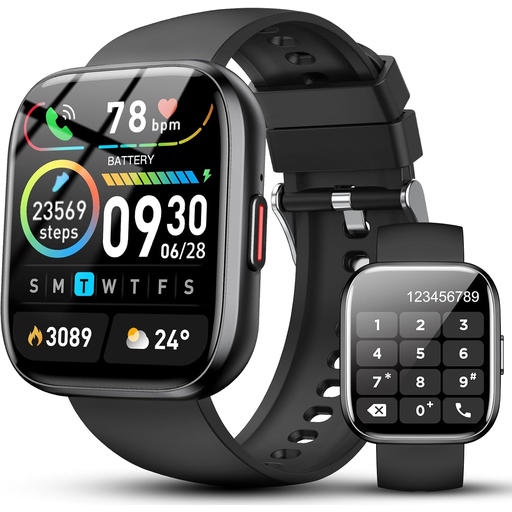
Jugeman P114 Black Smart Watch for Women Men Answer/Make Calls
Why This Fits Their Persona: Ideal for users who want to try out the core functions of a smartwatch, including calling and basic fitness tracking, without a large investment. It offers a solid feature set for daily use.
This model focuses on proven features like Bluetooth calls and app notifications. It avoids the pitfall of advertising inaccurate or experimental health metrics, delivering reliable baseline performance instead.
Direct calling via Bluetooth and a wide selection of over 115 sport modes. The IP68 certification makes it a robust everyday companion.
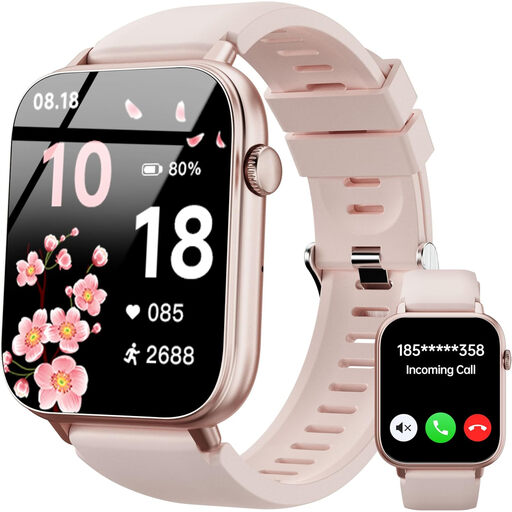
OUKITEL V3 Black Smartwatch-1.83" HD Smart Watch
Why This Fits Their Persona: Perfect for users looking for a daily driver watch that looks good both in the office and during a workout. The large display makes it easy to read notifications and operate the calling function.
The manufacturer's claim of "up to 7 days with daily use" is a realistic estimate and avoids the battery myth of pure standby times. Compatibility with Android & iOS is ensured by the established "GloryFit" app.
The large 1.83-inch HD display offers a clear view. Additionally, 24/7 health monitoring (pulse, SpO2, sleep) allows for a comprehensive analysis of your personal fitness data.
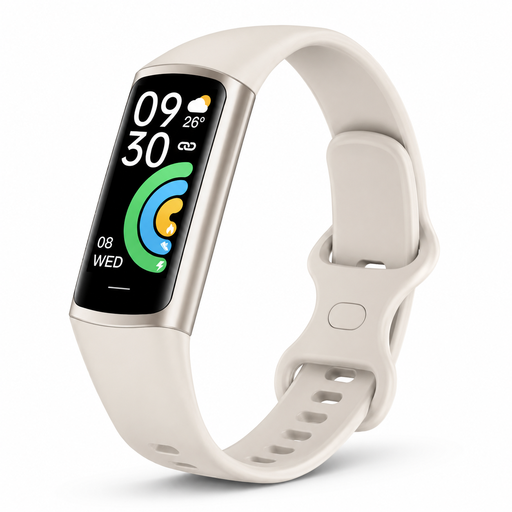
VoxorAI C68 Starlight Color Watch/Bracelet – Touchscreen Smartwatch
Why This Fits Their Persona: Suitable for users who place a special emphasis on collecting a wide range of health data. In addition to standard metrics, this watch also offers body temperature measurement as an additional data point.
By listing specific sensors for heart rate, blood oxygen, and body temperature, it avoids vague "health tracking" promises. Blood pressure monitoring is listed as one of several features, which underscores its indicative nature.
Comprehensive health tracking that, according to the manufacturer, includes heart rate, blood pressure, blood oxygen, and body temperature. The long standby time of up to 30 days is also a notable advantage.
Looking for more options?
We have compiled a complete, up-to-date list of products that fully meet these strict selection criteria and German safety regulations.
Frequently Asked Questions (FAQ)
1. How accurate is blood pressure monitoring on a smartwatch? Blood pressure measurement on most smartwatches not certified as medical devices should be considered an estimate. It uses optical sensors (PPG) to derive data from pulse waves. This method is prone to deviations due to movement, skin type, and the fit of the watch. The values can indicate a trend but are no substitute for a measurement with an upper-arm blood pressure monitor.
2. Does my smartphone always have to be nearby to make calls with the watch? Yes, for most smartwatches in this category that enable calls via Bluetooth, the smartphone must be paired and within range (approx. 5-10 meters). The watch acts as a hands-free device for your phone. Models with their own eSIM card, which can operate independently of the phone, are typically in a higher price range.
3. Which IP rating is suitable for swimming? For occasional swimming in a pool or lake, you should choose a watch with at least an IP68 rating. However, always read the manufacturer's specific information, as they define the exact depth and duration of protection. Avoid wearing the watch in salt water, soapy water, or at high water temperatures, as this can damage the seals. Do not press any buttons underwater.