
Smart Plug Buyer’s Guide: How to Avoid Costly Mistakes
A smart plug promises convenience and efficiency: turn on the coffee machine from your bed, monitor the power consumption of your devices, or control your Christmas lights on a schedule. But the market is flooded with products, and the differences are often in the details. A bad purchase not only leads to frustration but, in the worst-case scenario, can pose a safety hazard.
As your Joybuy Product Recommendation Officer, I'll help you recognise the common pitfalls and make an informed decision. We'll focus on the facts that truly matter.
The 3 Most Common Pitfalls When Buying a Smart Plug
Many buyers regret their choice because they fell for marketing promises instead of paying attention to technical specifications. These three problems are especially common:
- The Wi-Fi Incompatibility Trap: You unbox your new Wi-Fi plug, but the connection to your router keeps dropping or fails to connect at all. The reason: Many budget-friendly models only support the 2.4 GHz frequency band. However, modern routers often use the 5 GHz band in parallel or exclusively, which can lead to persistent connection issues.
- The Risk of Missing Safety Certifications: A temptingly low price can come at the expense of safety. Plugs without recognised certification marks, especially a T?V certification, can pose a serious fire hazard in the event of an overload or short circuit. The CE mark alone is often just a manufacturer's declaration and not an independent test seal.
- The Wrong Load Capacity Class: A plug is advertised as "high-power" but immediately trips when you start the washing machine. The crucial value is the maximum current rating in amperes (A). A 10A plug is sufficient for lamps and small gadgets, but for heavy-duty appliances like washing machines or dryers, a 16A plug is mandatory.
What Really Matters: The Key Parameters
To avoid these pitfalls, you should check three core aspects before buying. These determine whether a smart plug is suitable, safe, and reliable for your intended use.
1. Connectivity: Wi-Fi, RF, or Matter?
The type of connection is fundamental. There are three common technologies:
- WLAN (Wi-Fi): The most common variant. The plug connects directly to your home network and is controlled via an app or voice assistant. Check if the plug is compatible with your Wi-Fi (2.4 GHz or also 5 GHz) and if it works with your preferred ecosystem, like Alexa or Google Home.
- RF (Radio Frequency): An RF plug with a remote control doesn't require Wi-Fi or an app. It's ideal for users who want simple, reliable remote control for hard-to-reach devices without dealing with network configurations. Range is a key factor here.
- Matter: This new standard aims to unify compatibility between devices from different manufacturers. A Matter-certified plug integrates seamlessly into ecosystems like Apple Home, Google Home, and Alexa, making it future-proof.
2. Maximum Load and Safety: 10A vs. 16A
The maximum electrical load a plug can handle is a critical safety feature.
- 10 Amperes (approx. 2300 Watts): Suitable for most lamps, TVs, coffee machines, and chargers.
- 16 Amperes (approx. 3680 Watts): Necessary for appliances with a high inrush current or continuous load, such as washing machines, tumble dryers, dishwashers, or space heaters. Using a 10A plug for such devices can lead to overheating and damage.
Be sure to look for a T?V certification. This seal confirms that the product has been tested for electrical safety and build quality by an independent body.
3. Additional Features: Energy Monitoring and Outdoor Capability
Depending on your needs, other features can be the deciding factor:
- Plug with Energy Monitoring: These models show you real-time consumption and often historical data in the app. This helps you identify power-hungry devices in your home and actively reduce costs.
- Plug with Timer Function: This feature lets you program fixed on/off times, for example, to be woken up by freshly brewed coffee in the morning or to simulate presence while you're on vacation.
- Outdoor Smart Plug: For use in the garden, on the balcony, or for Christmas lights, you need a model with at least an IP44 rating. This classification guarantees protection against splashing water and foreign objects.
Picks for Different User Profiles
We have selected products from our range that meet specific requirements and avoid the pitfalls mentioned.
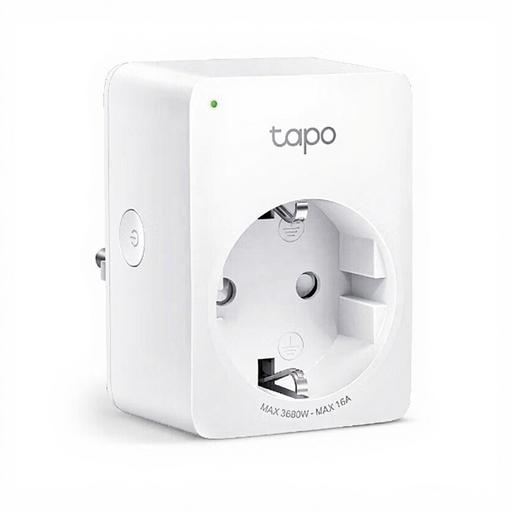
Tapo P110 Smart Plug with Energy Monitoring
Why This Fits Their Persona: Ideal for anyone looking to easily enter the world of home automation while keeping an eye on their energy consumption. Setup via the Tapo app is simple, and it's compatible with Alexa and Google Assistant.
As a product from TP-Link, an established network equipment provider, it offers a stable 2.4 GHz Wi-Fi connection and a mature app, which minimises the incompatibility trap. The 10A load is clearly declared.
The integrated real-time energy monitoring helps cut down on energy costs. Its compact design doesn't block adjacent outlets.
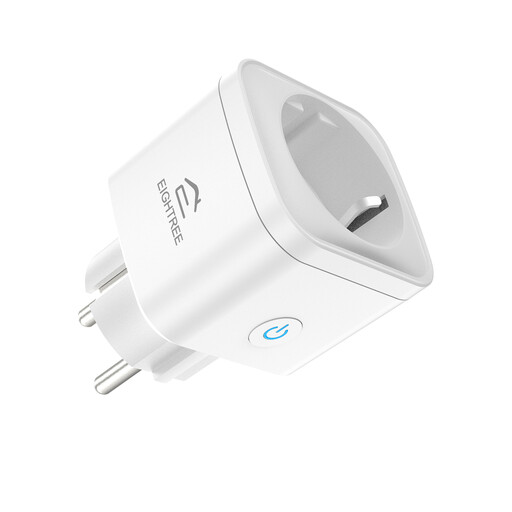
EIGHTREE Smart Plug, WiFi Outlet, T?V Certified, 16A
Why This Fits Their Persona: Perfect for users who want to safely and intelligently control high-power appliances like washing machines, dryers, or portable air conditioners. Safety and load capacity are the top priorities here.
This model directly addresses the pitfalls of safety and load capacity. The T?V certification proves its tested safety, and the design for 16A (3680W) makes it suitable for heavy-duty appliances.
The combination of high load capacity (16A) and a T?V certificate offers a high degree of safety. It also includes an energy monitoring feature.
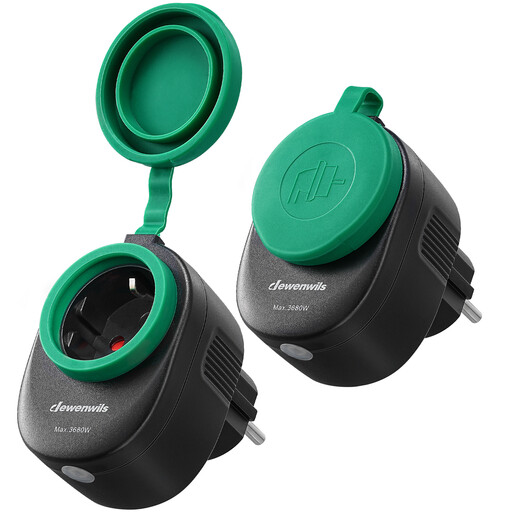
Dewenwils WiFi Outdoor Smart Plug, IP44 Waterproof
Why This Fits Their Persona: Designed for controlling garden lighting, pond pumps, or seasonal decorations. The weatherproof construction allows for safe and reliable outdoor operation in any season.
The IP44 certification ensures the device is protected against splashing water, which is essential for outdoor use. Additionally, the high load of 3680W is clearly specified, making it suitable for powerful garden equipment as well.
The robust, weatherproof design enables the automation of your outdoor space. Compatibility with Alexa and Google Home allows for convenient voice control.
Looking for more options?
We've compiled a complete, up-to-date list of products that fully meet these strict selection criteria and rigorous safety standards.
Frequently Asked Questions (FAQ)
Does every smart plug need an app or Wi-Fi?
No. There are two main types: Wi-Fi smart plugs, which require an internet connection and a smartphone app for control, and RF plugs. The latter come with a dedicated remote control and work without an internet connection. They are a simple solution for anyone who doesn't need app control or complex automations.
What does 10A or 16A mean for a smart plug?
The rating in amperes (A) indicates the maximum current the plug is designed to handle. A 10A plug can switch devices up to approx. 2300 watts (e.g., lamps, TVs, fans). A 16A plug is required for higher-power devices up to approx. 3680 watts (e.g., washing machines, space heaters, dishwashers). Using an under-rated plug for a high-power device is a safety hazard.
Can I use a smart plug outdoors?
Only if it is explicitly designed for it. An outdoor smart plug must have at least an IP44 rating. This means it is protected against splashing water from all directions and solid foreign objects larger than 1 mm in diameter. Never use a standard indoor plug outdoors, as moisture can cause a short circuit and fire.