
Smart Plant Pot Buying Guide: Choose the Right Model With Confidence
Plants enrich our homes and offices, but proper care can be a challenge. It's all too easy to overwater or underwater a plant when daily life gets in the way. A smart plant pot promises a solution: it aims to automate care and remind us when our plant needs water or light. But the market is flooded with models that don't always live up to their promises.
Before you make a purchase, it's crucial to understand the most common pitfalls that can lead to disappointment and wasted money.
- Pitfall 1: Inaccurate Sensors: Many budget-friendly models advertise intelligent monitoring, but their sensors for soil moisture or light are often unreliable. The result is the exact opposite of what was promised: the plant is cared for incorrectly and dies despite the technology.
- Pitfall 2: Short Battery Life: An intelligent planter that needs recharging every few days creates more work than it saves. A low battery capacity quickly makes the smart feature impractical for daily use.
- Pitfall 3: Bloated and Unreliable Apps: Some pots require a constant connection to a complicated smartphone app. If the app is confusing, the connection drops, or the features offer no real value, the gadget quickly becomes a source of frustration.
What Really Matters When Making Your Choice
To avoid a bad purchase, you should focus on a few crucial technical parameters. These features determine whether a smart plant pot is a genuine help or just a short-lived gimmick.
1. Sensor Technology and Interaction Method
The quality of the sensors is the core of any smart pot. Look for models that provide precise data on the most important parameters:
- Soil Moisture: The sensor should be able to measure moisture levels directly in the root zone.
- Water Level: For a self-watering pot, an accurate sensor for the water level in the reservoir is essential for timely refills.
- Light Conditions: A light sensor helps find the optimal location for the plant.
Just as important is how the pot communicates this information. An interactive plant pot with a clear display or a plant pot with a face that shows the plant's condition through simple emotions is often more practical than a purely app-based solution. This way, you get direct feedback even without a smartphone.
2. Power Supply and Autonomy
Independence from a power outlet is a crucial factor for convenience. Check the battery capacity, which is specified in milliampere-hours (mAh). A value of 2000mAh or more indicates a runtime of several days to weeks, depending on the intensity of use. Models with an integrated water tank that function as self-watering pots further increase autonomy and make care especially easy for a low-maintenance office plant.
3. Construction and Material Quality
The physical properties of the pot are also relevant. Pay attention to the dimensions of the inner plant container to ensure your plant has enough space. A removable inner pot makes repotting and cleaning much easier. High-quality plastic (e.g., ABS) is durable and robust. Also, check if the product has necessary certifications like CE, which confirm compliance with EU safety standards.
Our Picks for Different User Profiles
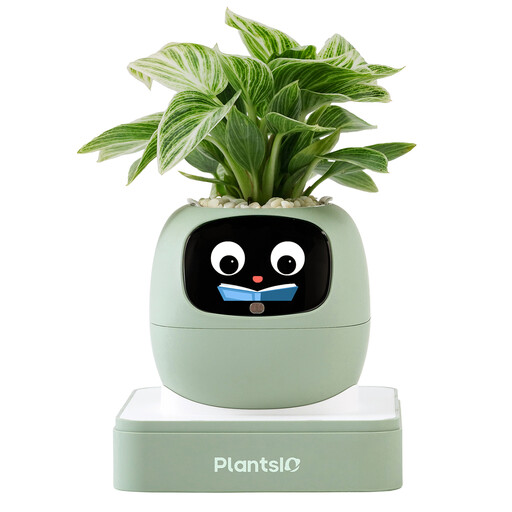
Ivy AI Smart Plant Robot
Why This Fits Their Persona: Ideal for anyone who loves both technology and plants. This pot is more than just a care assistant—it's an interactive companion. As a unique gift for plant lovers or a "pet substitute" for those living alone, it combines functionality with an emotional connection.
Instead of a confusing app, this plant robot communicates through over 80 different facial expressions. Its precise sensors for moisture, water level, and light provide reliable data that is directly translated into understandable emotions.
The anthropomorphic interaction turns plant care into an entertaining experience. The 2000mAh battery ensures a decent runtime.
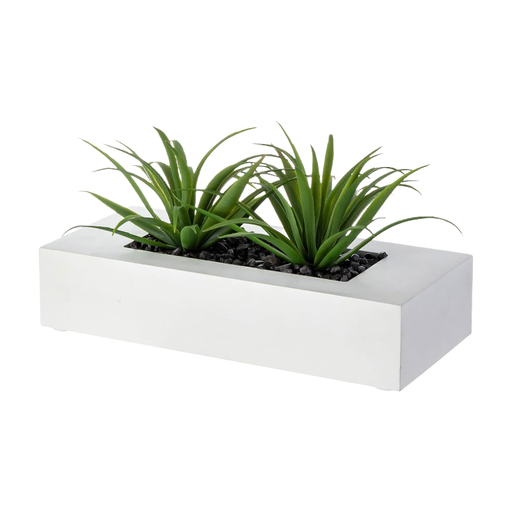
MyGift Artificial Grass in Wooden Planter Box
Why This Fits Their Persona: For those who want a green look with zero maintenance. Perfect as a low-maintenance office plant or for apartments with poor lighting conditions. An ideal solution for frequent travellers or absolute plant beginners.
This product completely bypasses the typical problems of smart pots. There are no sensors to fail, no battery to die, and no app to cause frustration. It's the ultimate maintenance-free decorative solution.
Provides a fresh, green look year-round without any water or sunlight. Its compact, rectangular shape fits perfectly on desks, windowsills, or shelves.
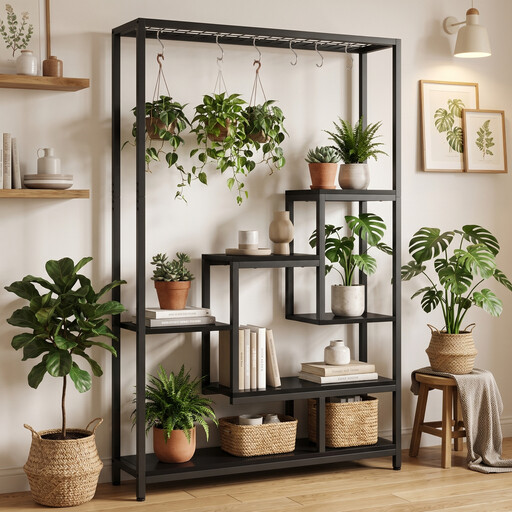
Tribesigns 5-Tier Plant Shelf
Why This Fits Their Persona: For users who already own multiple plants and are looking for a structured, space-saving solution for their collection. This shelf helps keep everything organized and gives each plant a suitable spot with adequate light.
Instead of investing in multiple, potentially faulty smart pots, this shelf provides a solid foundation for a growing plant collection. It enables efficient manual care and optimises space, which is often more sustainable than individual tech solutions.
The 5-tier design maximises vertical space and offers room for more than 8 plants. The open structure ensures good air circulation and light distribution.
Looking for More Options?
We have compiled a complete, real-time list of products that fully satisfy these strict selection criteria and UK safety regulations.
Frequently Asked Questions (FAQ)
1. How long does the battery last in a smart plant pot?
Battery life varies greatly depending on the model and usage. Simple models that only occasionally display the moisture status can last for several weeks or months on a single charge. An interactive plant pot with a permanently active display and multiple sensors, like the Ivy plant robot with its 2000mAh battery, has a typical usage time of up to 8 hours under normal use according to the manufacturer, which requires regular charging. Therefore, check the manufacturer's specifications for battery capacity and expected runtime before purchasing.
2. Is an intelligent planter suitable for every type of plant?
In principle, yes, but its effectiveness depends on the plant's needs. For most common houseplants that prefer consistent soil moisture, a self-watering pot is a great support. For plants with special requirements, such as succulents that need to dry out completely between waterings, it's important that the sensors work precisely and the settings are adjustable. Also, make sure the size of the pot is appropriate for your plant's root ball.
3. Do I always need an app for a smart plant pot?
Not necessarily. Some of the most user-friendly models rely on direct feedback systems. A plant pot with a face or a pot with simple LED indicators can show the plant's condition (e.g., "thirsty," "happy," "too dark") without going through a smartphone. These models are often easier to set up and more practical in daily life, as they don't require a stable Wi-Fi connection or a constantly accessible phone.