
Smart Ceiling Light: Buyer's Guide and Recommendations for 2026
A smart ceiling light is more than just a light source. It's a central component of modern home automation, adapting lighting to individual needs and daily routines. Selecting the right model is based on an analysis of technical parameters such as connectivity, light quality, and design. This guide breaks down the crucial criteria and presents a selection of models with various specifications.
Buyer's Guide: Technical Selection Criteria for Smart Ceiling Lights
The decision for a smart LED ceiling light should be based on an objective evaluation of its technical features. The following parameters are crucial for functionality and longevity.
1. Connectivity and Control Protocols
The type of wireless connection determines the light's reliability and range of functions.
- Wi-Fi Ceiling Light: Models with an integrated Wi-Fi module connect directly to your home router. This allows for control from anywhere via the internet but requires stable Wi-Fi coverage throughout the house. Each light acts as a separate client on the network.
- Bluetooth & Bluetooth Mesh: A direct Bluetooth connection to a smartphone is limited to short distances. More advanced is Bluetooth Mesh. Here, the lights communicate with each other, forming their own stable network. Only one light needs to be within range of the control device to relay commands to all others. This increases range and reliability, especially in larger rooms or across multiple floors. For remote control or connection to voice assistants like Alexa, a separate hub or bridge is often required.
2. Lighting Specifications
The quality of light directly impacts the room's atmosphere and visual comfort.
- CCT (Correlated Colour Temperature): A CCT ceiling light allows for seamless adjustment of the light colour on a scale typically from 3000 Kelvin (warm white, similar to an incandescent bulb) to 6500 Kelvin (daylight white, which promotes concentration). This feature is essential for adapting the lighting to different activities—from relaxed evenings to focused work.
- Luminous Flux (Lumen): The lumen value (lm) indicates the actual brightness of a light, independent of its power consumption (watts). For a 20 m² living room, for example, a luminous flux of about 2,600 to 3,000 lm is recommended for primary lighting.
- Colour Rendering Index (CRI): The CRI value (Ra) describes how true-to-life colours appear under the artificial light. A value of Ra ≥ 80 is the standard for living spaces and ensures that objects largely retain their natural colours. Higher values (Ra > 90) are relevant for areas where colour accuracy is critical.
3. Design and Material
The construction affects aesthetics as well as installation and maintenance.
- Surface-Mounted Lights: These are the classic ceiling lights mounted directly onto the ceiling surface. They are easy to install and available in a wide variety of designs, from flat panels to striking geometric shapes.
- Smart Recessed Downlights: These are integrated flush into a suspended ceiling, creating a minimalist, modern look. The required cutout diameter and a shallow installation depth are crucial here to ensure compatibility with the ceiling structure.
- Materials: Housings made of metal (e.g., aluminium) offer good heat dissipation, which extends the lifespan of the LEDs. Diffusers made of acrylic or polycarbonate (PC) ensure even, glare-free light distribution.
Our Product Selection for 2026
The following models have been selected based on their specific technical features and use cases.
Aigostar BLE MESH Smart Ceiling Light 36W
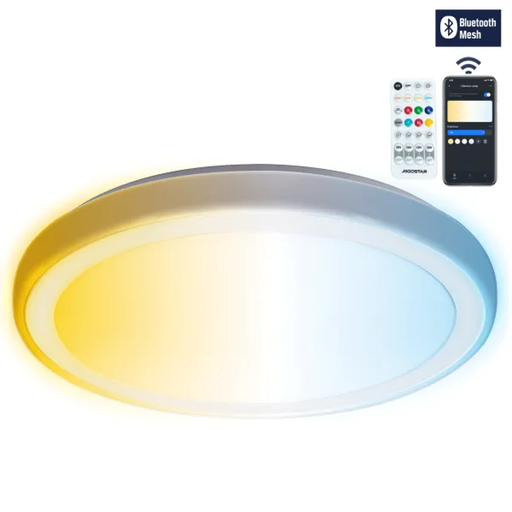
Why We Recommend This Product This model combines a high luminous flux of 3960 lm with stable Bluetooth Mesh technology. Its high brightness makes it an adequate primary light source for medium to large living spaces, without necessarily requiring additional lights. The mesh functionality ensures synchronous and reliable control of multiple lights simultaneously.
Advantages:
- High Luminous Flux: With 3960 lm and 36W of power (equivalent to a 225W incandescent lamp) for effective room illumination.
- Adjustable Colour Temperature: CCT function with a spectrum from 3000K to 6500K.
- Wide Beam Angle: 120° ensures homogeneous light distribution.
- High Power Factor: A PF value of >0.9 indicates high energy efficiency.
Who It's For: Users looking for powerful and reliable main lighting for spaces like a modern living room or large offices, who value the stability of a mesh network.
Aigostar Bluetooth MESH Smart Downlight 18W CCT
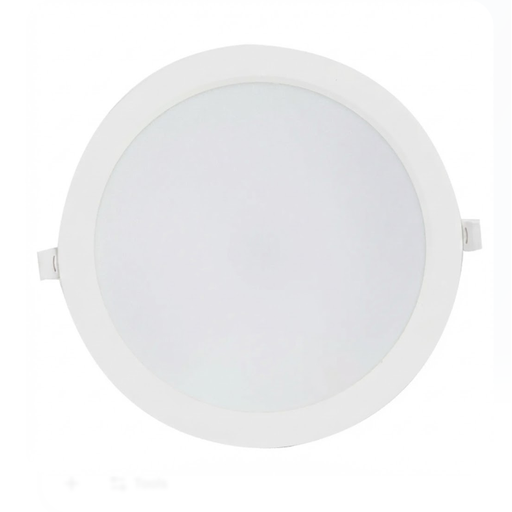
Why We Recommend This Product This smart recessed downlight is designed as a primary light source, not just for accent lighting. With up to 1800 lm per light and a slim profile, it is ideal for modern ceiling installations with limited space. The housing, made of aluminium and PBT, supports heat dissipation and contributes to the longevity of the LEDs.
Advantages:
- Powerful Recessed Downlight: 18W power and up to 1800 lm luminous flux.
- Shallow Installation Depth: Ultra-slim design for ceilings with minimal cavity space.
- Efficient Heat Dissipation: Aluminium/PBT material combination for optimised thermal management.
- Groupable via App: Multiple downlights can be grouped into zones and controlled synchronously.
Who It's For: Homebuilders and renovators planning minimalist, flush-mounted ceiling lighting for modern open-plan kitchens, hallways, or offices who want to leverage the benefits of a scalable mesh system.
Yeelight 12inch Round Mercury Smart Ceiling Light C300
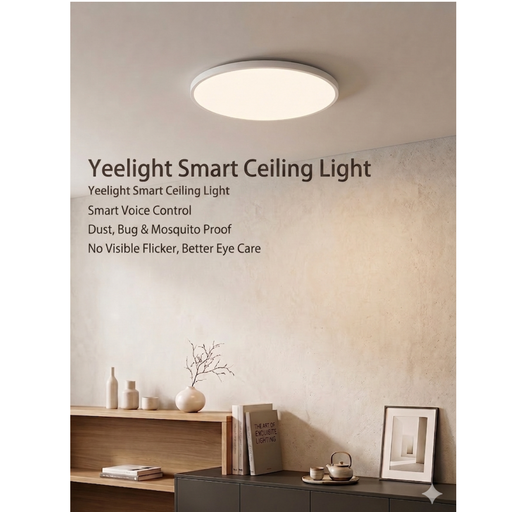
Why We Recommend This Product The Yeelight C300 stands out for its broad compatibility with leading smart home platforms (Alexa, Google Home, SmartThings, Mijia) and its well-designed convenience features. The "Moonlight Mode" with extremely low brightness and the sealed design to protect against dust and insects are practical features for use in bedrooms and living rooms.
Advantages:
- Comprehensive Smart Home Integration: Works with a variety of ecosystems, enabling flexible use as an Alexa-compatible ceiling light.
- Moonlight Mode: Provides a very gentle, glare-free light for nighttime.
- Sealed Construction: The design prevents the ingress of dust, insects, and water vapour, reducing maintenance.
- Eye-Friendly Light: RG0 certification for low blue light risk and flicker-free operation.
Who It's For: Tech-savvy users who prioritise seamless integration into an existing smart home system and appreciate additional features like a night mode and a low-maintenance design for bedrooms or living rooms.
Discover More Options and Designs
The models presented here represent a selection for specific use cases. However, the range of smart ceiling lights includes a much wider variety of designs, sizes, and technical configurations. For a comprehensive overview of more models, from minimalist panels to decorative lights, you can find a broader selection in our main category.
-> Discover all models in the LED Ceiling category here
Frequently Asked Questions (FAQ)
1. Can I use a smart ceiling light with a regular light switch? Yes, a smart ceiling light can be turned on and off using a conventional wall switch. However, it will lose its smart functions (e.g., dimming, colour changing) because the power supply is completely cut off. When switched back on, the light usually starts up with a default setting. For full functionality, control should be managed via the app, a remote control, or voice command.
2. What is the functional difference between Wi-Fi and Bluetooth Mesh ceiling lights? A Wi-Fi ceiling light connects individually to your router and is directly accessible via the internet, which can make it more susceptible to Wi-Fi interference. Bluetooth Mesh lights build their own independent network among themselves. This is more stable, especially when many lights are installed, as the failure of one light does not affect the entire system. However, for remote control from outside the home, mesh systems usually require an additional bridge.
3. Do I always need a bridge for voice control with Alexa or Google Assistant? That depends on the light's protocol. Wi-Fi-based lights can often be connected directly to Alexa or Google Assistant without additional hardware. For Bluetooth or Zigbee-based lights, a compatible hub or bridge is typically required to act as a 'translator' between the light's wireless protocol and the voice assistant's Wi-Fi network.