
Silicone Baking Mat Buying Guide: Avoid Common Purchase Pitfalls
Anyone who loves to bake knows the challenges: flour dusting the entire work surface, dough sticking stubbornly to the table, and an uneven surface that makes precise rolling difficult. A silicone baking mat promises a clean and efficient solution. However, not every model delivers on its promise. Many home bakers invest in a mat that quickly proves to be impractical or even unsuitable.
This guide will show you the most common pitfalls to avoid when buying and the crucial features you should look for to make an informed decision.
The 3 Most Common Mistakes When Buying a Silicone Baking Mat
Before deciding on a model, it's helpful to know the typical flaws that often only become apparent with use. These three points frequently lead to disappointment:
- Questionable Material Quality: The term "silicone" alone is no guarantee of safety. Inexpensive mats can contain fillers or BPA (Bisphenol A). Such materials are not ideal for food contact, can absorb odours, and may lose their shape with temperature changes.
- Lack of Slip Resistance: One of the main functions of a silicone dough mat is to provide a stable work surface. However, many mats have an insufficiently adhesive underside and slip around when kneading or rolling out firm dough. A truly non-slip rolling mat is essential for frustration-free work.
- Impractical or Illegible Markings: A baking mat with measurements is only useful if the markings are precise, easy to read, and durable. On low-quality products, the printed lines and circles fade quickly from cleaning or wear and become useless.
What Really Matters: The Core Features of a Good Baking Mat
To avoid the problems mentioned above, you should base your selection on objective criteria. The following three parameters are crucial for the functionality and longevity of a silicone baking mat.
H2: Parameter 1: Material and Food Safety
The most important criterion is the material. Look for the 100% food-grade silicone label. This material is specifically designed for contact with food, is tasteless, and does not release any harmful substances. Another essential standard is the BPA-free certification. This ensures that the mat is free from the industrial chemical Bisphenol A. High-quality silicone is also flexible yet shape-retentive and resistant to discolouration.
H2: Parameter 2: Size and Functional Measurements
The size of the mat should suit your baking projects. A large baking mat measuring 50x70 cm or more offers ample space for rolling out pizza dough, large cake bases, or working with fondant. For biscuits or smaller tasks, a more compact mat may suffice.
The measurement markings should be clear and permanent. Useful features include:
- Rulers on the edges: In centimetres and ideally also in inches for international recipes.
- Circular markings: With diameter specifications for rolling out round doughs to the perfect size (e.g., for pizza or cake bases).
- High contrast: The markings should stand out clearly from the mat's colour to be easily readable even in poor lighting conditions.
H2: Parameter 3: Heat Resistance and Easy Cleaning
A good silicone mat should be heat-resistant. This is relevant not only if it is to be used as a substitute for parchment paper in the oven (check the manufacturer's instructions!) but also for hygienic cleaning. Many mats can be sterilised by pouring boiling water over them without being damaged. The surface should be smooth and non-porous so that dough residue does not stick, making cleaning with water and a little dish soap or in the dishwasher straightforward.
Our Picks for Different Needs
Based on the criteria above, we have selected a few products from our range that are suitable for different purposes.
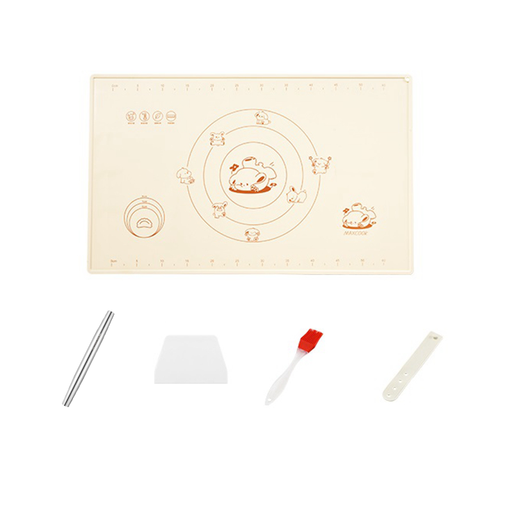
Maxcook Silicone Baking Mat (cream-coloured), 50 x 70cm
Why This Fits Their Persona: Ideal for anyone who needs a large, stable work surface for extensive projects like rolling out pizza dough, creating fondant decorations, or preparing large batches of cookie dough. This baking mat set also includes useful tools like a rolling pin and a dough scraper.
The reinforced, non-slip underside clings firmly to the countertop, preventing any sliding. Made from 100% food-grade, BPA-free silicone, it meets high safety standards. The generous 50x70 cm size solves the problem of a work surface that's too small.
Generous work surface with precise measurements. Its heat resistance allows for easy sterilisation with boiling water. The smooth surface is easy to clean.
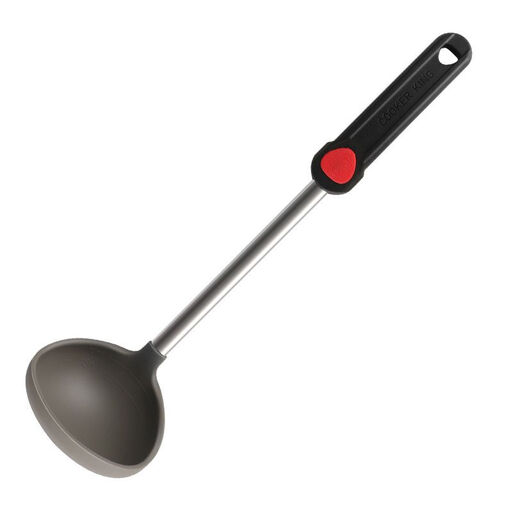
COOKER KING Red Dot Silicone Solid Turner
Why This Fits Their Persona: A smart addition to your baking mat. This turner is excellent for lifting delicate baked goods like cookies or pancakes from the mat or baking sheet without damaging non-stick surfaces.
This tool follows the principle of material quality: the heat-resistant silicone is safe for food contact and protects coated pans and baking tins from scratches, a common problem with metal turners.
Protects non-stick coatings. The flexible head glides easily under food. Heat-resistant and dishwasher-safe for easy handling.
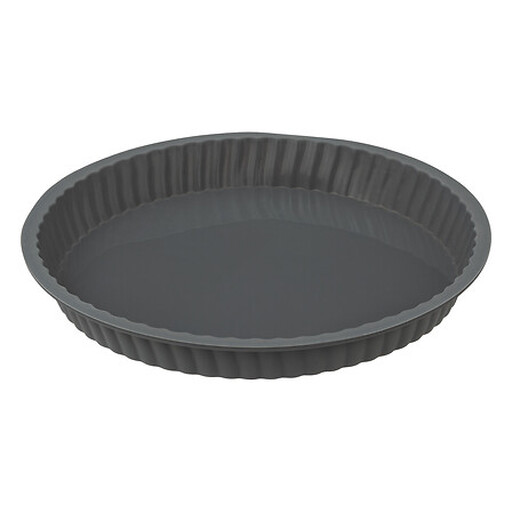
5FIVE Silicone mold for tart
Why This Fits Their Persona: For bakers looking for a reliable mould for the actual baking process after preparing the dough on a mat. This silicone mould is ideal for tarts, quiches, or cake bases.
The flexible premium silicone ensures effortless release of the baked goods without breaking delicate pastry edges—a common frustration with rigid metal pans. The even heat distribution also prevents uneven baking.
Excellent non-stick properties for easy release. Suitable for the oven, microwave, and freezer. Space-saving storage and dishwasher-safe.
Looking for More Options?
We have compiled a complete, up-to-date list of products that fully meet these strict selection criteria and German safety regulations.
Frequently Asked Questions (FAQ)
1. Can you cut a silicone baking mat to size? In general, it is not recommended to cut a silicone baking mat. Many mats, especially those with a fibreglass core for reinforcement, would be damaged by cutting. The fibres could become exposed, and the mat would fray at the edges. Instead, purchase a mat in the size that is right for you.
2. How do you clean a silicone baking mat properly to prevent it from becoming sticky? After use, the mat should be cleaned with warm water and a mild dish soap. Use a soft sponge, not abrasive scourers or hard brushes. To avoid a sticky surface caused by grease build-up, you can occasionally rub the mat with a paste of baking soda and water, let it sit for a short time, and then rinse thoroughly. Regular cleaning in the dishwasher is also effective.
3. Is a silicone baking mat heat-resistant and suitable for the oven? Most silicone baking mats are heat-resistant up to a certain temperature (often around 230°C / 446°F). Whether a mat is suitable for the oven depends on the specific product. Always check the manufacturer's instructions. Mats with a fibreglass core are often designed for the oven and serve as a reusable substitute for parchment paper. Pure dough mats are sometimes thinner and primarily intended for the work surface. Never expose the mat to direct heat or an open flame.