
The Perfect Shoe Rack for Your Home: Recommendations and Buying Guide
A cluttered entryway with shoes blocking the path is a common problem in many homes. Especially in apartments with limited space, finding the right hallway shoe storage can be a challenge. A well-chosen shoe rack not only creates order but can also elevate the look of your entrance area.
This guide provides an overview of different types of shoe storage solutions. We'll introduce various models and explain their unique features to help you make an informed decision that suits your space and needs.
What to Consider When Choosing Shoe Storage
Before you decide on a model, a few key considerations will help. The following points can serve as a guide to finding the perfect solution for your home.
1. Open Shelving or a Closed Cabinet?
The choice between an open and a closed system depends on your priorities.
- Open shoe racks offer the advantage of keeping shoes quickly accessible and well-ventilated. This can help reduce odour build-up. They are a great choice if you want to keep your shoe collection on display.
- A closed shoe cabinet or a tip-out shoe cabinet creates a particularly tidy and serene look, as the shoes are completely hidden. This option also protects your shoes from dust and direct sunlight.
2. Making the Most of Your Space
Measure the intended space precisely before making a purchase. Consider not only the width and depth but also the height.
- For narrow corridors, a narrow shoe rack or a slim small shoe cabinet with a depth often under 25 cm is an ideal choice.
- If you're looking for a comprehensive solution for your entryway, a hall tree with shoe storage can be a space-saving and functional option. Such combination furniture often provides additional space for jackets, bags, and a place to sit.
- Modular systems like an interlocking shoe rack can be flexibly adapted to the available space and expanded as needed.
3. Material and Assembly Effort
The choice of material affects both the look and the durability of the furniture. Metal racks are often robust and easy to clean, while wood or engineered wood creates a warmer atmosphere. Plastic systems are valued for their lightweight design and flexibility. Also, pay attention to the assembly effort. Many modern racks are designed for simple, tool-free assembly.
Recommended Shoe Racks
Here, we present a selection of different models, each suited for various needs due to their specific features.
eSituro Modular Cube Storage: The Flexible Solution
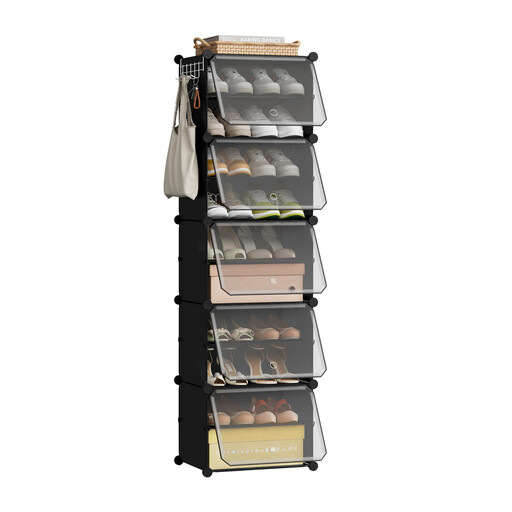
Why It Stands Out: The eSituro cube storage system is distinguished by its highly modular design. You can arrange the individual cubes to your liking—vertically, horizontally, or as separate units. This flexibility makes it an adaptable solution for various rooms and needs.
Advantages:
- Flexible Assembly: The system can be configured as a tall rack, a wide sideboard, or split into several small cubes.
- Expandable Capacity: Offers space for up to 10 pairs of shoes. By removing dividers, you can also accommodate boots or larger items.
- Additional Features: Five side hooks provide space for keys, umbrellas, or bags. The PP panels are waterproof and easy to clean.
- Sturdy Construction: A metal frame and ABS connectors ensure stability. Each compartment has a stated load capacity of up to 5 kg.
Who It's For: For those looking for an adaptable and expandable storage solution. Ideal for rental apartments, rooms with sloped ceilings, or when furnishing needs change frequently.
5 five simply smart Hall Tree: The All-in-One Performer
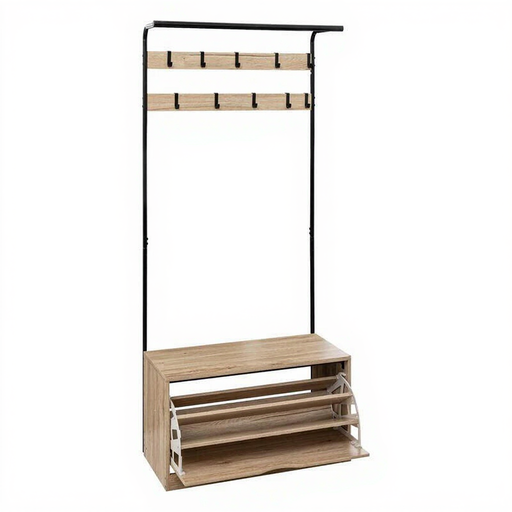
Why It Stands Out: This piece of furniture is more than just a shoe rack. It combines a coat rack, a bench, and shoe storage into a single, compact design, making it an all-in-one solution for the entryway.
Advantages:
- Multifunctional Design: Unites a clothes rail, bench, and shoe rack, eliminating the need for separate furniture.
- Practical Seating: The integrated bench makes it easier to put on and take off shoes and has a manufacturer-stated load capacity of up to 100 kg.
- Compact Footprint: With dimensions of 175 x 80 x 35 cm, it offers plenty of storage in a small area.
- Durable Materials: The construction of iron, MDF, and wood ensures good stability.
Who It's For: For families or individuals seeking an all-in-one solution for their hallway who value a combination of functionality and design.
WOLTU 8-Tier Shoe Rack: The Space-Saving Tower
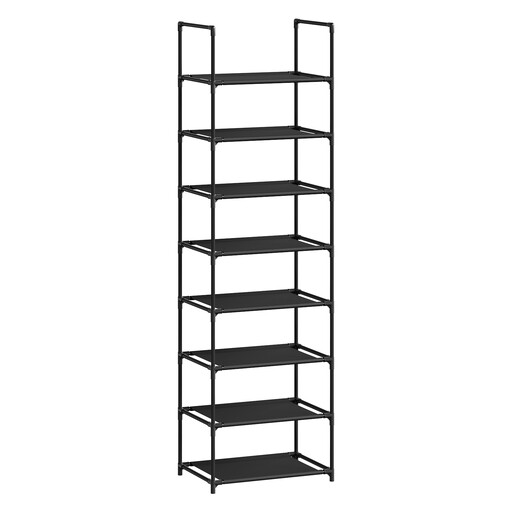
Why It Stands Out: With its tall and narrow build (41 x 28 x 140 cm), this rack makes excellent use of vertical space. It's a discreet solution for storing a large number of shoes on a minimal footprint.
Advantages:
- Extremely Space-Saving: The slim design fits perfectly in narrow hallways, alcoves, or behind doors.
- High Capacity: Eight tiers provide space for up to 16 pairs of shoes.
- Flexible Configuration: Tiers can be removed if needed to make room for boots. The rack can also be split into two smaller, four-tier racks.
- Simple Assembly: The interlocking system allows for tool-free setup.
Who It's For: For anyone who needs to store as many shoes as possible in a small apartment or narrow hallway and prefers a simple, functional solution.
SoBuy Tip-Out Shoe Cabinet: The Discreet Storage Solution
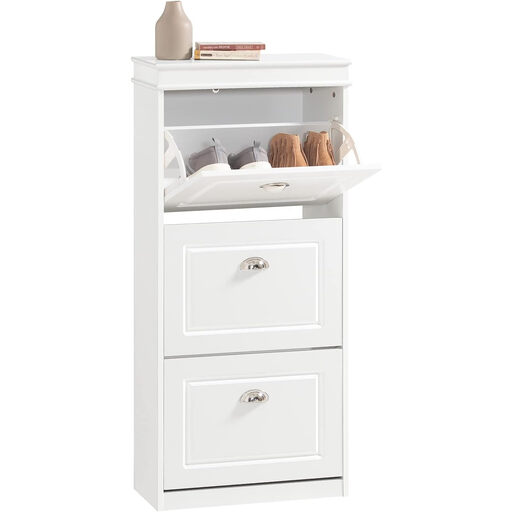
Why It Stands Out: The SoBuy tip-out cabinet conceals shoes behind three elegant flaps, ensuring a flawless look. With a depth of just 24 cm, it is exceptionally slim and integrates seamlessly into tight spaces.
Advantages:
- Ultra-Slim Profile: Ideal for the narrowest hallways and entryways where every centimetre counts.
- Concealed Storage: Shoes are protected from dust and stored out of sight, creating a calm and tidy atmosphere.
- Secure Mounting: Included anti-tip hardware allows for stable anchoring to the wall.
- Solid Construction: Made from FSC-certified MDF engineered wood with an easy-to-clean, painted finish.
Who It's For: For those who prefer a minimalist and tidy interior style and want to keep their shoes completely out of sight.
Looking for More Options?
If you haven't found the right solution among our recommendations or are interested in other organisational systems, you can find a wider selection of products to help you create order in your home in our Closet & Shelf Organizers category.
Frequently Asked Questions (FAQ)
How much space does a shoe rack need?
The space required varies greatly depending on the model. A very slim tip-out shoe cabinet can manage with a depth of about 24 cm. Open racks typically need a depth of 30 to 35 cm to provide stable support for larger shoes. Carefully measure your available space before buying.
What is better, an open shoe rack or a closed shoe cabinet?
Both systems have their merits. An open rack ensures good ventilation for shoes and quick access. A closed shoe cabinet protects from dust and provides a tidier look. The choice depends on your personal preferences and the specific conditions of your space.
How many shoes fit in a shoe cabinet?
The capacity varies widely. Compact models often hold 6 to 8 pairs of shoes, while larger racks, like the featured WOLTU model, can accommodate 16 pairs or more. The actual number also depends on the type and size of your shoes (e.g., boots require more space than sandals).