
Shoe Storage Solutions for Your Hallway
A cluttered entryway overflowing with shoes is a common frustration. The right shoe cabinet promises an immediate fix, but the selection is vast, and not every model lives up to its promise. As your Joybuy Product Recommendation Officer, I'll help you navigate common purchasing pitfalls and find a functional, durable solution for your home.
The 3 Most Common Mistakes When Buying a Shoe Cabinet
Many purchases lead to disappointment because crucial details are overlooked. Pay close attention to these three points to avoid a bad buy:
- The Depth Trap: A frequent mistake is choosing a cabinet that's too deep for a narrow hallway. A piece of furniture that juts out just a few centimetres too far can severely obstruct the walkway and make the entire entryway impractical.
- Unstable Materials: Budget-friendly models made from low-quality particleboard tend to quickly lose stability under the weight of shoes. Wobbly doors, sagging shelves, or an overall rickety structure are often the result after just a few months of use.
- Lack of Ventilation: Completely sealed shoe storage without any air circulation can lead to the build-up of unpleasant odours and, in the worst-case scenario, even mould, especially if damp shoes are stored inside.
What Really Matters: The Key Selection Criteria
To make the right choice, you should focus on three core aspects. These determine whether a shoe cabinet truly fits your needs and your living space.
1. The Right Type: Tip-Out, Rack, or Bench?
The design style is crucial for functionality in your home.
- Tip-Out Shoe Cabinet: This is the ideal solution for a very narrow shoe cabinet. Shoes are stored tilted, allowing for an extremely shallow depth, often under 25 cm. Perfect for tight entryways where every centimetre counts.
- Shoe Rack: Whether it's an open design or a white shoe chest with doors, racks often provide more space for taller footwear like boots. An open slim shoe rack ensures good ventilation, while closed shoe storage creates a particularly tidy, clutter-free look.
- Shoe Bench with Storage: These models combine two functions: they offer space for shoes and a convenient seat for putting them on and taking them off. Ideal for families or anyone who values comfort in their entryway.
2. Material and Stability
The longevity of a shoe cabinet depends directly on its material. Models made from MDF (Medium-Density Fibreboard) or bamboo are generally more robust and dimensionally stable than simple particleboard. For taller, narrow models, always look for an included anti-tip device for wall mounting. This is an essential safety feature, especially in households with children.
3. Capacity and Internal Dimensions
The specified number of shoe pairs is often just a guideline based on an average shoe size. Check the internal dimensions of the compartments. Is there enough room for your hiking boots, ankle boots, or shoes larger than a size 10 (US) / 45 (EU)? With tip-out cabinets, the maximum shoe height is often limited, which can be unsuitable for boots or high heels.
Our Picks for Different Needs
Here are some recommendations tailored to specific living situations and requirements.
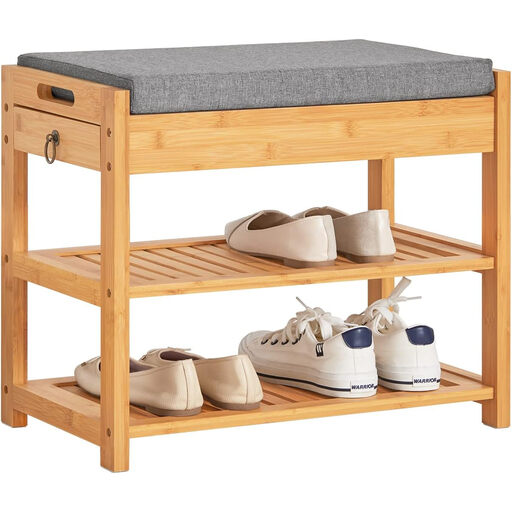
SoBuy FSR49-N Bamboo Shoe Bench with Seat Cushion
Why This Fits Their Persona: Ideal for anyone seeking a multifunctional solution. This shoe bench combines comfortable seating with practical storage and an extra drawer for small items like shoe polish or keys.
The sturdy bamboo material is naturally moisture-resistant and more stable than basic particleboard. Its compact design is robust and offers a high load capacity of up to 150 kg, according to the manufacturer.
Combination of seating and closed storage; includes a practical side drawer; floor protectors to prevent scratches.
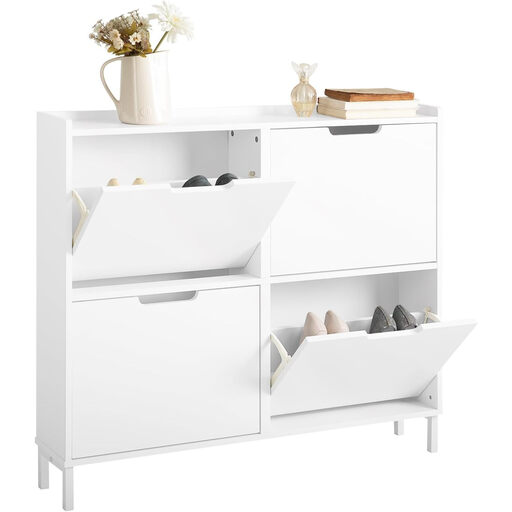
SoBuy Narrow Shoe Cabinet with 4 Flip Drawers
Why This Fits Their Persona: The perfect solution for anyone dealing with a very narrow hallway or entryway. This tip-out cabinet makes optimal use of vertical space without blocking valuable floor area.
With a depth of just 19 cm, this model decisively avoids the "depth trap." The E1-grade MDF material and included anti-tip device ensure the necessary stability and safety when mounted to the wall.
Extremely space-saving design; closed compartments protect shoes from dust and create a tidy look; top surface for decor or keys.
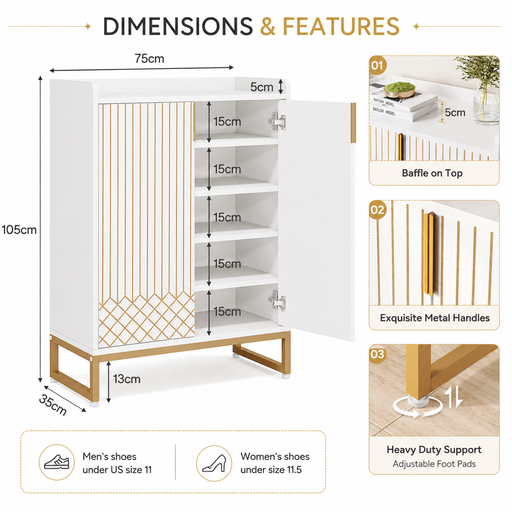
LANTINE Shoe Cabinet with 5 Tiers
Why This Fits Their Persona: For families or shoe enthusiasts who need to store a large number of shoes neatly and out of sight. This model offers space for up to 25 pairs of shoes behind closed doors.
The sturdy wood construction with metal legs ensures a stable footing, even when fully loaded. The closed design prevents the hallway from looking cluttered, even when the cabinet is full.
Very high capacity for 22-25 pairs of shoes; modern, minimalist design; bottom open shelf for frequently used shoes.
Looking for More Options?
We have curated a complete, up-to-date list of products that fully meet these strict selection criteria and rigorous safety standards.
Frequently Asked Questions (FAQ)
1. How deep should a shoe cabinet be in a hallway?
For a narrow hallway, a depth of no more than 25 cm is recommended to avoid obstructing the walkway. Tip-out cabinets are often the right choice here, as they offer models with depths of under 20 cm. Measure your hallway at its narrowest point before making a decision.
2. What is the difference between a tip-out cabinet and a shoe rack?
A tip-out cabinet stores shoes tilted or vertically in flip-down compartments, which allows for a very shallow design. It is ideal for flat shoes. A shoe rack has classic, horizontal shelves. It requires more depth but often offers more flexibility for taller footwear like boots or ankle boots.
3. How can I prevent unpleasant odours in a shoe cabinet?
Make sure to only place dry shoes in the cabinet. Models with ventilation holes, slatted doors, or an open back promote air circulation and prevent odours. For completely closed cabinets, it can help to leave the doors open regularly for a while or use special deodorising sachets.