
The Right SD Card for 4K Video: How to Avoid Costly Mistakes
Choosing a memory card seems simple, but for 4K video recording, hidden pitfalls can lead to data loss, stuttering footage, or, in the worst-case scenario, unusable material. Many users invest in a high-quality camera but skimp on the storage medium—a mistake that compromises the performance of the entire system. As your Joybuy Product Recommendation Officer, I'll help you understand the technical specs and make an informed decision based on facts, not marketing hype.
The Most Common Pitfalls When Buying a Memory Card
Before we dive into the technical details, let's clear up the three most common misconceptions that lead to bad buys:
- Focusing on Maximum Read Speed: Manufacturers often advertise impressively high megabyte-per-second (MB/s) figures. However, these usually refer to the read speed—how quickly data can be transferred from the card to a computer. For recording 4K video, the write speed is what's crucial. A high read speed is useless if the card can't save the incoming video data fast enough.
- Ignoring the Video Speed Class (V-Class): Many buyers look for general speed classes like "Class 10." For 4K video, this specification is inadequate. The Video Speed Class (V30, V60, V90) indicates the guaranteed minimum sustained write speed. A card without a V-Class certification can cause frame drops during 4K recording, even if its advertised maximum speed is high.
- Underestimating Storage Needs: 4K video files are enormous. A single minute of 4K video at 60 frames per second (fps) can take up several gigabytes of space, depending on compression. If you choose a low-capacity card, you'll constantly have to interrupt your shoot to swap it out—an impractical scenario for events, interviews, or nature videography.
What Really Matters: The Decisive Parameters
To find a suitable SD card for 4K video, you should focus on three core parameters. These define the true performance for demanding video recording.
1. Guaranteed Write Speed: UHS-I U3 and V30 as the Baseline
For smooth 4K recording, the memory card must maintain a consistently high write speed. Look for two important markings:
- UHS Speed Class 3 (U3): This symbol guarantees a minimum write speed of 30 MB/s. It is the minimum requirement for most 4K applications.
- Video Speed Class 30 (V30): This newer classification also guarantees a minimum write speed of 30 MB/s and is specifically designed for high-resolution video formats. A card marked UHS-I U3 V30 is a solid choice for recording 4K 60fps video. For even higher bitrates or 8K video, cards in the V60 (60 MB/s) or V90 (90 MB/s) classes are required.
2. Capacity and Format: SDXC for Future-Proofing
Due to the large file sizes, memory cards with 32 GB or less (SDHC) are often insufficient for 4K videographers. The solution is the SDXC (Secure Digital eXtended Capacity) format:
- Capacity: SDXC cards offer storage sizes from 64 GB up to 2 TB. For ambitious hobbyist photographers and videographers, capacities of 128 GB or 256 GB are a sensible starting point.
- File System: SDXC cards use the exFAT file system by default, which supports single files larger than 4 GB. This is essential for long, uninterrupted 4K recordings.
3. Compatibility with Your Camera
Always check your camera model's specifications. Not every memory card for a DSLR or mirrorless camera can take full advantage of a high-end card's maximum speed. A UHS-II card will work in a UHS-I slot, but only at the lower UHS-I speed. Investing in a more expensive card is only worthwhile if your camera also supports the corresponding standard.
Picks for Different User Profiles
Instead of making a one-size-fits-all recommendation, we have selected products that match specific user profiles.
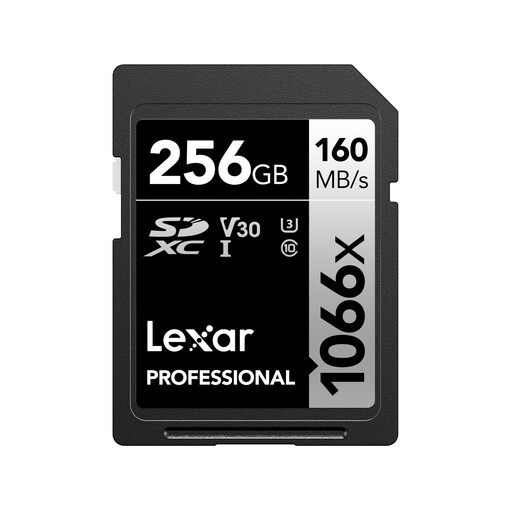
Lexar 256GB Professional 1066x SD Card, UHS-I, C10, U3, V30
Why This Fits Their Persona: Offers an ideal balance of large capacity for longer projects and high write speed, without requiring a professional's budget. Perfect for travel, events, or creating social media content.
With its V30 classification, it guarantees stable write performance for 4K, rather than just advertising high read speeds. The 256 GB capacity prevents frequent card swaps.
High write speed of up to 120 MB/s (manufacturer's specification) for fast burst shooting and 4K video; 256 GB provides ample space for extended recording sessions.
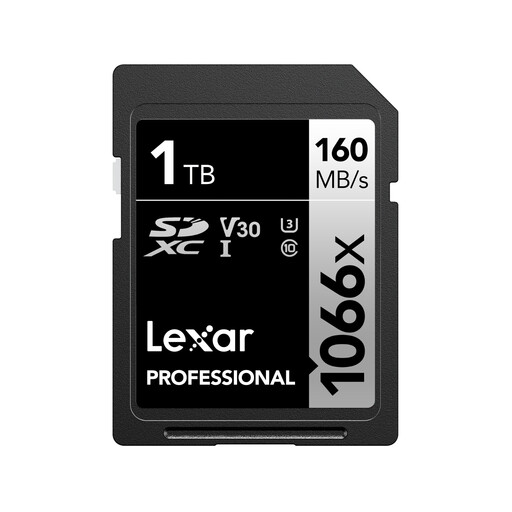
Lexar 1TB Professional 1066x SD Card, UHS-I, C10, U3, V30
Why This Fits Their Persona: The enormous 1 TB capacity is designed for all-day shoots like weddings, conferences, or documentaries. It eliminates the risk of needing to swap cards at a critical moment.
Completely solves the capacity problem for 4K RAW or high-bitrate recording. The V30 certification ensures recording quality even during long, uninterrupted sessions.
Maximum capacity of 1 TB for uninterrupted recording; reliable V30 performance for professional video projects and as a demanding **memory card for photographers**.
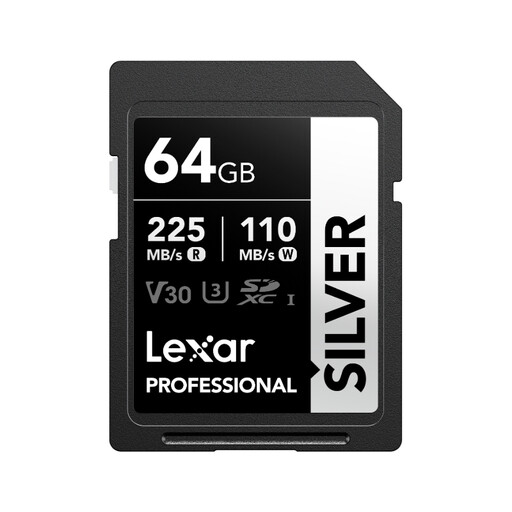
Lexar 64GB SD Card Silver, Up To 205MB/s Read, 90MB/s Write, V30
Why This Fits Their Persona: A budget-friendly option that still meets the V30 specification for reliable 4K recording. Ideal for shorter clips, use in action cameras, or as a backup card.
Focuses on the essential V30 certification for 4K video instead of superfluous features, enabling an accessible price point. The performance is clearly defined for its purpose.
V30-certified for 4K recording at an attractive price. The write speed of up to 90 MB/s (manufacturer's specification) is more than sufficient for many camera systems and 4K bitrates.
Looking for More Options?
We have compiled a complete, real-time list of products that fully satisfy these strict selection criteria and EU safety regulations.
Frequently Asked Questions (FAQ)
How do I properly format a new SD card for my camera?
It is highly recommended to always format a new memory card directly in the camera you plan to use it with ("in-camera formatting"). This optimises the file system for the camera's specific hardware, which increases stability and minimises file errors. You should also format the card after backing up all data to prepare it for new projects.
How much 4K video footage fits on a 256 GB card?
The exact amount depends heavily on the bitrate your camera uses. As a rough guideline, a 256 GB SDXC memory card can record approximately 4 to 8 hours of 4K video at a standard bitrate of 60-120 Mbps. For recordings with very high bitrates or in RAW format, this time can be significantly shorter.
Is a V30 card sufficient for 4K video at 60 fps?
For most cameras from manufacturers like Sony, Canon, and Nikon, a V30-certified card (guaranteed 30 MB/s write speed) is sufficient for recording 4K 60fps video. However, some professional camera systems that record at extremely high bitrates (e.g., over 240 Mbps) may require a V60 or even a V90 card. Always check the recommendations in your camera's manual for this.