
Kitchen and Bathroom Scale Buying Guide
Choosing the right scale—whether it's a bathroom scale for your wellness journey or a kitchen scale for precise recipes—can be more complicated than it first appears. The market is flooded with models that advertise numerous features, but not all of them deliver on their promises. Often, exaggerated marketing claims or poorly thought-out designs lead to an unsatisfying purchase. As your Joybuy Product Recommendation Officer, I'll help you identify the essential features and avoid common pitfalls.
The 3 Most Common Pitfalls When Buying a Scale
Before you make a decision, you should be aware of the typical problems that only become apparent after you've bought many common scales.
- The "Uneven Surface" Effect: Many digital scales provide unreliable and fluctuating measurements as soon as they are not placed on a perfectly level and hard floor. Inexpensive sensors are sensitive to the slightest irregularities, such as those found on tiled floors with grout lines or on older wooden floorboards. The result is frustrating discrepancies of several hundred grams during repeated measurements.
- Short-Lived "Smart" Features: A smart scale with an app sounds convenient, but its usefulness lives and dies with the software. Many manufacturers neglect app maintenance after a short time. The consequences: the app becomes unusable after a smartphone OS update, synchronisation fails, or subscription fees are suddenly demanded for basic functions.
- Material and Build Quality Flaws: A wobbly platform made of thin plastic, a glass plate that is not declared as safety glass, or rubber feet that come loose after a few weeks are not uncommon. Such defects not only impair measurement accuracy but also pose a safety risk in the household.
What Really Matters: The Core Parameters for a Good Scale
To avoid these traps, focus on three objective criteria that define a durable and reliable scale.
Precision and Sensor Technology
The accuracy of a digital scale depends on the quality of its sensors. Modern scales typically use four strain gauges (DMS sensors) positioned at the corners of the platform to capture weight evenly. Pay attention to the increments, i.e., the smallest measurable weight steps. For bathroom scales, increments of 100 g or 50 g are a good standard for precise results. For kitchen scales, the increment should be 1 g to weigh even small quantities exactly.
Material and Stability
A solid construction is essential for consistent measurement results. A platform or weighing surface made of tempered safety glass is not only robust and easy to clean but also provides a stable base. A non-slip underside is just as important. High-quality rubber feet ensure that the scale stands securely and does not slip, even on smooth tiles in the bathroom or on the kitchen countertop. This is a simple but crucial feature for longevity and safety.
Connectivity and Feature Set
If you opt for a body fat scale or a nutrition scale with app connectivity, critically evaluate its range of functions.
- Bathroom Scales: A good body analysis scale should determine values such as body fat percentage, muscle mass, and water content using Bioelectrical Impedance Analysis (BIA), in addition to weight. A reliable app allows data storage for multiple users and displays progress graphically.
- Kitchen Scales: An indispensable feature is the tare function (add-and-weigh), which allows the scale to be reset to zero to weigh ingredients one after another in the same bowl. Models that can also measure liquids in millilitres (ml) offer additional flexibility.
Top Picks by User
Here are some models that represent a considered choice for different user groups based on objective criteria.
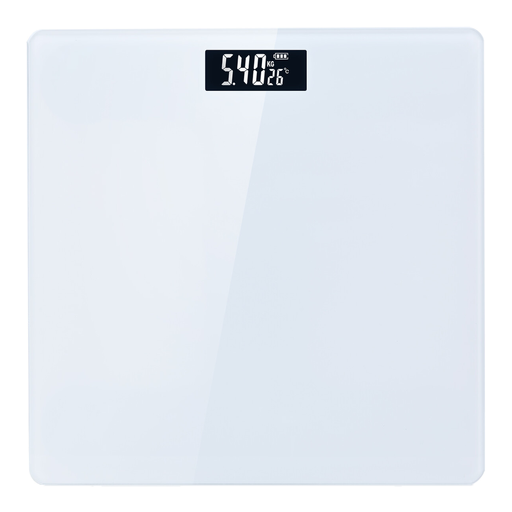
Sparoma AD-26 Electronic Scale, White
Why This Fits Their Persona: Ideal for users seeking a reliable and straightforward scale purely for weight monitoring. It focuses on the core function without the extra cost of smart features that might go unused.
Sidesteps the trap of short-lived smart functions by deliberately omitting them. The 4 mm thick tempered glass platform also addresses the point of material quality.
Offers high measurement accuracy with 0.05 kg increments and a high weight capacity of 180 kg. The clear LCD display is easy to read.
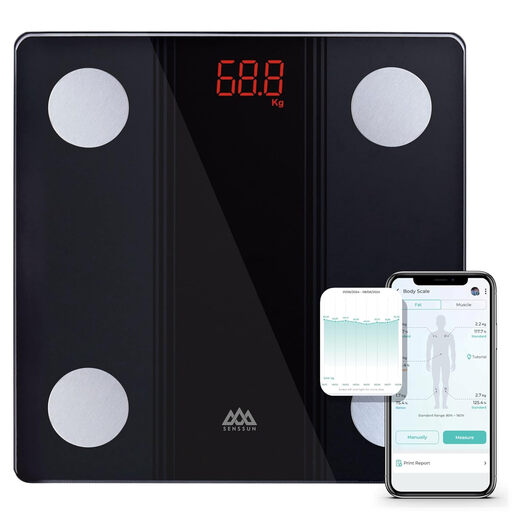
SENSSUN Body Fat Digital Personal Scale with App and Bluetooth
Why This Fits Their Persona: Perfect for users and families who want detailed insights into their body composition and wish to track their progress over time.
Uses the established MovingLife app for stable Bluetooth synchronisation, thus avoiding the trap of outdated software. The four high-precision electrodes ensure consistent BIA measurements.
Enables the analysis of 14 body metrics and supports automatic recognition and data storage for up to 15 different users.
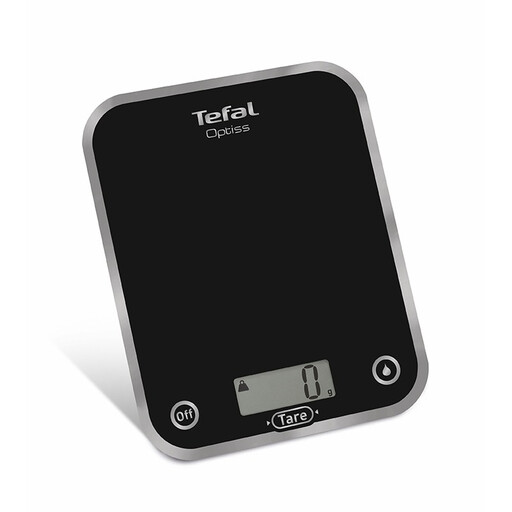
Tefal Optiss BC5005 Digital Kitchen Scale
Why This Fits Their Persona: Designed for anyone who values exact quantities when cooking and baking. Its simple operation and thoughtful features make preparing complex recipes easier.
The Tefal brand is synonymous with durable kitchen appliances. This scale avoids the inaccuracy trap with a precise 1g increment and a stable glass surface that guarantees a level platform.
Features a convenient tare (add-and-weigh) function, a liquid measurement function (ml), and an integrated hanging loop for space-saving storage.
Looking for more options?
We've compiled a full, up-to-date list of products that fully meet these strict selection criteria and UK safety regulations.
Frequently Asked Questions (FAQ)
How accurate are body fat scales, really?
A body fat scale uses Bioelectrical Impedance Analysis (BIA), which sends a weak, imperceptible electrical current through the body. Because fat, muscle, and water conduct electricity differently, the scale can estimate your body composition. It is an estimation, not a medically precise measurement. However, for home users, the consistency of the measurements is key to identifying trends. For more reliable results, you should always weigh yourself at the same time of day, under similar conditions (e.g., in the morning before breakfast), and on the same hard surface. Individuals with pacemakers or other medical implants should not use BIA scales.
Do I need to calibrate my digital scale?
Most modern digital scales have an automatic calibration feature. They typically calibrate themselves when turned on or when the batteries are changed. It's important to let the scale sit on a firm, level surface for a moment after turning it on until the display shows "0.0". This ensures the measurement starts correctly. Manual calibration is not necessary for most consumer-grade devices.
What is the difference between a mechanical and a digital scale?
A mechanical scale works purely analogically via a spring system that stretches under weight and moves a pointer on a dial. It requires no batteries but is generally less precise (often only in 500 g or 1 kg increments) and offers no additional functions. A digital scale uses electronic sensors for a more accurate measurement (usually in 100 g increments or finer) and shows the result on a display. It requires batteries and, depending on the model, can offer additional functions like body analysis or app connectivity.