
A Technical Guide to Samsung Galaxy Smartphones
Choosing a new Samsung Galaxy smartphone in 2026 requires an analysis of its technical specifications to find a device that meets your individual needs. Samsung's portfolio is primarily divided into the Samsung Galaxy S-Series, designed for high performance and advanced features, and the Samsung Galaxy A-Series, which covers a broad spectrum from entry-level to mid-range. This guide focuses on the objective criteria that should inform your purchasing decision.
Buyer's Guide: What to Look For When Choosing
Your choice of a Samsung phone should be based on a careful balance between hardware specifications and your intended use.
Display Technology and Resolution
Samsung predominantly uses AMOLED displays, known for their high contrast and deep blacks. Key differentiators include:
- Resolution: Full HD+ (approx. 2340 x 1080 pixels) is sufficient for most use cases. Quad HD+ (approx. 3120 x 1440 pixels) offers a higher pixel density for a sharper image, which is beneficial when viewing high-resolution photos and videos.
- Refresh Rate: A rate of 90 Hz or 120 Hz provides smoother animations and scrolling compared to the 60 Hz standard. Adaptive rates (LTPO) adjust to the on-screen content and can reduce power consumption.
- Brightness: A high peak brightness, measured in candelas per square metre (cd/m?), improves readability in direct sunlight.
Processor and Memory
Processing power determines how smoothly the system runs and handles demanding applications.
- Processor (SoC): High-end models like the Qualcomm Snapdragon 8 Elite are designed for compute-intensive tasks such as 8K video editing or demanding gaming. Processors from the Exynos series cover the entire performance spectrum, offering solid performance for everyday tasks in the mid-range.
- Memory (RAM): 4 GB of RAM is sufficient for basic applications. 8 GB to 12 GB of RAM allows for smooth multitasking with several apps open simultaneously and is recommended for future-proof performance.
Camera System
A smartphone with a good camera is defined by more than just a high megapixel count. Relevant factors include:
- Sensor Size and Aperture: A larger sensor and a wider aperture (lower f-number, e.g., f/1.8) capture more light, leading to better results in low-light conditions.
- Optical Zoom: Unlike digital zoom, optical zoom allows for lossless magnification of the subject.
- Additional Lenses: Ultra-wide-angle lenses capture a broader field of view, while macro lenses are designed for close-up shots.
- Video Features: The ability to record in 4K or 8K, as well as optical image stabilisation (OIS), are hallmarks of higher-end camera systems.
Battery, Connectivity, and Software
- Battery Capacity: A capacity of 4,500 mAh to 5,000 mAh is now standard and typically provides all-day use.
- Connectivity: A 5G phone is required to use the latest generation of mobile networks. Wi-Fi 6/7, Bluetooth 5.3/5.4, and NFC for contactless payments are other important standards. A Dual SIM phone (often as a Nano-SIM + eSIM) offers the flexibility of using two phone numbers.
- Software Updates: Long-term update commitments for the Android smartphone operating system and security patches are an indicator of a device's longevity and security. The Samsung Enterprise Edition offers extended update guarantees and management features for business customers.
Product Recommendations for You
Based on an analysis of specifications and intended user profiles, we present three models from the current Samsung portfolio.
Samsung Galaxy S25+: Performance for Demanding Users
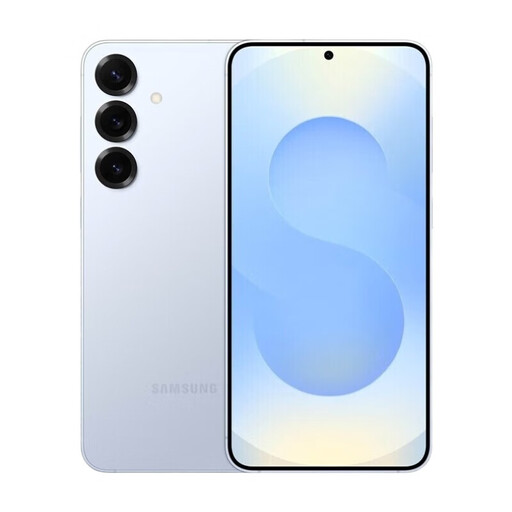
Why We Recommend This Product The Samsung Galaxy S25+ is positioned as a high-performance device for users with the highest demands. The Qualcomm Snapdragon 8 Elite processor, combined with 12 GB of RAM, delivers exceptional computing power for gaming, AI applications, and productive work via Samsung DeX. The 6.7-inch Dynamic LTPO AMOLED 2X display with QHD+ resolution and a 120 Hz adaptive refresh rate provides a visually stunning experience. A key feature is the manufacturer's seven-year update guarantee for Android versions and security patches.
Pros
- Processor: Qualcomm Snapdragon 8 Elite for peak performance.
- Display: 6.7-inch Dynamic LTPO AMOLED 2X with QHD+ and 120 Hz.
- Camera: 50 MP triple-camera with 3x optical zoom and 8K video recording.
- Software: 7 years of guaranteed system and security updates.
- Battery: 4,900 mAh with 45-watt fast charging.
- Protection: IP68 certified for water and dust resistance.
Who It's For This model is aimed at tech-savvy power users, creatives, and gamers who value maximum performance, future-proof software support, and an advanced camera system.
View all Galaxy S25+ specifications
Samsung Galaxy A56 5G Enterprise Edition: Efficiency for Business Professionals
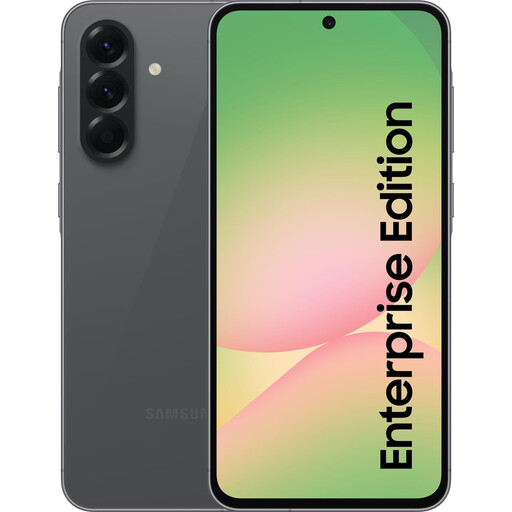
Why We Recommend This Product The Samsung Galaxy A56 5G Enterprise Edition is specifically designed for professional use. It combines a robust feature set with enhanced security and management capabilities. The Exynos 1580 processor and 8 GB of RAM ensure smooth performance for business applications. The 5,000 mAh battery is built for long workdays. The Enterprise Edition includes an extended security update guarantee and simplifies device management in corporate environments.
Pros
- Enterprise Edition: Extended security updates and management features.
- Battery: 5,000 mAh capacity for long runtime.
- Storage: 256 GB of internal storage and 8 GB of RAM.
- Display: Large 6.7-inch Super AMOLED display with FHD+ resolution.
- Protection: IP67 certified for water and dust resistance.
- Connectivity: 5G and Dual SIM functionality (Nano + eSIM).
Who It's For This device is the choice for business customers, enterprises, and professional users looking for a reliable, secure, and durable work device.
Find more technical details on the Galaxy A56 here
Samsung Galaxy A17: A Solid Foundation for Everyday Use
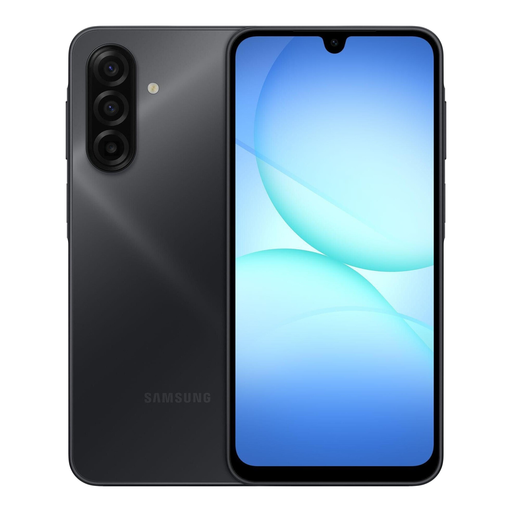
Why We Recommend This Product The Samsung Galaxy A17 offers a balanced feature set at an attractive price point. It features a large 6.7-inch Super AMOLED display, which is not a given in this price category. The 5,000 mAh battery ensures long-lasting use. With 128 GB of expandable storage, a 50 MP main camera, and 5G connectivity, the Samsung Galaxy A17 covers all the essential requirements for daily use.
Pros
- Display: 6.7-inch Super AMOLED display.
- Battery: Large 5,000 mAh capacity.
- Storage: 128 GB of internal storage, expandable via microSD card.
- Camera: 50 MP main camera for detailed photos.
- Connectivity: Supports the 5G mobile standard.
Who It's For This model is suitable for entry-level and everyday users looking for a reliable smartphone with a large display and long battery life at an attractive price-to-performance ratio.
Discover details about the Samsung Galaxy A17
Other Options at a Glance
If these models don't meet your specific requirements, the Samsung portfolio offers a wide range of other options that differ in price, performance, and features. You can find a comprehensive selection of devices in our SIM-Free Smartphone category.
Frequently Asked Questions
What is the difference between the Samsung Galaxy S-Series and the A-Series? The Samsung Galaxy S-Series represents Samsung's flagship line. It offers the most advanced processors, the highest-quality displays, and the most powerful camera systems. The Samsung Galaxy A-Series is aimed at a broader audience, from entry-level to the upper mid-range. It provides excellent value for money and often inherits technology from previous S-Series generations.
How important is the update guarantee on an Android smartphone? A long-term update guarantee is a crucial factor for a smartphone's security and longevity. Regular security patches protect the device from new threats. System updates (new Android versions) introduce new features and improve performance. A multi-year guarantee, as offered with the S-Series or Enterprise Editions, ensures the device remains secure and up-to-date for an extended period.
Do I need a 5G phone in 2026? The rollout of the 5G network is well advanced. A 5G phone enables significantly faster download and upload speeds, as well as lower latency compared to 4G/LTE. For data-intensive applications like streaming 4K video, cloud gaming, or downloading large files quickly, 5G is advantageous. While 4G is still sufficient for basic use like messaging and browsing, 5G is a recommended standard for a future-proof device in 2026.