
Robotic Pool Cleaner Buyer's Guide 2026: A Technical Comparison of Models
A robotic pool cleaner significantly reduces the manual effort of pool maintenance. These devices navigate autonomously through the pool, removing debris such as leaves, sand, and insects from the floor, walls, and in some cases, the waterline. Choosing the right model depends on objective criteria like pool size, pool type, and your specific cleaning needs. This article analyses technical specifications to provide a solid basis for an informed decision.
Selection Criteria for a Robotic Pool Cleaner
The efficiency of a pool cleaner is determined by the interplay of several technical parameters. A close examination of these factors is crucial for selecting the right device.
1. Drive System and Mobility: Corded vs. Cordless
- Corded Robotic Pool Cleaners: These models are powered via a mains cable, which allows for continuous runtime. However, the length of the cable limits the range and can lead to tangles in complex pool shapes.
- Cordless Robotic Pool Cleaners (Battery-Powered): A cordless pool vacuum offers maximum flexibility and eliminates the risk of cable tangles. The critical parameters here are battery life and charging time. Models with lithium-ion batteries typically offer high energy density and consistent performance throughout the cleaning cycle.
2. Cleaning Areas: Floor, Walls, and Waterline
A robot's ability to clean different areas is a key performance feature.
- Floor Cleaners: These are often entry-level models that exclusively clean the pool floor. They are suitable for pools where wall contamination is minimal, such as with many above-ground pools.
- Floor and Wall Cleaners: Advanced models have the ability to climb vertical surfaces. This requires sufficient suction power and special drive mechanisms (e.g., caterpillar treads) to adhere to the walls.
- 3D Cleaning (Floor, Walls, Waterline): Some devices also clean the waterline, where oils, sunscreen, and other grime often accumulate.
3. Suction Power and Filtration System
The suction power, specified in litres per hour (L/h) or cubic metres per hour (m³/h), defines how much water the unit can circulate and filter per unit of time. Higher suction power allows for the collection of larger and heavier debris.
The filtration system is equally relevant. It usually consists of one or more filter baskets or cartridges. The filter fineness, measured in microns (µm), indicates the size of the smallest particles that can be captured. A system with multiple filters (e.g., a coarse and a fine filter) can efficiently collect both large debris and fine particles. The filter capacity, measured in litres, determines how often the filter needs to be emptied.
4. Navigation and Pool Mapping
Modern robotic pool vacuums use intelligent navigation systems to ensure systematic and complete coverage of the pool surface. Basic models operate on a random pattern, while more premium units use gyroscope sensors or algorithms for optimised route planning (e.g., S-shaped paths). This reduces cleaning time and prevents areas from being missed.
Our Top Picks for Robotic Pool Cleaners for 2026
The following models have been selected based on their technical specifications and intended applications.
Beatbot Sora 70
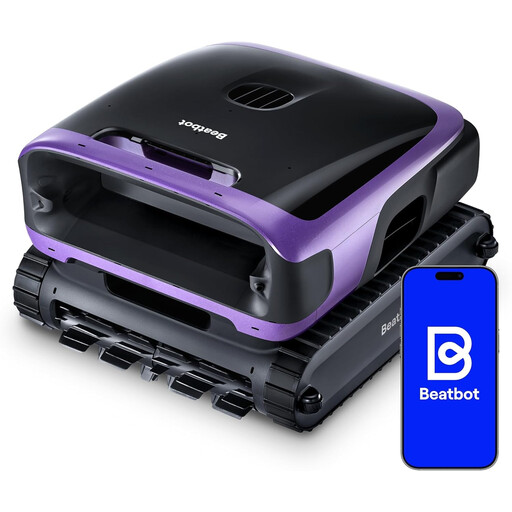
Why We Recommend This Product The Beatbot Sora 70 stands out for its ability to clean the entire pool, including the water's surface—a feature made possible by the JetPulse system. With a suction power of 25,700 L/h and a 10,000 mAh battery capacity, it is designed for large pools up to 300 m². The intelligent surface parking function and app control enhance user convenience.
Pros
- Comprehensive cleaning: Floor, walls, waterline, and water surface
- Very high suction power of 25,700 L/h
- Long battery life (up to 5 hours for floor-only cleaning)
- Large filter capacity of 6 litres
- Intelligent parking and retrieval function via app
Who It's For For owners of large in-ground or above-ground pools (up to 300 m²) who are looking for a comprehensive cleaning solution that also clears floating debris from the water's surface.
Aiper Scuba S1
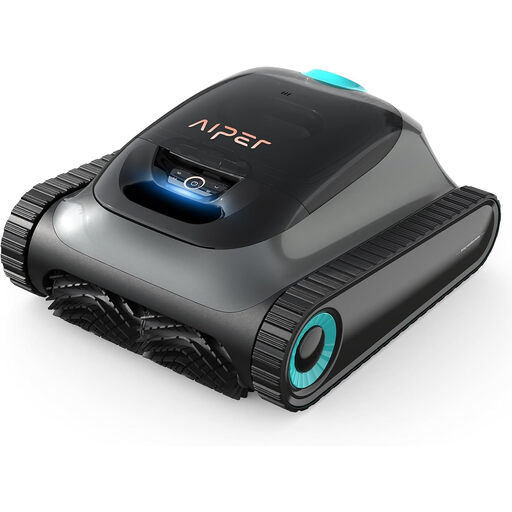
Why We Recommend This Product The Aiper Scuba S1 is a cordless robotic pool cleaner specifically designed for cleaning the floor and walls of in-ground pools up to 150 m². Its caterpillar treads provide excellent traction on various surfaces and allow it to overcome obstacles. The WavePath Navigation 2.0 ensures systematic coverage. Four cleaning modes, including an Eco mode, allow for flexible adaptation to cleaning needs.
Pros
- Cordless operation with up to 150 minutes of runtime
- Effective wall-climbing function thanks to caterpillar treads
- Intelligent navigation system for efficient coverage
- Four customisable cleaning modes
- Suitable for various pool shapes and surfaces
Who It's For For owners of medium-sized in-ground pools (up to 150 m²) who value reliable wall cleaning and the flexibility of a battery-powered device.
XUSHIDZ Pool Cleaner Robot SP1
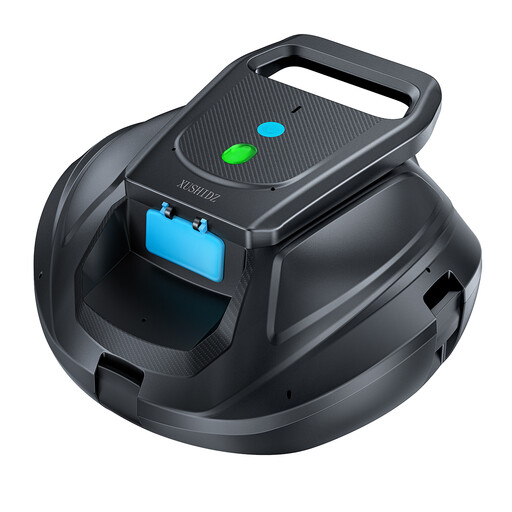
Why We Recommend This Product The XUSHIDZ SP1 is an automatic pool cleaner designed for a specific application: cleaning the floors of flat-bottomed above-ground and in-ground pools up to 80 m². Its strength lies in its simple operation (one-button start) and solid core functionality. With a battery life of up to 130 minutes and a short charging time of 2.5 hours, it offers an efficient solution for its defined use case.
Pros
- Very simple handling with one-button start
- Cordless operation and fast charging time
- Designed for flat floors (PVC, vinyl, concrete, etc.)
- Auto-parking function at the pool edge after the cycle ends
Who It's For For owners of small to medium-sized above-ground pools or in-ground pools with a flat bottom (up to 80 m²) who are looking for a straightforward and functional solution for automatic floor cleaning.
Other Models and Alternatives
The products presented here cover a range of different requirement profiles. If your pool has special conditions or you are looking for additional features, a broader market analysis may be worthwhile. You can find an expanded selection of devices with various specifications in our Robotic Pool Cleaners category.
Frequently Asked Questions (FAQ)
1. How often should a robotic pool cleaner be used? The frequency of use depends on how dirty the pool gets. For normal use and low debris entry (e.g., when using a pool cover), running it 2-3 times a week is often sufficient. During periods of heavy load, such as high pollen counts or after a storm, daily operation may be necessary to maintain water quality.
2. Can a robotic pool cleaner also clean the walls? Yes, many models are specifically designed as robotic pool cleaners for walls. These devices use their suction power and special drive mechanisms like brushes or caterpillar treads to adhere to and clean vertical surfaces. When selecting a product, look for "wall cleaning" or "floor and wall cleaning" in the technical specifications.
3. Do robotic pool cleaners work in above-ground pools? Yes, there are numerous models suitable for above-ground pools. It is important to choose a model that is designed for the specific pool shape and surface (usually vinyl liner). For above-ground pools with flat floors, in particular, there are many suitable cordless pool vacuums that require no complex installation. For pools with soft walls, care should be taken to ensure the robot does not damage them.