
Robot Vacuums with Mopping and Auto-Empty Stations: 2026 Buyer's Guide
A robot vacuum with mopping and an auto-empty station is a multifunctional cleaning system designed to minimise the manual effort of floor care. These devices combine three core functions: vacuuming dry debris, wet mopping hard floors, and automatically emptying the internal dustbin into a larger base station. The efficiency and autonomy of these systems depend on a range of technical specifications that are crucial for making an informed purchasing decision.
Buyer's Guide: Technical Selection Criteria
Selecting the right model is based on objective performance metrics. The following criteria are essential for evaluating functionality and suitability for specific household needs.
Suction Power (in Pascals)
Suction power, measured in Pascals (Pa), is an indicator of the device's ability to lift dirt, dust, and particles from the floor.
- Up to 4000 Pa: Sufficient for daily cleaning of hard floors and low-pile carpets. Effective at picking up dust and light debris.
- 4000 Pa to 8000 Pa: High suction power in this range is recommended for homes with medium-pile carpets or for the thorough removal of pet hair.
- Over 8000 Pa: Models with this level of power offer a very intensive deep clean and are designed for demanding conditions, such as high-pile carpets and lifting fine or heavy debris.
Navigation Technology
The method a robot uses to orient itself in a room determines its cleaning efficiency and coverage.
- Laser Navigation (LiDAR): A robot mop with laser navigation scans its surroundings using a rotating laser sensor. This allows for precise room mapping, systematic cleaning path planning, and reliable operation even in low-light conditions. The generated maps can often be edited via a robot vacuum with app control (e.g., by setting up no-go zones).
- Camera-Based Navigation (vSLAM): These systems use a camera to identify visual landmarks on the ceiling or walls to create a map. Performance can be limited in darkness or in very uniform environments.
- Gyroscope Navigation: Simpler models use gyroscope sensors to track their movements. They often clean in straight lines but are less precise at mapping and may clean areas twice or miss spots entirely.
Auto-Empty Station: Bagless vs. Bagged
The auto-empty station serves to automatically empty the robot, extending its autonomous cleaning intervals to several weeks or months.
- Bagless Robot Vacuums: These stations collect debris in a reusable container. This reduces running costs, as no consumables need to be repurchased. However, emptying the container can lead to direct contact with dust.
- Station with Disposable Bag: Debris is suctioned into a sealed bag. This allows for particularly hygienic disposal and is beneficial for allergy sufferers. However, it incurs recurring costs for purchasing replacement bags.
Battery Life and Operating Noise
- Battery Life: Specified in minutes (min) or square metres (m²), it defines the maximum cleaning area per charge cycle. Models with runtimes of 150 minutes or more are suitable for living spaces over 120 m². Most devices feature a "Charge & Resume" function, where they return to the station to recharge and then continue cleaning.
- Operating Noise: Measured in decibels (dB). A quiet robot vacuum operates at a noise level below 65 dB in standard mode. This allows it to run without significantly disrupting conversations or other household activities.
Our Top Picks for 2026
Based on technical specifications and practical utility, we present a few models here.
Vexilar W15 Robot Vacuum and Mop
-
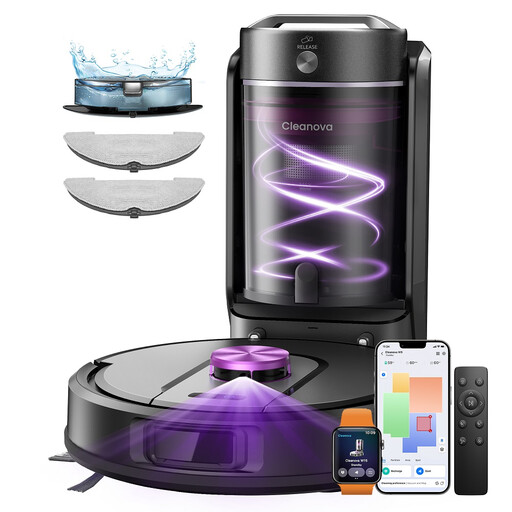
Why we recommend it: The Vexilar W15 combines a very high suction power of 10000 Pa with a bagless auto-empty station. This configuration is designed for maximum performance and minimised operating costs. Its LiDAR navigation ensures efficient and complete cleaning coverage.
-
Pros:
- Suction Power: 10000 Pa
- Auto-Empty Station: 4-litre, bagless (Multi-Cyclonic Technology)
- Navigation: LiDAR with 360° scan and map storage for up to 5 floors
- Battery Life: Up to 180 minutes (covers up to 200 m² according to the manufacturer)
- Operating Noise: From 60 dB in Quiet Mode
- Control: App, Alexa, Google Assistant, Siri, remote control
-
Best for: Households with large areas and mixed flooring (hard floors and carpets). Especially relevant for pet owners who need high suction power to remove pet hair and prefer a cost-effective, bagless solution.
NARWAL Freo S Robot Vacuum Cleaner
-
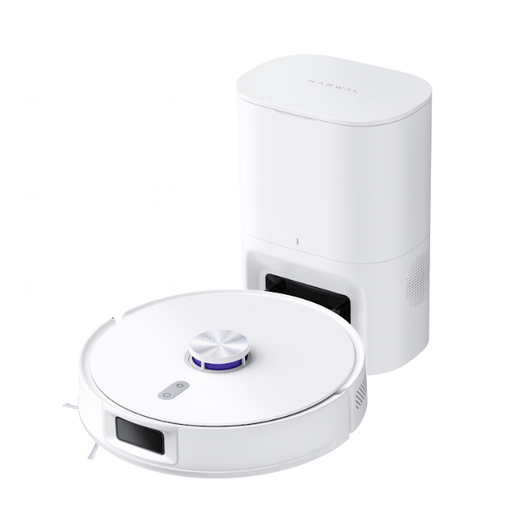
Why we recommend it: The NARWAL Freo S focuses on a thorough mopping function with 8N of downward pressure and hygienic debris disposal via a station with a large 3.5-litre dust bag. Its 8000 Pa suction power is very well-suited for most applications, including pet hair.
-
Pros:
- Suction Power: 8000 Pa
- Mopping Function: 8N downward pressure for removing stubborn stains
- Auto-Empty Station: 3.5-litre dust bag (up to 180 days maintenance-free, per manufacturer)
- Navigation: LDS Laser Navigation with 3D mapping
- Battery Life: Up to 145 minutes in Standard Mode
- Obstacle Clearance: Up to 20 mm
-
Best for: Users who place a high value on intensive mopping performance and hygienic, dust-free disposal. Ideal for homes with predominantly hard floors and for individuals with dust allergies.
Lubluelu L15 Ultra 3-in-1 Robot Vacuum and Mop
-
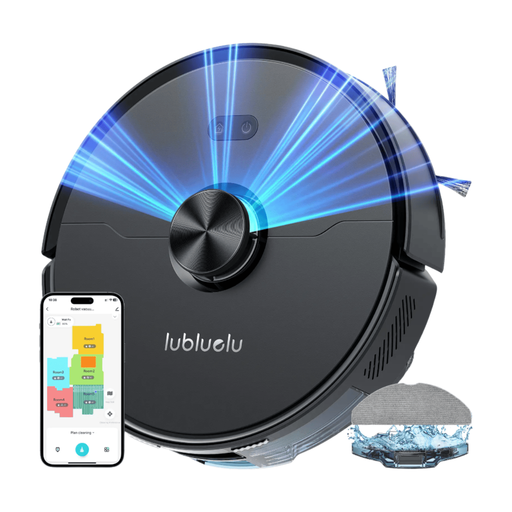
Why we recommend it: The Lubluelu L15 Ultra is an all-around model that combines solid vacuuming and mopping performance with an advanced station. The station not only empties the dustbin but also cleans and dries the mop pads with 45°C hot air, further reducing maintenance and preventing odours.
-
Pros:
- Suction Power: 4000 Pa
- Auto-Empty Station: 3-in-1 function (dust collection, mop cleaning, mop drying)
- Water Tanks: 4L clean water tank, 3L dirty water tank
- Battery Life: Up to 180 minutes (covers up to 300 m² according to the manufacturer)
- Navigation: Laser navigation with 5-level mapping
- Height: 9.7 cm, allows cleaning under many pieces of furniture
-
Best for: Users looking for a fully automated solution with minimal maintenance. The self-cleaning and self-drying mop function makes this model especially convenient for working professionals and families.
Other Models for Specific Needs
For households where pet hair removal is a top priority, a specialised selection of robot vacuums for pet hair offers additional options optimised for this requirement.
Frequently Asked Questions (FAQ)
1. How well do robot vacuums and mops clean corners and edges? Modern devices use special side brushes to sweep debris from corners and along edges into the path of the main brush. Models with a D-shaped design or advanced edge-cleaning algorithms often achieve better coverage here than standard round models. However, cleaning performance in tight corners remains a physical challenge.
2. Is a robot vacuum with an auto-empty station suitable for households with allergy sufferers? Yes, especially models with auto-empty stations that use sealed, disposable bags. These minimise contact with dust and allergens during the disposal process. While bagless systems are more cost-effective to maintain, they can release dust into the air when the container is emptied. An additional HEPA filter in both the robot and the station is also an important factor.
3. How much maintenance does a robot vacuum with mopping and an auto-empty station require? The maintenance effort is significantly lower compared to models without a station, but it is not zero. Regular tasks include:
- Emptying the station's container or changing the dust bag (every 30–90 days).
- Cleaning or replacing the filters (every 1–3 months).
- Removing hair from the brushes.
- Refilling the clean water tank and emptying the dirty water tank (for mopping function).
- Cleaning the robot's sensors.