
Robot Vacuums with Mopping and Cleaning Stations: 2026 Buyer's Guide
The automation of household cleaning has reached a new level of maturity with the introduction of robot vacuums featuring mopping functions and fully automatic cleaning stations. These systems aim to reduce manual maintenance to a minimum by not only emptying the robot's dustbin but also washing and drying its mops and refilling its water tanks. This article analyses the key technical parameters for making an informed purchasing decision and presents a selection of current models.
Buyer's Guide: Technical Selection Criteria for Robot Vacuum and Mop Combos with a Station
The performance of a robot vacuum and mop with a station is determined by the interplay of several technical components. An objective evaluation should consider the following aspects.
1. Cleaning Station Functionality
The station is the core of the automation. Its capabilities define the degree of autonomy.
- Auto-Empty: The station suctions the contents of the robot's mobile dustbin into a larger, stationary dust bag. Key factors are the volume of the dust bag (measured in litres) and the suction efficiency, which prevents clogging.
- Mop Washing: There are significant differences here. Basic systems rinse the mops with cold water. More advanced models use robot vacuums with hot water mop washing (e.g., at 75°C) to more effectively dissolve grease and stubborn stains from the fabric.
- Mop Drying: After cleaning, the mops must be dried to prevent mould and odour build-up. Drying can be done with hot air or at room temperature, with hot air speeding up the process.
- Tank Management: The station has a clean water tank and a dirty water tank. The robot returns to the station to refill its internal water tank and empty the dirty water. The volume of these tanks determines how often manual intervention is required.
2. Suction Power and Brush System
The raw cleaning performance depends on the suction power and the design of the brushes.
- Suction Power (Pascal, Pa): This value indicates the negative pressure the robot can generate. Higher Pascal values generally correlate with better pick-up of fine dust from carpet fibres and heavier particles like sand or pet food. Models with values over 7,000 Pa are considered very powerful.
- Brush System: Most devices combine a main brush (often made of rubber or with bristles) with one or more side brushes. For households with pets, a robot vacuum for pet hair with an anti-tangle system (e.g., dual rubber brushes or special detangling combs) is advantageous to reduce maintenance.
3. Mopping Technology and Edge Cleaning
The effectiveness of the wet cleaning is determined by the mechanics of the mopping system.
- Rotating vs. Vibrating Mops: Rotating mops (often two round pads) exert a scrubbing action through their rotational movement and downward pressure, which is beneficial for removing dried-on stains. Vibrating mop plates move back and forth at high frequency to polish the floor.
- Mop-Lifting Function: An important feature for homes with mixed flooring. The robot detects carpets and automatically lifts its mops to avoid soaking them.
- Edge Cleaning: By design, round robots struggle to clean corners and edges precisely. Innovative solutions like an extendable mop or an extendable side brush (robot vacuum with edge cleaning) address this shortcoming.
4. Navigation and Software
An autonomous vacuum with an app is standard today. However, the precision of navigation varies.
- Navigation Technology: LiDAR (Light Detection and Ranging) is the de facto standard for precise mapping and systematic cleaning. Additional cameras and 3D structured light sensors improve obstacle avoidance for smaller objects like cables or toys.
- App Features: A well-designed app allows for creating cleaning schedules, defining no-go zones, adjusting suction power and water flow per room, and control via voice assistants (e.g., Amazon Echo, Google Home).
Our Top Picks for Robot Vacuums with Cleaning Stations for 2026
Based on the technical criteria above, we present three models that each focus on different strengths.
Roborock Qrevo Edge
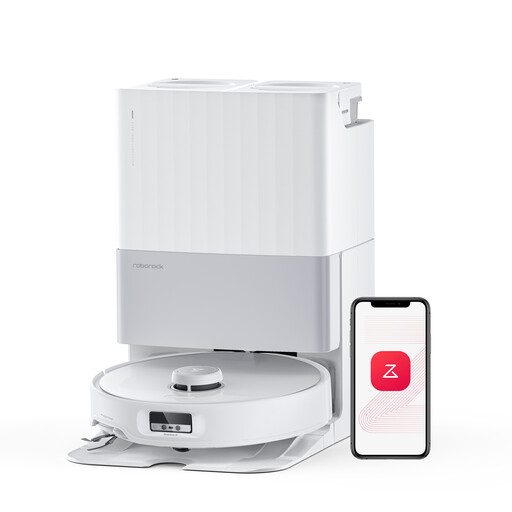
Why we recommend this product: The Roborock Qrevo Edge focuses on maximum cleaning performance and edge coverage. With a manufacturer-specified suction power of 18,500 Pa, it tackles demanding scenarios. The combination of 75°C hot water mop washing and the FlexiArm Design for edge cleaning positions it in the high-end performance segment. The Dual-Anti-Tangle system is specifically designed to reduce hair entanglement.
Pros:
- Very high suction power of 18,500 Pa
- FlexiArm Design for improved cleaning of edges and corners
- Mop washing with 75°C hot water for better stain removal
- AdaptiLift chassis for adjusting to different floor heights
- Comprehensive app control and voice commands via "Hello Rocky"
Who it's for: This model is ideal for users who prioritise a deep and seamless clean, especially in homes with many edges, corners, and stubborn dirt on hard floors.
Roborock Qrevo S5V
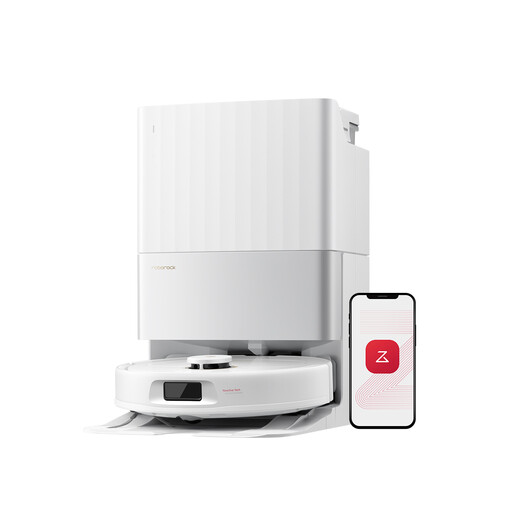
Why we recommend this product: The Qrevo S5V represents a balanced combination of strong suction power and an intelligent mopping function. With 12,000 Pa, it offers high suction power for most use cases. The FlexiArm mops allow for flexible adaptation to uneven floors, while hot air drying ensures mop hygiene. The dual anti-tangle system makes it a solid choice for households with pets.
Pros:
- High suction power of 12,000 Pa
- FlexiArm mops for a thorough wet clean
- Dual anti-tangle brush system
- Hot air drying for mops in the station
- Intelligent navigation with obstacle avoidance
Who it's for: This device is an option for users looking for a powerful all-rounder for mixed flooring who place particular value on low-maintenance brush systems.
Eufy RoboVac Omni C20
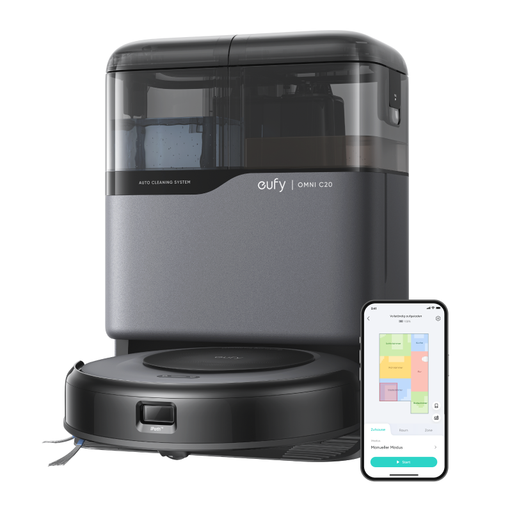
Why we recommend this product: The Eufy RoboVac Omni C20 stands out with its particularly slim design and specialised hair removal features. With a height of just 8.5 cm, this self-cleaning robot vacuum can reach areas under low furniture that are inaccessible to taller models. The Mop Master technology, with 180 RPM and 6N of downward pressure, ensures effective stain removal, while the Pro-Detangle Comb actively removes tangled hair from the brush roll.
Pros:
- Very slim design (8.5 cm) for cleaning under furniture
- Pro-Detangle Comb for automatic hair detangling
- All-in-one station with auto-empty, washing, and drying
- Rotating mops with 180 RPM and 6N of downward pressure
- Child lock on the station
Who it's for: Ideal for homes with a lot of low-profile furniture like sofas or beds. The Pro-Detangle feature makes it especially appealing for pet owners or people with long hair.
A Complement to Your Home's Ambience
While an immaculately clean floor creates the foundation for a pleasant living environment, personal style also significantly contributes to the sense of well-being within your own four walls. If you're looking to refresh not just your floors but also your wardrobe, you might find inspiration in our selection of Designer Skirts.
Frequently Asked Questions (FAQ)
1. How often does the cleaning station of a robot vacuum and mop need maintenance? Maintenance intervals depend on the size of the tanks and the dust bag, as well as the frequency of use. On average, the dust bag in the station needs to be replaced every 30 to 60 days. The clean water tank needs to be refilled every few days, depending on its size and the mopping intensity, and the dirty water tank must be emptied at the same time.
2. Are robot vacuums with mopping functions suitable for pet hair? Yes, many modern models are explicitly designed as robot vacuums for pet hair. Key factors are high suction power (over 5,000 Pa) to effectively pick up hair from carpets and hard floors, and a brush system that minimises tangles. Rubber brushes or special combs (like the Pro-Detangle Comb) are advantageous here.
3. Do these robots work on all floor types? Most devices are designed for hard floors (tiles, parquet, laminate, vinyl) and low-pile carpets. Models with an automatic mop-lifting function can seamlessly transition between hard floors and carpets without getting the carpet wet. Performance may be limited on high-pile carpets, and navigation can be more difficult.