
RGB Lighting: A Guide to Choosing the Right Light Solution
The right RGB lighting can transform any space—from a gaming room to a living room or a workspace. But the market is flooded with products whose marketing promises often outshine the lights themselves. Many buyers quickly discover that the adhesive on LED strips fails, the colours are inconsistent, or the app control is unreliable.
This guide will help you avoid common pitfalls and understand the technical features that are crucial for durable and functional smart lighting. This way, you can make an informed decision that fits your needs.
Common Problems with Budget RGB Lighting
Before you make a purchase, you should be aware of three common flaws that often only become apparent after installation:
- Weak Adhesive: Many budget LED strips use low-quality adhesive tape. The strip often detaches after just a few weeks, especially on rough surfaces or in areas with temperature fluctuations (e.g., behind a television). The result is an unsightly, sagging light that needs to be constantly reattached.
- Inconsistent Colour and Brightness: Uneven light distribution is a frequent annoyance. Individual LEDs or entire sections of the strip may appear dimmer or have a different colour from the rest. This ruins the desired ambient lighting and indicates poor manufacturing quality of the diodes and circuit paths.
- Unreliable Connectivity:App-controlled lights promise convenience, but the reality is often different. Connection drops, slow response times, or a confusing app can make using them frustrating. The range is particularly limited with Bluetooth-only solutions.
What Really Matters When Making a Choice
To avoid the problems mentioned above, you should pay attention to a few key technical parameters. These determine the quality, functionality, and longevity of your new lighting.
LED Type and Density: The Difference Between RGB and RGBIC
The type of LEDs used is crucial for the visual effects.
- Standard RGB: On these strips, all LEDs can only display a single colour at a time. They are well-suited for static ambient lighting or simple colour changes.
- RGBIC (Independent Chip): This more advanced technology integrates a chip into each LED section. This allows the strip to display multiple colours simultaneously and create dynamic effects like rainbow gradients or flowing animations. For gaming lights or dynamic TV backlighting, RGBIC is the better choice.
- LED Density: The number of LEDs per metre affects the brightness and uniformity of the light. A higher density (e.g., 60 LEDs/m) creates a more even line of light without visible dark spots between the diodes.
Control and Connectivity: App, Remote, and Matter
The control method should match your usage habits.
- Remote Control (IR): A simple and direct control method that doesn't require an app or network connection. However, the range of functions is usually limited.
- Bluetooth App: Allows for detailed settings via your smartphone but only works at close range (approx. 10 metres).
- Wi-Fi App: Offers the greatest range of functions, including remote control, voice assistant integration (Alexa, Google Assistant), and scheduling.
- Matter Support: Matter is a new smart home standard that ensures compatibility between devices from different manufacturers (e.g., Govee LED with Apple HomeKit). A future-proof option for anyone building a connected home.
Form Factor and Use Case
Not every RGB solution is a strip. Depending on the application, other form factors may be more suitable.
- LED Strips: Flexible and ideal for indirect lighting along edges, under furniture, or as TV backlighting.
- LED Panels: Modular light panels (often triangular or hexagonal) that can be assembled on the wall to create creative patterns. Very popular for gaming lights.
- Colour-Changing LED Night Light: Compact plug-in lights or battery-powered table lamps that provide safety and atmosphere in the bedroom or children's room.
- Light Bars: Rigid bars, often placed in pairs next to a monitor or TV, to illuminate the wall behind and visually expand the screen.
Product Recommendations for Different User Profiles
Here are some selected products tailored to specific needs and use cases.
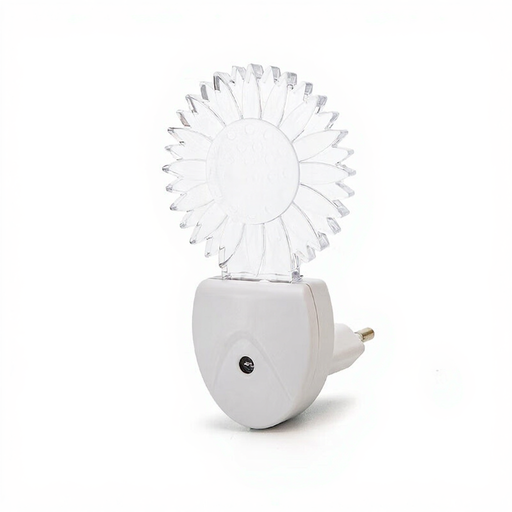
Aigostar Sunflower LED Sensor RGB Night Light
Why This Fits Their Persona: Ideal for parents looking for a safe and straightforward colour-changing LED night light for a child's room. Just plug it into the socket, and you're done. The sensor does the rest.
This product bypasses the typical problems of LED strips as it requires no adhesive surfaces or complex app integration. It's a robust plug-in device for a clear purpose.
Automatic day-night sensor that activates the light in darkness (below 20 LUX). Very low energy consumption of just 0.5 watts maximum.
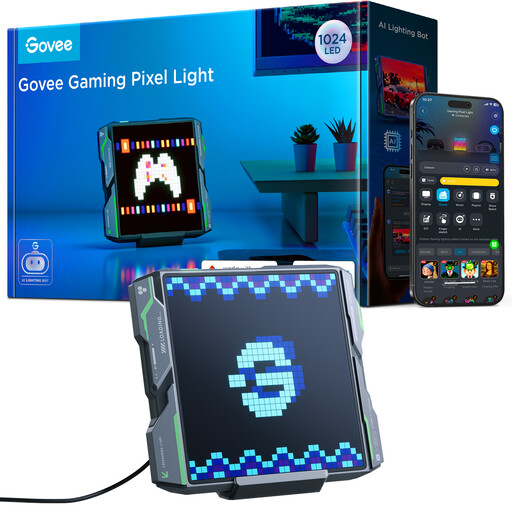
Govee Pixel Light 32 x 32 RGB LED Panel
Why This Fits Their Persona: Perfect for gamers and content creators who want to personalise their setup. This LED panel is more than just a light source—it's an interactive display for pixel art, animations, and useful information.
Govee is known for a mature and stable app platform with a large community. The problem of unreliable software is minimised here by a strong ecosystem and continuous updates.
Extensive DIY options for creating your own pixel art and animations. It also offers a light bar with music synchronisation and can display weather or stock prices.
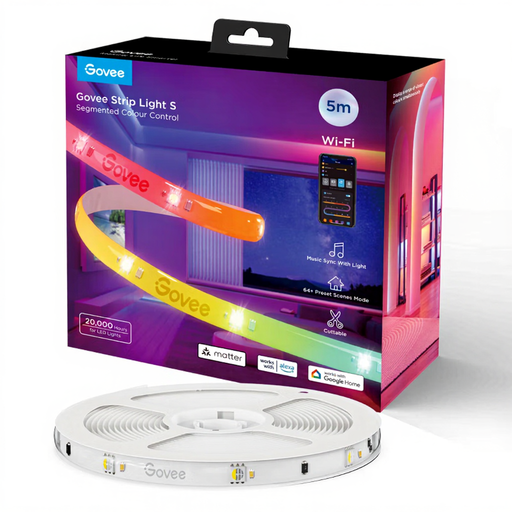
Govee RGBIC LED Strip with Matter Support
Why This Fits Their Persona: For users who want seamless integration into their existing smart home system (Apple Home, Google Home, Alexa). Matter certification ensures maximum compatibility and future-proofing.
RGBIC technology prevents inconsistent colours and allows for smooth transitions. Matter support solves the problem of isolated, unreliable app ecosystems.
Segmented colour control for dynamic effects and a protective coating that shields the LEDs from dust and diffuses the light more softly.
Looking for more options?
We have compiled a complete, up-to-date list of products that fully meet these strict selection criteria and safety standards.
Frequently Asked Questions (FAQ)
How much power does RGB lighting consume?
Power consumption depends heavily on the length, LED density, and set brightness level. A 5-metre LED strip typically consumes between 15 and 30 watts at full brightness. Smaller solutions like a colour-changing LED night light often require less than 1 watt, making them very energy-efficient. You can find the exact specifications in the technical data for each product.
Can you cut or extend LED strips?
Yes, most LED strips can be cut at the designated markings (often indicated by a scissor symbol). Extending them is also possible but requires special connectors and often a more powerful power supply to ensure uniform brightness along the entire length. Make sure to only connect compatible strip sections.
What is the difference between RGB and RGBIC?
The main difference lies in how the LEDs are controlled. On a standard RGB strip, all LEDs always light up in the same colour. You can change the colour of the entire strip, but you cannot display different colours simultaneously. An RGBIC strip has additional control chips that allow individual segments of the strip to be controlled independently. This enables dynamic effects such as colour gradients, chasing lights, or rainbow patterns on a single strip.