
Retro Bluetooth Speakers Buying Guide: Avoid Common Design Traps
A retro Bluetooth speaker is more than just an audio device; it's a statement piece that blends nostalgia with modern technology. However, the market is flooded with models whose stylish exteriors often mask technical shortcomings. Before you make a decision, it's crucial to understand the most common pitfalls to avoid buyer's remorse.
Many buyers are disappointed by two main issues:
- Poor sound quality behind a pretty facade: A vintage-style housing is no guarantee of good sound. Often, cheap drivers are installed in thin plastic casings, resulting in a flat, tinny sound that lacks depth.
- Unrealistic battery claims: Manufacturers advertise long playback times that are often only achievable at minimum volume. In normal, everyday use, the actual runtime of a portable Bluetooth speaker with a battery is frequently much shorter.
This guide will help you navigate these pitfalls and find a model that delivers on both aesthetics and performance.
What Really Matters: Key Features for Sound and Durability
To distinguish a high-quality vintage Bluetooth speaker from a purely decorative object, you should examine three core areas: its sound architecture, connectivity options, and realistic battery performance.
Sound Profile and Customisation: More Than Just Volume
A balanced sound profile is created by the interplay of various components. Look for models that feature separate drivers for different frequency ranges—typically a woofer for bass and a tweeter for clear highs. A key advantage is a speaker with a bass control and, ideally, a treble control as well. These physical knobs allow for direct, intuitive sound adjustments to suit your personal preferences and room acoustics, without needing to navigate through app menus.
Connectivity and Expandability: Bluetooth, Cable, and TWS
The wireless connection is the core of any Bluetooth speaker.
- Bluetooth Version: Look for models with Bluetooth 5.0 or higher (e.g., 5.3). Newer versions offer a more stable connection, greater range, and better power efficiency.
- Additional Inputs: A 3.5mm AUX input is essential for connecting non-Bluetooth devices like older MP3 players or turntables (with a preamp). Slots for Micro SD cards or USB drives offer added flexibility.
- TWS (True Wireless Stereo): The TWS speaker feature allows you to wirelessly pair two identical speakers. This creates a true stereo effect, where the left and right audio channels are reproduced separately, leading to a much more spacious and immersive listening experience.
Materials and Build Quality
The choice of materials affects not only durability but also sound quality. Solid enclosures made of wood or dense metal alloys minimise unwanted vibrations and resonance, resulting in a cleaner sound. In contrast, lightweight plastic casings tend to rattle at higher volumes. Look for solid craftsmanship, precisely fitted components, and a substantial weight that indicates a robust build.
Our Picks for Different Needs
Here are some recommendations tailored to different user profiles that meet the quality criteria mentioned above.
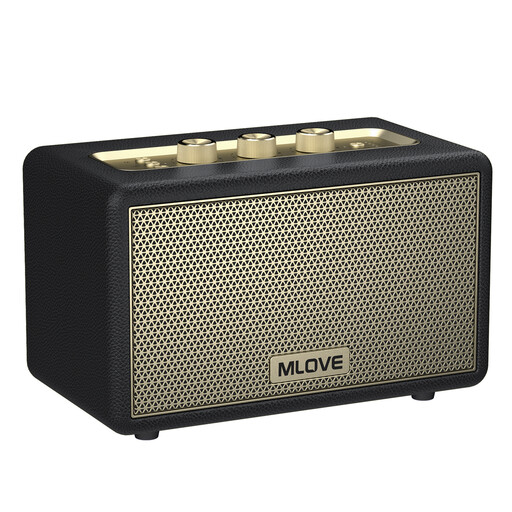
Mlove A200 Portable Bluetooth Speaker - Black
Why it's a match: Ideal for those seeking a stylish audio accessory for their home or office. Its mid-century design, complete with alloy controls, makes it a decorative element on any desk or shelf.
The solid construction, featuring a metal alloy front grille and control panel, avoids the cheap feel of all-plastic models and contributes to a resonance-free sound.
Separate controls for bass and treble allow for precise sound customisation directly on the device.
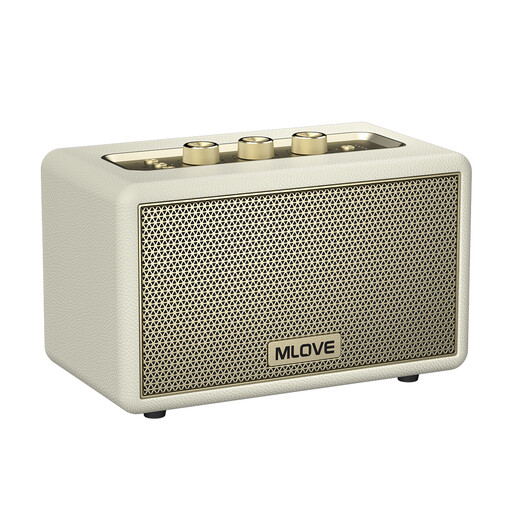
Mlove A200 Portable Bluetooth Speaker - White
Why it's a match: Perfect for users who want to enjoy their music in different rooms or even in the garden. As a portable Bluetooth speaker with a battery, this model offers the flexibility needed for on-the-go use.
The stated battery capacity of 5000mAh and a playback time of approx. 8 hours (varies with volume) is a realistic estimate, avoiding the trap of exaggerated marketing claims.
Modern connectivity via Bluetooth 5.3 and a USB-C charging port ensures a stable connection and convenient recharging.
Mlove A200 (as a TWS Pair)
Why it's a match: For listeners who want a full stereo setup as a home speaker. Pairing two Mlove A200 speakers creates a wide soundstage that far exceeds the performance of a single unit.
The TWS speaker function offers a future-proof expansion option, bypassing the limitation of a single mono speaker that cannot produce a true spatial soundscape.
Creates an immersive stereo listening experience, ideal for dedicated music sessions in the living room or office.
Looking for More Options?
We have compiled a complete, up-to-date list of products that fully meet these strict selection criteria and comply with German safety standards.
Frequently Asked Questions (FAQ)
How does TWS pairing for stereo sound work?
To use TWS (True Wireless Stereo) mode, you need two identical, compatible speakers. Typically, you turn on both devices and activate pairing mode on one of them, often by long-pressing a specific button (e.g., "M" or "TWS"). Once the two speakers are connected to each other, you pair your smartphone or other source device via Bluetooth to one of them. The system will then automatically assign the left and right audio channels.
Can I also connect devices with a cable?
Yes, most high-quality retro speakers, including the Mlove A200, have a 3.5mm AUX input. With the appropriate cable, you can directly connect devices like laptops, turntables (with a built-in or external preamp), or older audio players. This is a great option for ensuring a latency-free connection or for using non-Bluetooth devices.
How long does the battery last with normal use?
Battery life depends heavily on the volume and the type of music being played, as bass-heavy tracks consume more power. A realistic expectation for a speaker with a battery capacity of around 5000mAh is 6 to 10 hours at a moderate room volume. Claims of over 20 hours are often only achievable at very low volumes. Pay attention to the capacity in milliampere-hours (mAh) as a more objective metric for comparison.