
Resistance Bands Buyer's Guide and Selection Tips
Resistance bands are a flexible and space-saving solution for working out at home, in the gym, or while traveling. Their versatility makes them a popular tool for strength training, yoga, and rehabilitation. However, the market is saturated, and not every product delivers on its promise. Before you make a purchase, it's crucial to understand the common pitfalls and overhyped features that often lead to buyer's remorse.
This guide focuses on the objective criteria that truly matter, helping you to avoid the three most common traps when buying fitness bands:
- Rapid Material Wear: Many budget-friendly bands lose their elasticity or even snap after just a few weeks. This is often due to the use of low-quality materials that are unsuitable for regular stress.
- Mismatched Resistance Levels: A set with resistance levels that don't match your fitness level is useless. The bands are either too light and offer no training stimulus, or they are too heavy and increase the risk of injury.
- Lack of Versatility: Buying a single type of band that doesn't suit your planned exercises—for example, a short loop band for exercises that require a long therapy band—unnecessarily limits your workout potential.
What Really Matters: The Decisive Parameters Before You Buy
To make an informed decision, you should focus on a few critical technical features. These determine the longevity, safety, and effectiveness of your training.
1. Material: TPE vs. Natural Rubber
The material is the most important factor for the durability and stretch properties of a resistance band.
- Thermoplastic Elastomer (TPE): This synthetic material is often found in more affordable sets. It is odor-free and a good choice for individuals with latex allergies. However, TPE can lose elasticity with intensive use and tends to be less tear-resistant than natural rubber.
- Natural Rubber (Natural Latex): This material offers superior elasticity and tear resistance, making it the preferred choice for intensive strength training and muscle building. It is more durable but may have a characteristic rubber smell and is unsuitable for those with allergies.
2. Band Type: Loops, Long Bands, or Bands with Handles?
The type of band should be directly aligned with your training goals.
- Loop Bands (Mini Bands): These are short, closed-loop bands that are excellent for activating and strengthening the glute, hip, and leg muscles. They are a standard tool for warm-up exercises and targeted lower-body training.
- Long Fitness Bands (Therapy/Pull-Up Bands): These bands are typically 1.5 to 2 meters long and extremely versatile. They are suitable for full-body exercises, stretching in yoga and pilates, and as an assistive tool, for example, with pull-ups.
- Resistance Bands with Handles: These models simulate training with dumbbells or a cable machine. The handles provide a firm and comfortable grip for exercises like bicep curls, shoulder presses, or rows, making them ideal for classic at-home strength training.
3. Resistance Levels: Clear Labeling and Logical Progression
A band's color is not a standardized indicator of its strength. Instead, look for clear labeling of the resistance, ideally in kilograms (kg) or pounds (lbs). A high-quality resistance band set offers different strengths with a logical progression. This allows you, as a beginner, to start with light resistance and continuously progress, which is essential for muscle building.
Our Selection for Different User Profiles
Based on these objective criteria, we have compiled a selection of products suitable for different user profiles and training goals.
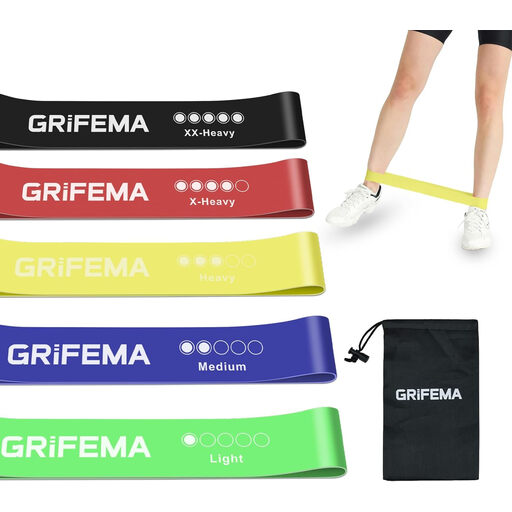
Grifema Resistance Bands Set, 5 Different Levels
Why This Fits Their Persona: This set is ideal for individuals who want to start training at home without a large initial investment. It provides a complete kit for a versatile full-body workout.
It solves the problem of mismatched resistance, as the five included bands provide a clear progression from light (approx. 2.3 kg) to heavy (approx. 18 kg). This ensures the right resistance is available for every exercise and fitness level.
Comprehensive set with 5 resistance levels and a carrying bag. The TPE material is suitable for those with latex allergies.
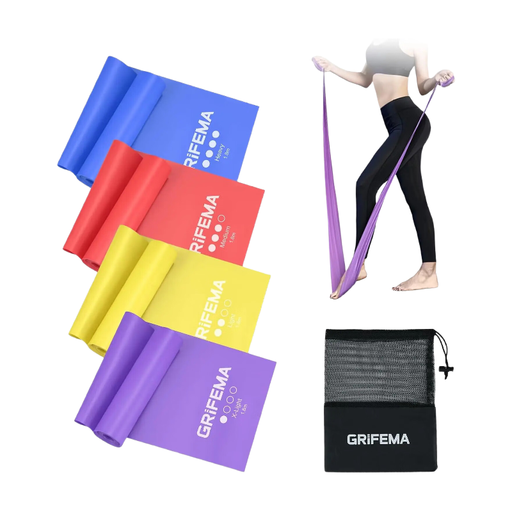
Grifema Resistance Bands Set of 4, 1.8m
Why This Fits Their Persona: The generous 1.8-meter length makes these bands ideal for stretches and full-body exercises that are central to yoga, Pilates, and general mobility routines.
This set bypasses the trap of limited versatility. While short loop bands are unsuitable for stretching, these long bands offer maximum flexibility for a wide range of motion.
1.8m length for full range of motion. The durable natural rubber material provides consistent and reliable tension.
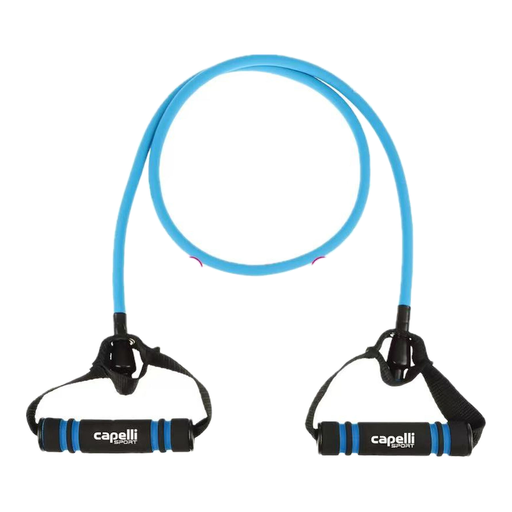
Capelli Sport Resistance Band with Handles
Why This Fits Their Persona: This band is designed for users who want to build strength and supplement or simulate their free weight training. The handles allow for clean and safe exercise execution.
It offers a specialized solution for strength training where simple loop bands are often impractical. The handles prevent slipping and allow for proper form during exercises like chest presses or tricep pushdowns.
Foam handles for a comfortable and secure grip. Ideal for simulating exercises with dumbbells or a cable machine.
Looking for More Options?
We have compiled a complete, up-to-date list of products that fully meet these strict selection criteria and safety requirements.
Frequently Asked Questions (FAQ)
How do I care for my resistance bands to maximize their lifespan?
To ensure the durability of your bands, you should protect them from direct sunlight and extreme temperatures. Inspect the bands for small tears or signs of wear before each use. Do not use them on rough or sharp surfaces. After your workout, you can clean the bands with a slightly damp cloth and let them air dry.
Which resistance band set is most effective for muscle building?
For effective muscle building, the principle of progressive overload is crucial. A resistance band set with multiple, clearly defined resistance levels is ideal for this, as it allows you to gradually increase the intensity. For isolated strength exercises targeting specific muscle groups, resistance bands with handles are often particularly effective because they provide stable handling and targeted resistance.
Are training bands suitable for rehabilitation after an injury?
Training bands are a commonly used tool in physical therapy because they allow for low-impact training with controlled resistance. However, it is imperative to discuss the selection of exercises and the appropriate strength level with a doctor or physical therapist beforehand to best support the healing process and prevent further injury. Always start with the lowest possible resistance.