
Rechargeable LED Lights Buyer’s Guide: Avoid Common Purchase Mistakes
A reliable Rechargeable LED Light is more than just a light source; it's a versatile tool for everyday life, work, and leisure. However, the market is flooded with models whose marketing claims are often more dazzling than the light itself. Before you make a decision, it's crucial to understand the common pitfalls that can lead to a purchase you'll regret.
Many buyers are swayed by exaggerated brightness claims or unrealistic battery life specs, only to find the product fails in real-world use after just a few weeks. This guide will help you cut through the noise and make an informed choice.
The 3 Most Common Traps When Buying a Rechargeable LED Light
- The Lumen Trap: Manufacturers often advertise extremely high lumen ratings. However, a high lumen value alone doesn't guarantee good light. Poorly designed optics can result in an unusable beam pattern that's too harsh in the center and too dim at the edges. More important factors are the light distribution, colour temperature, and Colour Rendering Index (CRI).
- Unrealistic Battery Life Claims: The stated maximum runtime almost always refers to the lowest brightness setting, which is often too dim for practical use. Under realistic conditions, the actual runtime is usually much shorter. The key metric is the battery capacity in milliampere-hours (mAh) relative to power consumption.
- Outdated Charging Ports and Lack of Protection: Many budget-friendly models still use the obsolete Micro-USB port. A modern LED flashlight with USB-C not only offers the convenience of a reversible connector but also often provides faster charging times. Furthermore, cheap products frequently lack an overcharge protection circuit, which drastically shortens the battery's lifespan.
What Really Matters: The Decisive Parameters
To find a durable and functional rechargeable LED lamp, you should focus on objective technical specifications. These three parameters are crucial for most use cases.
Battery Capacity and Charging Port
Battery capacity, measured in milliampere-hours (mAh), is a direct indicator of potential runtime. A higher mAh number generally means longer operation. Look for models with at least 1800-2000 mAh for a solid baseline. A USB-C port is the current standard and a clear sign of quality. It ensures universal compatibility with modern chargers and power banks.
Light Characteristics: More Than Just Brightness
Instead of focusing solely on lumens, consider the following properties:
- Colour Temperature (Kelvin): Values around 3000 K produce a warm, cozy white light, ideal for a cordless desk lamp or a clip-on book light. Values around 6000 K create a cool, daylight-like white light, suitable for workspaces or outdoor activities.
- Colour Rendering Index (CRI): A CRI value over 80 (or better, 90+) ensures that colours are rendered naturally and accurately. This is especially important for an RGB video light in photography or for DIY projects where colour accuracy is crucial.
- Beam Pattern and Dimmability: An adjustable focus or various lighting modes offer flexibility for different distances and tasks.
Ingress Protection (IP Rating) and StVZO Approval
The IP rating indicates how well a light is protected against the ingress of foreign objects (first digit) and water (second digit).
- IP44: Protection against splashing water. Sufficient for normal household use or a closet light with a motion sensor.
- IP67/IP68: Protection against temporary or permanent submersion. A must-have for a rugged camping lantern or a flashlight for your emergency go-bag.
For a bike light in Germany, approval according to the German Road Traffic Licensing Regulations (StVZO) is also a legal requirement. Look for this specific certification to ensure you are compliant and safe on the road.
Recommended Products for Every User
Instead of making a one-size-fits-all recommendation, we have selected models tailored to specific use cases.
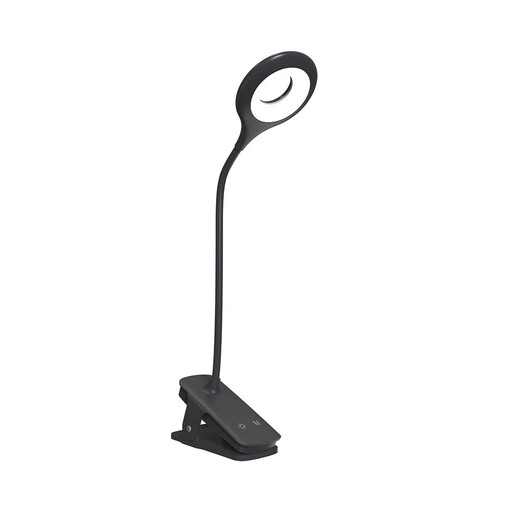
Mini Wozinsky Wireless LED Reading Lamp
Why It's a Good Fit: Ideal for reading in bed or at a desk. The flexible arm and sturdy clip allow for precise light positioning without disturbing others. The adjustable brightness and colour temperature are easy on the eyes.
The lamp features a modern USB-C port and a solid 1800 mAh battery with a realistic runtime of 4 to 32 hours, depending on the mode. It thus avoids the trap of outdated technology and unrealistic claims.
Five brightness levels and five colour temperatures (3000–6500 K) offer exceptional flexibility for this price point. The memory function recalls the last-used setting.
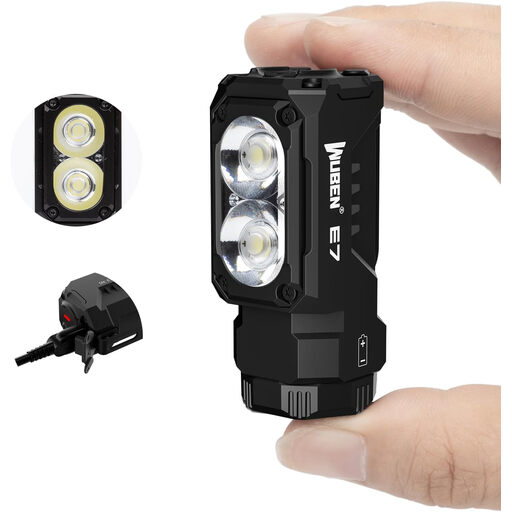
WUBEN E7 1800-Lumen Mini Flashlight
Why It's a Good Fit: Designed for demanding conditions. Its high luminosity, rugged housing, and water resistance make it the ideal companion for camping, hiking, or as part of an emergency kit in your car or home.
Instead of using vague marketing terms, this model provides verifiable facts: a brightness of up to 1800 lumens and an IP68 certification, which guarantees protection against permanent submersion. This sidesteps the pitfall of misleading durability claims.
The combination of extreme brightness, a compact design, and a magnetic base for hands-free operation is a standout feature in its class. Six lighting modes, including an SOS function, enhance its versatility.
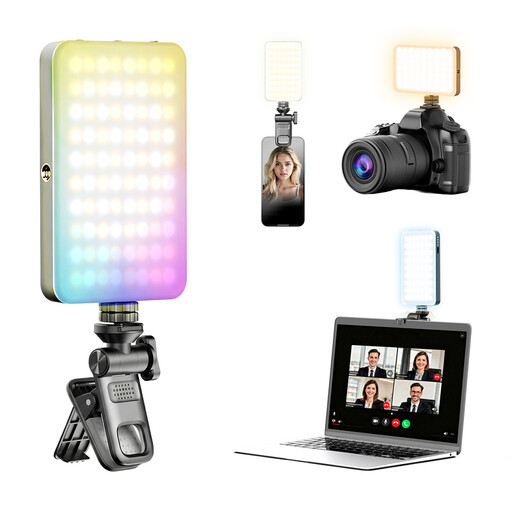
Rollei LUMIS Mini Creator RGB
Why It's a Good Fit: For vloggers, photographers, and videographers who need a compact yet powerful light source for creative projects. Full control over colour and temperature allows for professional scene lighting.
This model avoids the lumen trap by focusing on light quality. With a high CRI/TLCI value of 90/95, it ensures precise colour rendering, which is more important for visual media than raw brightness.
Full control over 360 RGB hues and a wide colour temperature range (2,500–9,000 K). Multiple mounting options (1/4" thread, cold shoe adapter) provide maximum compatibility with cameras and tripods.
Looking for More Options?
We have compiled a complete, up-to-date list of products that fully meet these strict selection criteria and German safety regulations.
Frequently Asked Questions (FAQ)
1. How long does the battery of an LED light really last?
The actual battery life depends heavily on the selected brightness level and the battery capacity (mAh). A 2000 mAh light that consumes 5 watts at full brightness will last for a shorter time than when dimmed to a 1-watt setting. Compare the mAh ratings and check if the manufacturer provides runtimes for different brightness levels to get a realistic estimate.
2. What does the IP rating on a rechargeable lamp mean?
The IP (Ingress Protection) rating classifies a housing's protection against the entry of foreign objects and water. The first digit (0-6) describes protection against solids (e.g., dust), while the second digit (0-9) describes protection against water. For home use, IP20 (no water protection) is often sufficient, whereas for a camping lantern or flashlight, at least IPX4 (protection against splashing water) or, even better, IPX7/IPX8 (protection against submersion) is recommended.
3. Does my bike light need StVZO approval?
Yes, in Germany, all lights used on bicycles in public traffic must have approval according to the German Road Traffic Licensing Regulations (StVZO). These lights have a specially shaped beam pattern that prevents dazzling oncoming traffic. Attaching a regular flashlight or a non-approved rechargeable light to your handlebars is not permitted and can result in a fine. When buying a bike light, always look for the K-mark certification from the Federal Motor Transport Authority.