
Ready-Made Soup Buyer’s Guide: How to Avoid a Bad Purchase
By Joybuy Product Recommendation Officer, August 29, 2026
Ready-made soups are a convenient solution for a quick meal at the office, during long study days, or when busy family life leaves no time for cooking. However, the vast selection of packet soups, canned soups, and stews can be overwhelming. Not every product delivers on its promise. Before you buy soups online, you should know the common pitfalls to make an informed decision.
Many shoppers are swayed by appealing images and marketing slogans, only to be disappointed later by a watery taste or a meal that isn't filling. The three most common problems are:
- Misleading Labels: Terms like "homestyle" or "traditional" are often purely marketing. They don't guarantee that a product is free from flavour enhancers or industrially processed ingredients.
- Hidden Sugar and High Salt Content: A savoury-tasting soup can contain a surprising amount of sugar or salt. These details are often found only in the fine print of the nutritional information and can make a balanced diet more difficult.
- Low Percentage of the Main Ingredient: A "rich tomato soup" should have a high tomato content. Often, however, such products are primarily based on water and starch, while the namesake ingredient is present only in a low concentration.
What to Look for When Buying Ready-Made Soups
To ensure you get a product that meets your expectations, you should check three key criteria. These will help you objectively assess the quality and suitability of a ready-made soup.
1. Packaging and Preparation Method
The choice of packaging has a direct impact on preparation time, shelf life, and taste.
- Packet Soups (Instant Soups): These are dry products that are mixed with hot water. They are lightweight, space-saving, and ideal for on the go or as a quick soup for work. Preparation takes only a few minutes. However, the consistency is often thinner and the solid ingredients are smaller than in other varieties.
- Canned and Jarred Soups: These contain already-cooked soups or stews that only need to be heated. They offer a creamier consistency and larger chunks of vegetables or meat. Canned soups have a particularly long shelf life and are robust, making them a good choice for pantry stocking or camping. They can be prepared in a pot or in the microwave.
2. Analysing the Ingredient List and Nutritional Facts
The ingredient list is the most objective indicator of a soup's quality. Ingredients are listed in descending order by weight.
- Percentage of the Main Ingredient: Look for percentages. A good lentil stew should have a lentil content of at least 25–30%. If water is listed first, followed by starch and flavourings, it's a sign of a lower-quality product.
- Salt and Sugar Content: Pay attention to the nutrition table. A high salt content (often over 1g per 100ml) is common in ready-made meals. Compare different products to find a more balanced option.
- Additives: Manufacturers like Knorr or Erasco are increasingly offering products without flavour-enhancing additives. A look at the list reveals whether flavourings, colourings, or preservatives are included.
3. Soup Type: Clear Broth, Cream Soup, or Stew
The type of soup determines whether it serves as a light starter or a full meal.
- Clear Soups: Often broth-based with noodles or vegetables, like a classic wedding soup. They are light and work well as a snack.
- Cream Soups: A tomato soup or cream of asparagus soup is creamier and more filling. Its quality heavily depends on the percentage of the namesake vegetable.
- Stews: An Erasco stew with lentils or potatoes is a complete meal. It contains solid ingredients like sausages, meat, or a large amount of legumes and vegetables.
Top Picks for Every Need
Here are some recommendations tailored to different needs and situations.
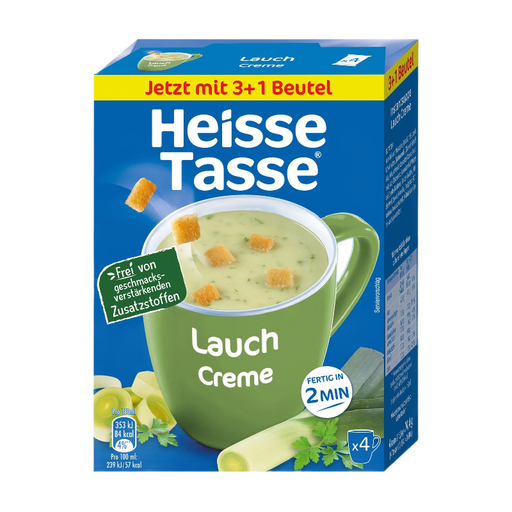
Heisse Tasse Cream of Leek Soup
Why This Fits Their Persona: This instant soup is designed for a quick lunch break. It only requires hot water and is ready in minutes. The single-serving packets are practical and prevent leftovers.
The product doesn't promise to be a homemade meal. It is clearly positioned as a quick cup soup. The 12% leek content is solid for an instant cream soup and is transparently declared.
Extremely fast preparation; croutons are already included as a garnish.
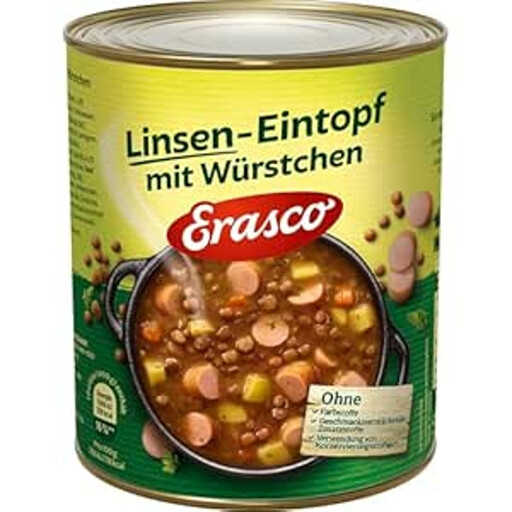
Erasco Hearty Lentil Stew with Sausages
Why This Fits Their Persona: For anyone who wants a traditional, filling dish without the effort of cooking. The stew is a complete meal and a classic of German cuisine, ideal for a quick family dinner.
The ingredient list is transparent: the percentage of cooked lentils (32%) and bockwurst sausage slices (6.5%) is clearly stated. You get exactly what is advertised—a stew with a high proportion of its main ingredients.
Very filling; contains no flavour-enhancing additives, according to the manufacturer.
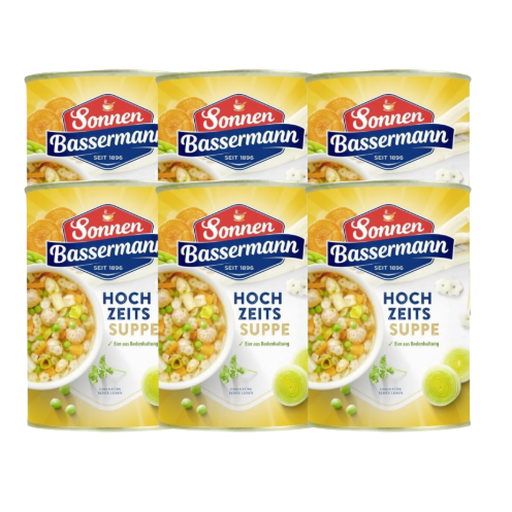
Sonnen Bassermann Traditional Wedding Soup
Why This Fits Their Persona: Wedding soup is an elaborate classic. This ready-made version offers the traditional flavour with noodles, egg custard, and meatballs, without you having to spend hours in the kitchen.
The "traditional" label is backed up by a clear list of the typical ingredients. The percentages of noodles (9.3%), meatballs (5.3%), and egg custard (1.5%) are specified, providing an honest picture of the product.
Offers the complex flavour of a classic with minimal effort; diverse ingredients.
Looking for More Options?
We have compiled a complete, up-to-date list of products that fully meet these strict selection criteria and German regulations.
Frequently Asked Questions
1. How long do ready-made soups last? The shelf life depends on the type of packaging. Canned soups and jarred soups usually last for several years thanks to the heat preservation process, as long as the packaging is undamaged. Packet soups also have a very long shelf life but should be stored in a dry place to prevent clumping. You can always find the exact best-before date on the packaging.
2. How can I identify a soup with high salt content? A look at the nutrition table per 100g or 100ml is crucial. As a rule of thumb, products with more than 1.25g of salt per 100g/ml are considered high in salt. Many manufacturers now offer reduced-salt versions or explicitly point out a moderate salt content.
3. Can you prepare ready-made soups without a stove? Yes, most ready-made soups can be prepared without a stove. Canned soups can be heated in a microwave-safe container. Instant soups or packet soups only require hot water from a kettle. This makes them an ideal quick soup for work or for situations without a fully equipped kitchen. Always follow the manufacturer's preparation instructions on the packaging.