
8K Wireless Gaming Mouse Buyer's Guide
The search for a new 8K wireless gaming mouse often leads into a jungle of marketing terms. Manufacturers advertise extremely high DPI counts, ultra-lightweight designs, and revolutionary polling rates. However, not every advertised feature translates to a real in-game advantage. Many ambitious gamers invest in expensive peripherals only to find they don't deliver the expected performance boost or develop defects after a short time.
This guide will help you separate the wheat from the chaff. We'll highlight the most common pitfalls and explain which technical parameters truly matter for an esports mouse, ensuring your next investment gives you a competitive edge.
The 3 Most Common Pitfalls When Buying a Gaming Mouse
Before we dive into recommended models, it's crucial to understand the typical marketing traps that often lead to disappointment.
- The DPI Myth: Extremely high DPI values (e.g., over 20,000) are often presented as a key selling point. In practice, however, most professional players use settings between 400 and 1,600 DPI. An excessively high value is not only impractical but also says nothing about the sensor's actual precision. A high-quality sensor with flawless tracking at lower DPI settings is far more important.
- Weight at All Costs: A lightweight gaming mouse can improve responsiveness and reduce fatigue. However, some manufacturers achieve extremely low weights by using perforated shells (honeycomb design) or very thin materials. This can compromise stability and makes the mouse susceptible to dust and liquids, which can shorten its lifespan.
- The Misunderstood 8K Polling Rate: A polling rate of 8,000 Hz promises data transmission eight times faster than the 1,000 Hz standard, resulting in minimal latency. However, to leverage this advantage, a powerful PC and a high-refresh-rate monitor (at least 144 Hz, preferably 240 Hz or higher) are required. Without the right system environment, the high polling rate can place unnecessary strain on the CPU without offering any noticeable benefit.
What Really Matters: The Decisive Features of an Esports Mouse
To gain a real performance advantage, you should focus on the following objectively measurable criteria.
Polling Rate: The Difference Between 1,000 Hz and 8,000 Hz
The polling rate indicates how often the mouse reports its position to the computer per second.
- 1,000 Hz: The established standard for gaming mice, sending an update every 1 millisecond (ms). This is sufficient for most gaming scenarios.
- 8,000 Hz: A fast wireless mouse with 8K technology sends an update every 0.125 ms. This results in visibly smoother cursor movement on high-refresh-rate monitors and can further reduce the latency between a click and the in-game action. This is particularly relevant in fast-paced FPS games where every millisecond counts.
Sensor Quality Over DPI: The Pixart 3395 as a Benchmark
Instead of focusing on the maximum DPI number, the sensor model used is what's crucial. The Pixart 3395 sensor is considered one of the leading sensors on the market. It is characterized by extremely high tracking accuracy without unwanted acceleration or smoothing. This means that mouse movements are translated 1:1 on the screen without deviation—a fundamental requirement for precise aiming.
Weight and Ergonomics: The Balance of Agility and Control
A lightweight gaming mouse (typically under 65 grams) allows for faster changes in direction and reduces wrist strain during long sessions. However, the shape is at least as important. An ergonomic right-handed gaming mouse is specially adapted to the anatomy of the hand and supports a natural posture. Symmetrical mice offer flexibility for different grip styles (Claw, Fingertip) and are also suitable for left-handed users. The shape must fit your hand size and grip style to ensure maximum control.
Exceptional Gaming Guide Selections
Based on the criteria above, we have curated a selection of mice that are suited for the specific needs of competitive players.
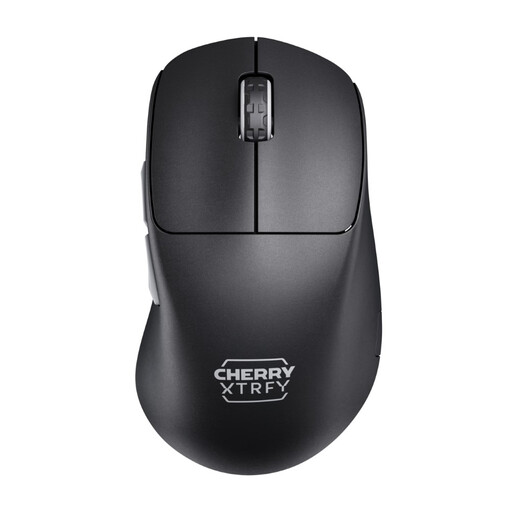
CHERRY XTRFY M64 Pro Wireless Gaming Mouse, Ultra-Fast 8K
Why This Fits Their Persona: For players who want to eliminate every millisecond of latency and have the corresponding high-end hardware (powerful CPU, 240Hz+ monitor). The M64 Pro is engineered for maximum performance.
The 8K polling rate isn't just a marketing gimmick here; combined with the Pixart 3395 sensor, it delivers a measurable advantage for its target audience. The solid 55g chassis avoids the drawbacks of fragile, lightweight constructions.
Extremely low latency thanks to the 8,000 Hz polling rate. Ergonomic right-handed design with a low front for maximum control.
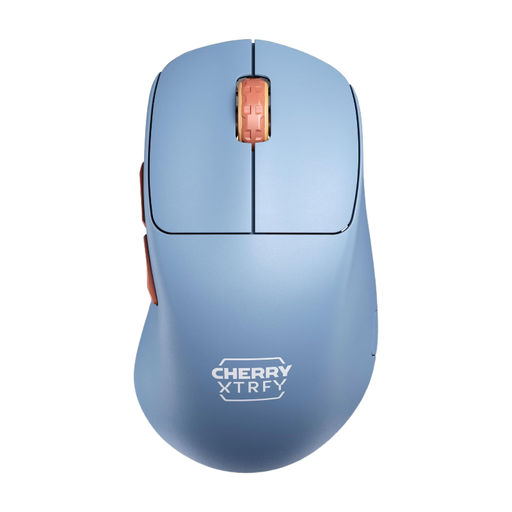
CHERRY XTRFY M64 Wireless Gaming Mouse
Why This Fits Their Persona: Ideal for competitive players who want an extremely light and ergonomic mouse with long battery life but don't necessarily need an 8K polling rate. Perfect for long training and gaming sessions.
It focuses on the essentials: an extremely low weight of 53g in a sturdy, closed chassis and a very long battery life. It forgoes the 8K feature, offering proven 1K performance instead.
Excellent long-battery-life gaming mouse (up to 90 hours, per manufacturer). Ultra-lightweight design (53g) for maximum agility.
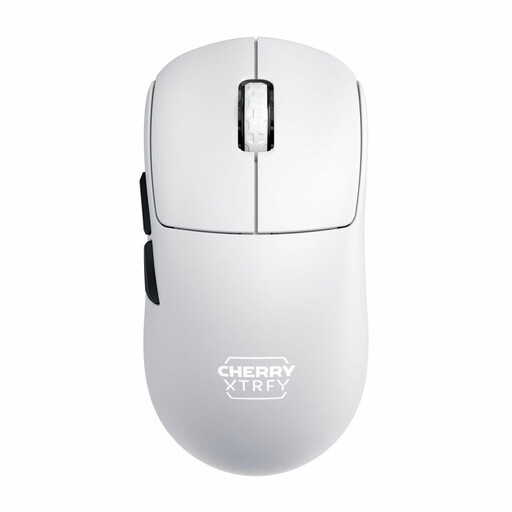
CHERRY XTRFY M68 Pro Wireless Gaming Mouse, 8K
Why This Fits Their Persona: For players who want the 8K performance of the M64 Pro but prefer a symmetrical shape for their grip style (e.g., fingertip or claw grip) or because they are left-handed. It offers the same technology in a different form factor.
This model proves that "ergonomic" doesn't just mean "right-handed." It offers top-tier technology in a flexible, symmetrical shape, thus avoiding the pitfall of high-performance mice often having only a single ergonomic design.
Combines an 8K polling rate with a lightweight, symmetrical design. Ideal for versatile grip styles and the highest precision demands.
Looking for More Options?
We've compiled a complete, up-to-date list of products that fully meet these strict selection criteria and rigorous safety standards.
Frequently Asked Questions (FAQ)
Do I really need an 8K wireless gaming mouse?
An 8K mouse is primarily beneficial for ambitious and professional gamers with a high-end setup (powerful CPU, 240 Hz+ monitor). For casual gamers or systems with lower specs, a high-quality mouse with a 1,000 Hz polling rate already offers excellent and perfectly sufficient performance.
How does weight affect my gameplay?
A lighter mouse reduces inertia and requires less force for quick movements and changes in direction. This can improve aiming and reaction time, especially in fast-paced games like FPS shooters, and reduce fatigue during long gaming sessions.
Is a fast wireless mouse as reliable as a wired one?
Modern wireless gaming mice that use stable 2.4 GHz wireless technology offer latency and reliability that are virtually indistinguishable from their wired counterparts. They are now fully established for competitive use and provide the added benefit of unrestricted movement without cable drag.