When choosing a protein bar for your morning coffee break, start with the substance or ingredient you want to avoid – not just the words ‘free from’ on the front of the pack. Vegan, lactose-free, gluten-free and no added sugar each describe different things. So, before focusing on the advertised protein content, compare the ingredients, allergen information and nutritional values for the specific variety.
Which choice matters for you?
The pack information that matters most depends on what you personally need to avoid. A claim on the front of the pack is no substitute for checking the ingredients list for the specific variety.
People avoiding specific allergens or gluten
If avoiding a particular ingredient is essential for your coffee break, check the ingredients, highlighted allergens and any ‘may contain’ information against your needs. If you need to avoid gluten, look for an explicit ‘gluten-free’ label too.
People choosing vegan or lactose-free products
If you’re looking for a plant-based bar or one explicitly labelled lactose-free, check the protein source and allergen information as well. For example, the vegan Barebells bar listed by REWE contains wheat and soya protein.
People focusing on sugar and protein information
If you mainly want a portioned snack to enjoy with your coffee, compare the sugar, protein and energy per bar and per 100 g. For varieties sweetened with sugar substitutes, check the ingredients and any relevant warnings too.
What should you look for when buying?
First, work out whether you need to avoid a particular ingredient. Then compare the labels and nutritional information for the specific bars you’re considering. You may have several requirements at once.
| Criteria |
What to check |
Who it matters most to |
| Allergens and gluten |
Check the ingredients, highlighted allergens and ‘may contain’ information. If you need to avoid gluten, look for a ‘gluten-free’ label too. |
If I need to avoid a specific allergen or gluten, a general ‘free from’ claim isn’t enough. For around 40% of consumers, this specific exclusion would come first. |
| Vegan or lactose-free |
Check the relevant label and the protein sources in the ingredients list; vegan and lactose-free don’t mean the same thing. |
For my coffee break, I’m looking for a plant-based or explicitly lactose-free variety, without automatically ruling out other ingredients. This choice would come first for around 30% of consumers. |
| Sugar and sweeteners |
Compare the sugar per 100 g and per bar. Check the ingredients and any warnings about sugar substitutes. |
I want to assess the sugar content and know what the bar is sweetened with. Around 20% of consumers would prioritise comparing sugar and sweeteners. |
| Protein and portion size |
Compare the protein and energy per bar and per 100 g, especially when the bars are different sizes. |
For a short break, I want to know the nutritional values of the portion I’ll actually eat. For around 10% of consumers, this would be the most important criterion. |
A market survey of 38 protein bars by the North Rhine-Westphalia Consumer Advice Centre found that protein content was presented in different ways, making the bars difficult to compare. That’s why the basis for comparison matters: a figure per 100 g doesn’t describe the same portion as a figure per bar.
Common misconceptions
-
Assuming ‘free from’ means free from all allergens
Vegan, lactose-free, gluten-free and no added sugar each refer to different characteristics. A bar with one of these labels may still contain other ingredients or traces that matter to you.
Decide what you want to avoid and check the ingredients list and allergen information for every variety. The German Food Federation explains that relevant allergens must be identified in the ingredients list.
-
Comparing only the protein claim on the front of the pack
Grams, percentages and different portion sizes can’t be compared without knowing what they refer to. The North Rhine-Westphalia Consumer Advice Centre’s market survey shows why protein bars are particularly easy to compare incorrectly.
Check the nutritional information per 100 g and, where available, per bar. As well as protein, consider energy and sugar.
-
Assuming ‘no added sugar’ means you’ll have no issues with it
A bar like this may contain sweeteners or sugar substitutes. The Consumer Advice Centre notes that sugar substitutes can have a laxative effect when consumed in large quantities; some bars carry a warning about this.
Check which sweeteners are used, and read the warnings and portion information on the specific pack.
-
Assuming online information is the same for every pack
ALDI SÜD notes that its vegan ALDI SPORTS protein bar may come from different suppliers, so the nutritional values may vary. The retailer also states that special-buy items are available for a limited time.
Before buying, check the information on the pack actually being offered, particularly the variety, ingredients, allergens and nutritional values.
Brands to help you choose
These examples illustrate different product labels, rather than suggesting that every product from a brand is suitable for everyone. The specific variety is what matters.
REWE PWR
In September 2026, REWE introduced its own-label PWR range, which included six protein bars at launch.
- REWE says the range includes several protein bars.
- You’ll need to check each variety to see whether its ingredients, allergens and nutritional values suit you.
ALDI SPORTS
The ALDI SPORTS range at ALDI SÜD includes, among other products, a lower-carb protein bar labelled gluten-free and a vegan protein bar.
- The varieties mentioned have different attributes: one is labelled gluten-free, the other vegan.
- For the lower-carb bar, ALDI SÜD lists possible allergen traces and a warning about excessive consumption. Nutritional information for the vegan bar may vary by supplier.
Barebells
The Barebells Protein Bar Caramel Choco Chip listed by REWE is labelled vegan and lactose-free.
- REWE lists 15 g of protein per 55-g bar for this variety.
- This variety contains wheat and soya protein. REWE also lists possible traces of milk, peanuts, tree nuts and sesame.
Protein bars at Joybuy
These protein bars may suit a portioned coffee break if their ingredients and nutritional information match your own criteria. A product name alone doesn’t confirm that it’s suitable if you need to avoid a particular allergen or gluten.
 No image available
Premier Protein 50% Bar Chocolate Caramel, 16 × 40 g
An option if you’re looking for a portioned protein bar for your coffee break and want to check the sweeteners on the pack.
The product title states 16 × 40 g, but the pack quantity information is inconsistent. Check the amount actually being offered before buying. If you need to avoid milk, soya or other allergens, the information on the specific pack is what matters.
View at Joybuy
 No image available
Barebells Vegan Protein Bar Peanut Caramel, 12 × 55 g
If you’re looking for a bar described as vegan, this Peanut Caramel variety is one to compare with your other requirements.
The product title states 12 × 55 g. This variety isn’t suitable if you need to avoid wheat, soya or peanuts. Check the labelling on the specific pack for any other relevant allergens and possible traces.
View at Joybuy
 No image available
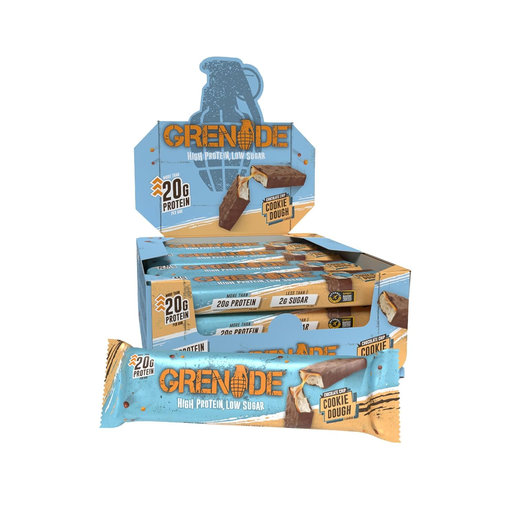
Grenade Carb Killa Choc Chip Cookie Dough, 12 × 60 g
This protein bar is an option to compare portion sizes if you want to assess sugar and sweeteners using the pack information.
The product title states 12 bars of 60 g each. Check the labelling for milk, soya and possible traces, as well as the warning about consuming polyols. Compare the sugar content using the nutritional information for the variety on offer.
View at Joybuy
 No image available
Corny Crunchy Cookie Flavour Protein Bar, 12 × 45 g
This individually portioned cookie-flavour variety may suit you if you’d like to compare its nutritional information with other bars for your coffee break.
The product title states 12 bars of 45 g each and a protein content of 30%. To compare a single portion, check the protein per bar on the pack. Also check the labelling for milk, soya and cereals containing gluten, as well as the information about sweeteners.
View at Joybuy
 No image available
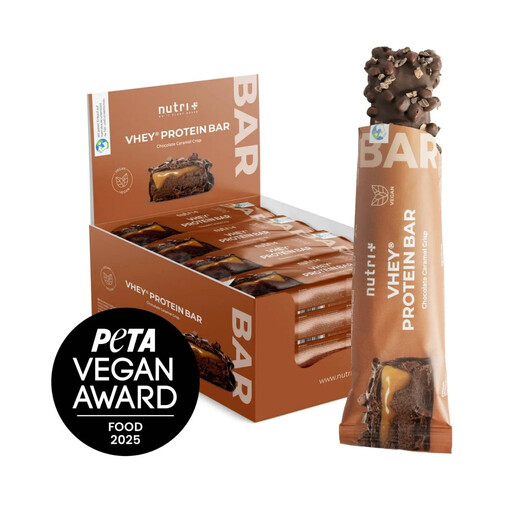
Nutri+ Whey Protein Bar Chocolate Caramel Crisp, 12 × 50 g
For a coffee break with a single bar, you can assess this Chocolate Caramel Crisp variety using the current information on the pack.
The product title states 12 bars of 50 g each. If you want to avoid animal-derived ingredients or specific allergens, check the labelling on the actual pack carefully; the product name alone doesn’t tell you whether it’s suitable for vegans. Check the sugar and sweeteners on the label too.
View at Joybuy
Frequently asked questions
Is a vegan protein bar automatically gluten-free?
No. A vegan label doesn’t tell you whether a bar contains gluten or other allergens that matter to you. For example, the vegan Barebells Caramel Choco Chip bar listed by REWE contains wheat and soya protein, so always check the specific variety.
How can I identify allergens in a packaged protein bar?
Check the ingredients list for highlighted allergens and look for any ‘may contain’ information as well. The German Food Federation explains how relevant allergens are labelled in the ingredients list; what matters for your choice is which substances you personally need to avoid.
If I need a gluten-free bar, is it enough to check the ingredients list for wheat?
No. Look for an explicit ‘gluten-free’ label and also check the ingredients and ‘may contain’ information for the variety. Simply checking for wheat won’t identify other cereals containing gluten or other allergens that may matter to you.
Are bars with no added sugar always free from sweeteners?
No. These bars may contain sweeteners or sugar substitutes. The Consumer Advice Centre notes that sugar substitutes can have a laxative effect when consumed in large quantities, so check the ingredients and warnings on the pack.
How can I compare the protein content of bars in different sizes?
Compare the protein per 100 g and also per bar you’ll actually eat, if both figures are available. The North Rhine-Westphalia Consumer Advice Centre found in its market survey that protein figures presented in different ways make direct comparisons difficult. Take the energy and sugar in each portion into account too.
