
Smart Home Presence Sensor Buying Guide
An intelligent presence sensor can significantly improve the comfort and energy efficiency of your home. Unlike traditional motion sensors that often turn off the lights while you're still in the room, modern presence sensors detect even the slightest movements. The result: lights that are only on when truly needed and automations that work reliably.
However, the market offers a wide array of technologies and standards. From simple Wi-Fi sensors to models with mmWave radar and Matter support, the choices can be overwhelming. This article serves as a guide to help you navigate the options. It explains the key differences and presents a selection of models for various use cases, enabling you to make an informed decision.
What to Look for When Buying a Presence or Motion Sensor?
To find the right sensor for your smart home, three key aspects should be considered.
1. Detection Technology: PIR vs. mmWave Radar
The type of detection is crucial for reliability.
- PIR (Passive Infrared): This is the most common technology in a smart home motion sensor. PIR sensors react to changes in heat caused by the movement of people or large animals. They are energy-efficient and budget-friendly, but they may fail to detect the presence of stationary individuals, such as someone reading on a sofa.
- mmWave (Millimeter-Wave Radar): A mmWave sensor emits high-frequency radio waves and analyses their reflections. This technology is so precise it can detect even minimal movements like breathing or typing on a keyboard. Such a presence sensor is ideal for rooms where you spend extended periods without much movement, like an office or living room.
2. Connectivity and System Compatibility
Integration into your existing system is a critical factor.
- Hub-Free Motion Sensors (Wi-Fi): These devices connect directly to your 2.4 GHz Wi-Fi network. Setup is usually straightforward via an app. They are a great choice for beginners or for covering individual areas.
- Hub-Based Systems (Zigbee): Sensors based on protocols like Zigbee require a central control unit (hub or bridge). This creates a stable and energy-efficient mesh network that operates independently of your Wi-Fi router. An Aqara presence sensor is a typical example in this category.
- Matter over Thread:Matter motion sensors that use the Thread protocol represent the latest standard for interoperability. They require a Thread Border Router (often integrated into newer smart speakers or hubs) to function. The advantage lies in direct, local, and cross-vendor communication, making them a future-proof choice for HomeKit presence sensors or Alexa motion sensors.
3. Additional Features like Light Detection
Some models offer more than just motion detection. An integrated motion sensor with light detection can measure ambient brightness. This allows you to create an automation that turns on the light only when a person is present and the room is dark enough. This saves additional energy and increases comfort.
Our Recommended Presence Sensors
Based on the criteria mentioned, we have compiled a selection of sensors for different needs.
For Precision: AQARA Presence Sensor FP1E
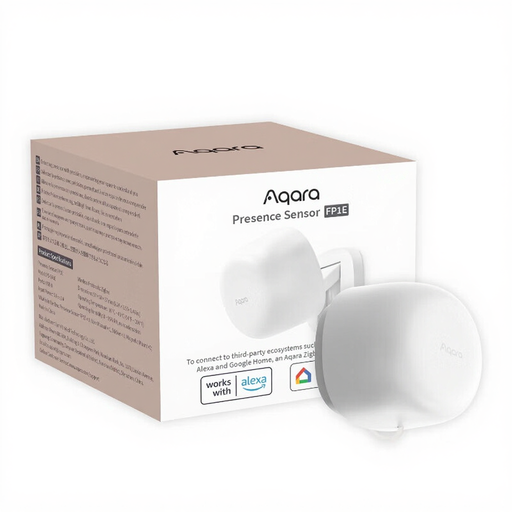
Why it stands out The Aqara FP1E uses mmWave radar technology to provide extremely accurate presence detection. It captures even the most subtle movements, solving the classic problem of PIR sensors that switch off when people are stationary.
Advantages
- Precise Presence Detection: The mmWave technology reliably detects even static individuals.
- Zone Configuration: Within the Aqara Home app, you can define different detection zones in the room to trigger automations with precision.
- Interference Filtering: According to the manufacturer, the integrated AI technology can identify interference sources like fans or pets and reduce false alarms.
- Broad Compatibility: Requires an Aqara Zigbee 3.0 Hub. Through this hub, it is compatible with platforms like Matter, HomeKit, Alexa, and Google Home.
Who is it for? For smart home users who require maximum precision for their automations and already use or plan to build an Aqara system. Ideal for living rooms, offices, or other areas where you spend extended periods.
For an Easy Start: Rexsun WiFi Smart Motion Sensor
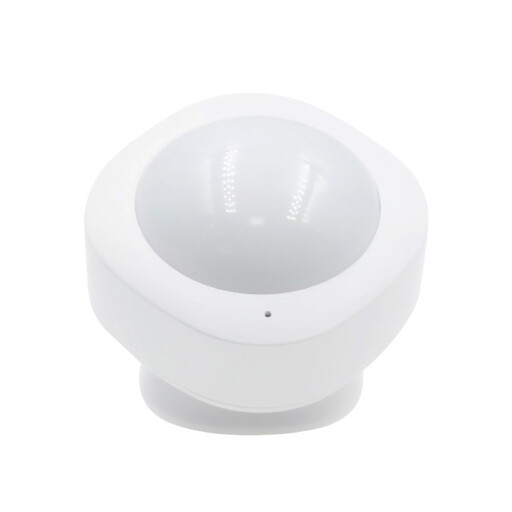
Why it stands out This sensor from Rexsun is a classic hub-free motion sensor. It connects directly to your Wi-Fi and is controlled via the popular Smart Life app, making it exceptionally easy to get started.
Advantages
- No Hub Required: Connects directly to your 2.4 GHz Wi-Fi network.
- Simple Setup: Quick installation and configuration via the Smart Life app.
- Flexible Placement: Thanks to battery power (2x CR123A), the sensor can be placed anywhere without wiring.
- Real-Time Notifications: Sends an instant push notification to your smartphone when motion is detected.
Who is it for? For beginners looking for a straightforward and budget-friendly solution for motion monitoring. Perfect for hallways, entryways, or rooms where precise presence detection is not required.
For Future-Proofing: AQARA Motion and Light Sensor P2
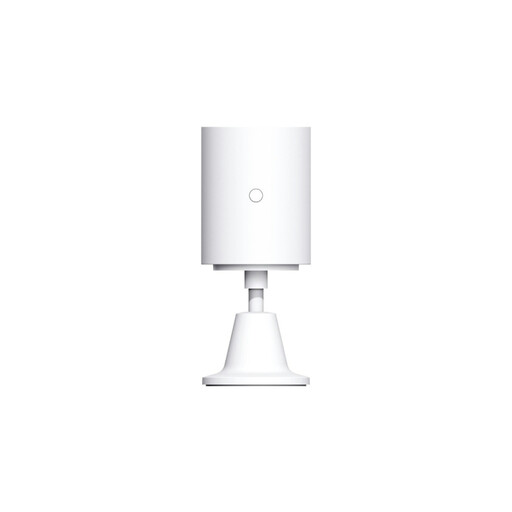
Why it stands out The Aqara P2 is one of the first sensors of its kind to be natively based on the Matter-over-Thread standard. This allows for direct, local, and cross-vendor integration into modern smart home ecosystems.
Advantages
- Native Matter Support: Seamless integration into all Matter-compatible platforms like Apple Home, Google Home, and Amazon Alexa, without relying on vendor-specific bridges.
- Integrated Light Sensor: Enables smart lighting controls that react to both motion and ambient brightness.
- High Energy Efficiency: The Thread protocol is designed for very low power consumption, leading to a battery life of up to two years, according to the manufacturer.
- Adjustable Parameters: Sensitivity and detection timeout can be configured (requires an Aqara M3 Hub for advanced settings).
Who is it for? For tech-savvy users and prosumers building a future-proof smart home based on Matter and Thread. This requires an existing Thread Border Router (e.g., Apple HomePod mini, Google Nest Hub 2nd Gen, or Aqara Hub M3).
Discover More Options
Haven't found the right model for your needs yet? The market offers a wide range of sensors for different systems and budgets.
? Discover more models in our Motion Sensors category
Frequently Asked Questions (FAQ)
What is the difference between a presence sensor and a motion sensor?
A classic motion sensor (usually with PIR technology) reacts to larger movements and the associated temperature changes. It is well-suited for transit areas. A presence sensor (often with mmWave technology) is significantly more sensitive and can detect even minimal movements like breathing. It is therefore ideal for detecting the presence of people who are barely moving, for example, at a desk or while watching TV.
Do I always need a hub for a smart home presence sensor?
No, not necessarily. There are three main types:
- Wi-Fi Sensors: Connect directly to your router and do not require a hub.
- Zigbee/Z-Wave Sensors: Require a compatible hub or bridge as a central control unit.
- Matter-over-Thread Sensors: Require a Thread Border Router, which is often already integrated into other smart home devices (like smart speakers).
How does a presence sensor with Matter work?
A Matter motion sensor uses a universal communication standard. This means it can communicate directly and locally with other Matter-certified devices (e.g., lights, smart plugs), regardless of the manufacturer. Setup is done through a Matter-compatible app (e.g., Apple Home, Google Home), and automations run reliably on the local network, even if the internet connection goes down.