
Premium Notebook Buying Guide: Avoid Common Purchase Mistakes
The search for the right notebook can be more complex than it first appears. A premium notebook is more than just a stack of paper; it's a daily companion for your thoughts, plans, and creative ideas. However, the market is filled with products whose marketing claims often fall short. Before you buy another journal or invest in a notebook for work, it's crucial to understand the typical pitfalls that lead to disappointment and unnecessary expense.
As your Joybuy Product Recommendation Officer, I'm here to help you define objective criteria for your selection. This guide focuses on the three most common problems with notebooks and shows you what to look for to make an informed decision.
- The Paper Trap: The paper is too thin, causing ink to bleed through ("bleeding") or show on the reverse side ("ghosting"). This renders half the pages unusable, especially when using fountain pens.
- The Binding Trap: The notebook won't lay flat on a table, making writing difficult. After just a few weeks, the glue binding comes apart, and pages start to fall out.
- The Feature Trap: The design prioritises superfluous gimmicks over essential functions. For example, it might lack a notebook with a pen loop, even though this feature is indispensable for mobile use.
What Really Matters: The Decisive Quality Markers
To avoid these problems, you should base your selection on three objective parameters. These characteristics determine the durability and user-friendliness of a notebook.
1. Paper Quality: Weight and Texture
Paper quality is the heart of any notebook. The crucial metric is its weight, measured in grams per square metre (g/m?).
- Under 80 g/m?: Often found in budget-friendly pads. Unsuitable for fountain pens or rollerballs, as ink will bleed through heavily.
- 80 g/m?: A standard for many everyday notebooks. Sufficient for ballpoint pens and pencils, but ghosting can occur with wet-writing pens.
- 90 g/m? to 100 g/m?: This is the range for fountain pen-friendly paper. The higher density and special surface treatment prevent ink feathering and minimise show-through. A Lamy notebook, for example, typically uses 90 g/m? paper optimised for its in-house fountain pens.
- Over 100 g/m?: Ideal for drawings with markers or for heavy ink usage.
Also, look for the "acid-free" label. Acid-free paper does not yellow over time, making it better for long-term archiving of notes or for use as a journal.
2. Binding and Cover: Stability Meets Flexibility
The type of binding determines how well a notebook performs in use and how long it lasts.
- Thread-sewn binding: In this method, folded sheets of paper (signatures) are stitched together. This is the most durable method and allows the notebook to lie completely flat ("lay-flat"). It is a clear hallmark of a high-quality product.
- Perfect (glue) binding: Pages are simply glued together at the spine. This binding is less durable and often breaks under heavy use. Laying it flat is only possible to a limited extent.
- Spiral binding: Offers maximum flexibility for folding back pages but can easily get bent in a backpack.
The cover protects the contents. A softcover notebook is lighter and more flexible, making it ideal for transport. A hardcover offers maximum protection for the pages but is heavier and more rigid.
3. Format and Functionality: The Right Size and Useful Extras
The choice of format depends on its primary purpose.
- A5 Notebook (approx. 14.8 x 21 cm): The all-rounder for your desk, meetings, and university. It offers ample space for detailed notes without being too bulky.
- A6 Notebook (approx. 10.5 x 14.8 cm): The pocket size. Ideal for quick notes, ideas, and lists on the go.
A good design is distinguished by thoughtful, functional details. These include an elastic closure band, one or more ribbon markers for bookmarking pages, an expandable inner pocket at the back for loose papers, and the aforementioned pen loop. A lined notebook is the classic choice, but dotted or plain versions also have their advantages depending on your needs.
Top Picks for Every User
Here are some recommendations tailored to specific user profiles that meet the quality criteria mentioned above.
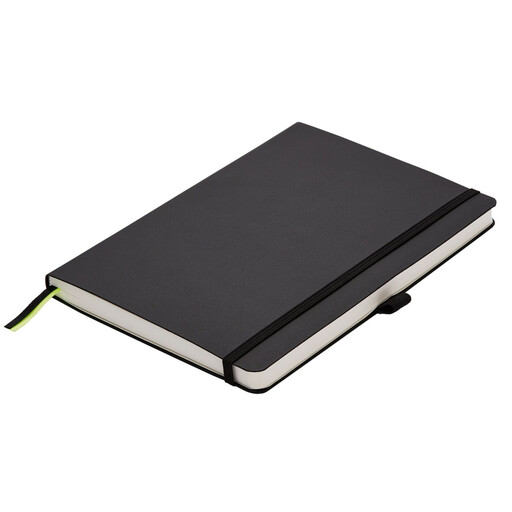
Lamy B3 Softcover A5 Notebook – Black
Why it's a great fit: Ideal for fountain pen users and anyone who values a first-class writing experience. The A5 format provides plenty of space for detailed notes, while the high-quality paper and binding support daily, intensive use.
The 90 g/m? paper is explicitly designed to be fountain pen-friendly, preventing bleed-through. The thread-sewn binding ensures long-term durability and a perfect lay-flat experience.
A combination of fountain pen-friendly paper, lay-flat binding, and functional details like a pen loop, two ribbon markers, and an expandable inner pocket.
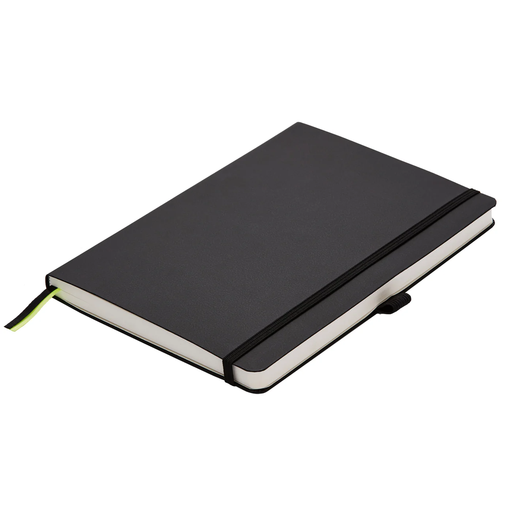
Lamy B4 Notebook Softcover A6 Black
Why it's a great fit: The compact A6 notebook is designed for constant transport. It's lightweight, durable, and combines all the essential features for quickly capturing thoughts and tasks on the go.
It focuses on the essentials: high-quality paper in a durable softcover notebook with an integrated pen loop. No superfluous extras, just pure functionality.
Excellent portability thanks to its A6 format and low weight, without compromising on paper quality (90 g/m?) or useful details (two ribbon markers, expandable inner pocket).
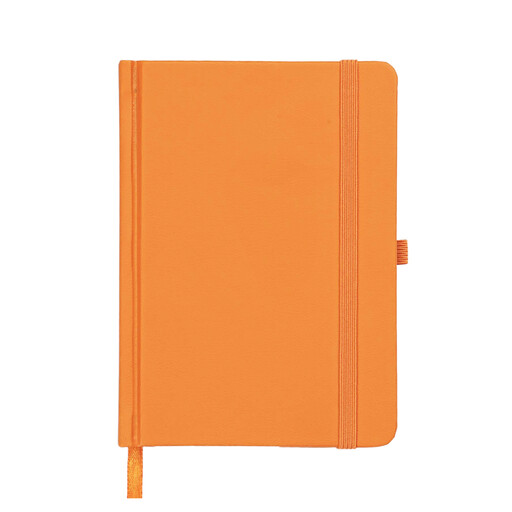
JubiluuA6 Premium PU Hardcover Pocket Notebook - Rust Orange
Why it's a great fit: This notebook offers an excellent set of functional features for daily use. It's suitable for users seeking a reliable tool for notes and planning who also appreciate great value for money.
With 100 g/m? paper, it offers a heavier weight than many standard notebooks, significantly reducing the risk of ghosting and bleeding. The sturdy PU hardcover reliably protects the pages.
A complete feature set including a pen loop, closure band, and bookmark in a compact A6 hardcover format at a very accessible price point.
Looking for more options?
We have compiled a complete, up-to-date list of products that fully meet these strict selection criteria.
Frequently Asked Questions (FAQ)
What does "fountain pen-friendly paper" mean?
Fountain pen-friendly paper is specially treated to optimally absorb the liquid ink from fountain pens. It prevents the ink from spreading on the paper ("feathering"), bleeding through to the back ("bleeding"), or showing through excessively ("ghosting"). A paper weight of at least 90 g/m? is generally a good prerequisite for this.
Which notebook size is right for me: A5 or A6?
The choice depends on your usage habits. An A5 notebook is ideal if you primarily use it in one place, like at your desk or in meetings, and need plenty of space for structured notes. An A6 notebook is the right choice if you are constantly on the move and need a lightweight, compact notebook for quick ideas and to-do lists that fits in any bag.
How can I identify a durable binding on a notebook?
You can best identify a durable binding by its thread-sewn construction. If you open the notebook to the middle and look closely at the fold between the pages, you can see the fine threads holding the individual sections together. This type of binding is significantly more robust than a simple glue binding and also allows the notebook to lay flat.