
Power Bank Recommendations: A Guide to Portable Power
By: Joybuy Product Recommendation OfficerDate: July 18, 2026
A low battery on your smartphone, tablet, or laptop is more than just an inconvenience—it can disrupt your workflow, complicate navigation, or leave you unreachable. A reliable external battery has therefore become an indispensable companion for many. However, the market offers an overwhelming variety of models that differ greatly in capacity, speed, and functionality.
This guide is designed to bring clarity. We will introduce objective criteria relevant to choosing a power bank and present a selection of models for different use cases to provide you with a solid basis for making an informed decision.
What to Look for When Choosing a Power Bank
Before you decide on a model, several technical aspects should be considered. These three criteria will help you find the right mobile charging solution for your needs.
1. Capacity: Milliampere-hours (mAh) and Watt-hours (Wh)
The capacity, usually specified in milliampere-hours (mAh), determines how many times you can charge your devices.
- Up to 10,000 mAh: These models are compact and lightweight, ideal for daily use. They can typically fully charge a modern smartphone one to two times.
- 10,000 to 25,000 mAh: A great choice for weekend trips, business travel, or when you need to power multiple devices like a smartphone, headphones, and tablet. A power bank for a laptop should generally have at least 20,000 mAh.
- Over 25,000 mAh / Watt-hours (Wh): Large capacities are often found in a portable power station. The specification in watt-hours (Wh) is more precise here and relevant for air travel (the limit is usually 100 Wh in carry-on luggage).
2. Charging Speed and Ports: Watts (W) and USB-C
The charging speed, measured in watts (W), indicates how quickly your devices will be charged. A fast-charging power bank is essential for most users today.
- Power Delivery (PD) via USB-C: The current standard for fast charging. A USB-C power bank with the PD protocol can charge smartphones to 50% in about 30 minutes and is also capable of efficiently powering tablets and laptops.
- Wireless Charging (Qi & MagSafe): Wireless charging adds convenience. A MagSafe power bank magnetically attaches to compatible iPhones and charges them. The newer Qi2 standard offers similar magnetic alignment and faster charging for a wider range of devices.
- Number of Ports: Consider how many devices you want to charge simultaneously. Models with multiple USB-A and USB-C ports offer the greatest flexibility.
3. Battery Technology and Additional Features
The type of battery used affects longevity and safety.
- Lithium-Polymer (Li-Po): The most common type of battery. It offers good energy density in a compact form.
- Lithium Iron Phosphate (LiFePO4): A LiFePO4 battery is characterized by a significantly higher number of charge cycles, leading to a longer lifespan. These batteries are also considered more thermally stable and therefore safer.
- Additional Features: Some models offer integrated cables, a flashlight function, or the ability to be charged via a solar panel (solar power bank), which can be particularly advantageous for outdoor activities.
Our Top Product Recommendations
Here is a selection of three models that cover different needs—from a daily companion to a powerful station for demanding users.
Wozinsky 10,000 mAh Power Bank with Qi2 and Kickstand
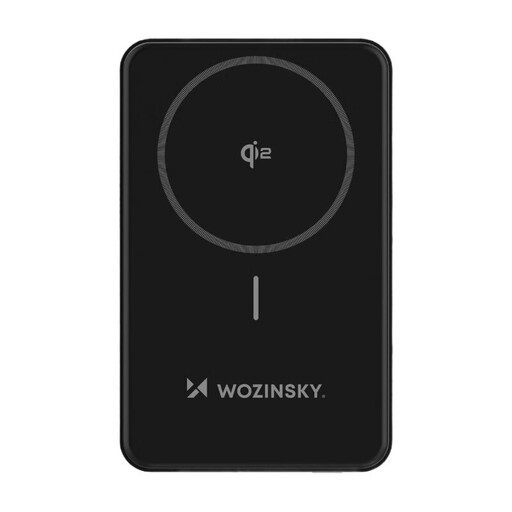
What makes it stand out: The Wozinsky power bank combines an everyday-friendly capacity of 10,000 mAh with modern charging features. Particularly noteworthy is its support for the Qi2 standard for wireless charging up to 15W and the integrated, foldable kickstand, which makes it easy to watch media while charging.
Advantages:
- Wireless charging with Qi2 (up to 15W) and MagSafe compatibility
- Integrated kickstand for horizontal and vertical orientation
- Compact and travel-friendly design at 240g
- Supports wired fast charging up to 22.5W
Who is it for? This model is a great choice for commuters and daily users who are looking for a versatile and compact charging solution for their smartphone and appreciate the convenience of wireless charging and a stand function.
Jackery Explorer 100 Plus Portable Power Station
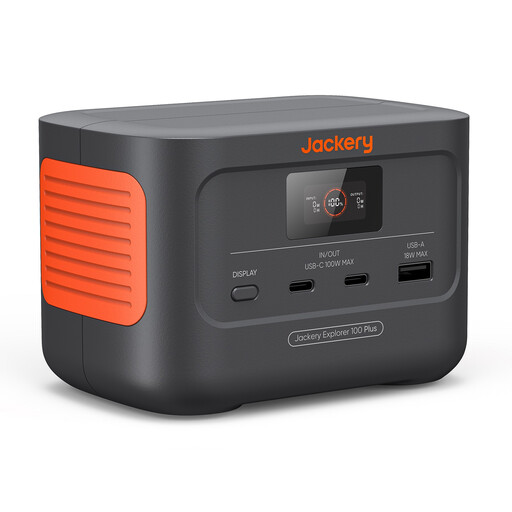
What makes it stand out: The Jackery Explorer 100 Plus is a compact portable power station designed for durability and performance. It uses a LiFePO4 battery that, according to the manufacturer, allows for up to 2,000 charge cycles while retaining 80% capacity. With a 99 Wh capacity, it is flight-friendly and delivers a high total output of up to 128W across three ports.
Advantages:
- Durable LiFePO4 battery for a long service life
- High total output of 128W for charging multiple devices
- Flight-friendly capacity of 99 Wh
- Can be recharged via USB-C, a wall outlet, or an optional solar panel
Who is it for? Ideal for outdoor enthusiasts, photographers, or travelers who need a robust and long-lasting power solution for more demanding devices like cameras, drones, or tablets and value a long lifespan.
Anker Power Bank 25,000 mAh with 165W Total Output
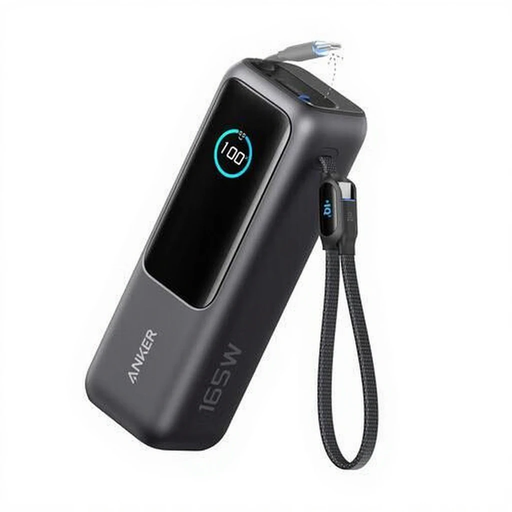
What makes it stand out: This power bank from Anker is designed for maximum performance and capacity. With 25,000 mAh and an impressive total output of 165W, it is a fully-fledged power bank for laptops and other power-hungry devices. It can charge multiple devices simultaneously at high speed.
Advantages:
- Very high capacity of 25,000 mAh
- Extremely high total output of 165W
- Can charge laptops at high speed
- Two USB-C ports and one USB-A port for maximum compatibility
Who is it for? Perfect for business travelers, digital nomads, and power users who need a single charging solution for all their tech gear—including a laptop, tablet, and smartphone—and don't want to compromise on charging speed.
Discover More Options
The models presented cover common use cases. However, if you have more specific requirements, such as a particularly rugged power bank for the outdoors or a model with an integrated solar power bank function, you will find more specialized solutions in our broader assortment.
Frequently Asked Questions (FAQ)
What capacity should a power bank have?
The required capacity depends on your usage habits. For daily charging of a smartphone, a 10,000 mAh power bank is sufficient. If you want to charge multiple devices or a tablet, or need to be independent for several days, models with 20,000 mAh or more are a better choice.
Can you take a power bank on an airplane?
Yes, power banks are generally allowed on airplanes, but only in carry-on luggage. The International Civil Aviation Organization (ICAO) limits the capacity per battery to 100 Wh. Most power banks up to 27,000 mAh fall below this limit. However, it is recommended to check the specific regulations of the respective airline before traveling.
What is the difference between a power bank and a portable power station?
A power bank (or external battery) is primarily designed for charging smaller personal devices like smartphones and tablets and typically has a capacity between 5,000 and 30,000 mAh. A portable power station offers a significantly higher capacity (often over 100 Wh), more power, and more diverse connection options, sometimes even a 230V AC outlet. It can power larger devices such as laptops, cameras, or even small coolers.