
Pots and Pans with Lids: A Buying Guide for Versatile Cookware
If you’re looking to buy pots and pans with lids, you’ll find plenty of options for induction, gas, electric and ceramic hobs. The differences go beyond just size and design. Material, coating, lid fit, hob compatibility and ease of care all determine whether your cookware will be practical for everyday use.
Three common buying mistakes often lead to the wrong choice:
- “Suitable for all hob types” without the right base: A magnetic base is essential for induction. A pure aluminium construction won’t work automatically.
- Coatings without clear care instructions: Non-stick pans and ceramic coatings can be damaged by overheating when empty, using sharp-edged metal utensils, or harsh cleaning.
- Wrong size: A very large pan needs enough space on the hob and a matching cooking zone. A small saucepan, on the other hand, can quickly be too small for family portions.
The Key Buying Criteria at a Glance
1. Hob Compatibility and Base Construction
When looking at cookware for all hob types, the product details should explicitly state that it is suitable for induction, gas, electric and ceramic hobs. Induction requires a magnetic base. Stainless steel pots with a multi-layer base or a magnetic stainless steel plate are often suitable.
For aluminium pots and aluminium pans, pay particular attention to an integrated induction base. One example is the 5Five pot with a 24 cm diameter and 1.5 litre capacity. According to the product details, it has a stainless steel induction base and can be used on gas, electric, ceramic and induction hobs.
2. Material and Coating to Suit Your Needs
Stainless steel pots are usually uncoated and ideal for water, pasta, soups and sauces. They can withstand suitable stainless steel kitchen utensils, but food may stick more if the temperature is wrong.
Coated pans and non-stick pans make cooking delicate foods easier. Wooden, silicone or nylon utensils are usually the gentler choice. Always check the dishwasher, oven and maximum temperature details before buying.
A ceramic coating is often promoted for easy food release and needing less oil. This is no guarantee of unlimited durability. Here too, low to medium heat, careful cooling and non-abrasive cleaning are important care basics.
3. Lids, Handles and Dimensions
A glass lid lets you keep an eye on your cooking without losing heat and moisture by lifting it too often. Check whether the lid is included and whether the handles and lid knob are heat-resistant.
These points are also important for everyday use:
- Diameter: 16 to 18 cm is good for sauces and small side dishes; 24 to 28 cm works for several portions.
- Capacity: One to two litres suits smaller households; larger families will benefit from bigger sauté pans or woks.
- Oven safety: Not all cookware with lids can go in the oven. Plastic or Bakelite handles may limit this.
- Cleaning: “Dishwasher-safe cookware” is convenient, but hand washing can be kinder to coatings and handles.
Our Selection by User Profile
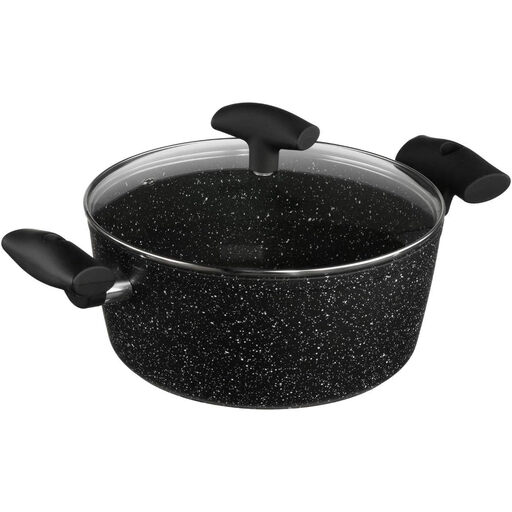
5Five 24cm Forged Aluminum Pot with Lid
Why this product fits the profile: The 24 cm aluminium pot offers a handy 1.5 litre size for sauces, side dishes and smaller meals. A glass lid is included.
The product details explicitly mention a stainless steel induction base and suitability for all common hob types. The advice on hand washing and avoiding metal utensils makes the care requirements clear.
Forged aluminium, non-stick surface, glass lid and a stated weight of 1.63 kg. According to the product data, this pot is not oven-safe.
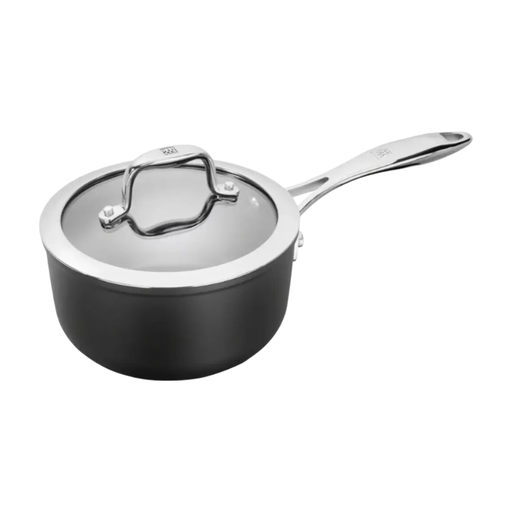
ZWILLING FORTE Series 18cm Single-Handled Covered Stew Pot
Why this product fits the profile: The 18 cm pot with 2.2 litres is designed for sauces and side dishes, combining an aluminium body with a Ti-X non-stick coating.
The details list the compatible hob types including induction, along with specific care and safety instructions. This makes it easier to assess suitability before buying.
2.2 litre capacity, glass lid, ergonomic handle and, according to the product description, suitability for gas, induction, ceramic, electric and halogen hobs.

MAXCOOK Tri-Ply 304 Stainless Steel Chinese Wok with Glass Lid
Why this product fits the profile: The 30 cm wok is designed for larger portions and various cooking methods including stir-frying, braising, boiling and deep-frying.
The product data recommends hand washing and lists suitable kitchen utensils. This means the extra care needed for the ceramic coating is not hidden.
Tri-ply stainless steel body, 30 cm diameter, glass lid and stated suitability for induction, gas, electric and ceramic hobs.
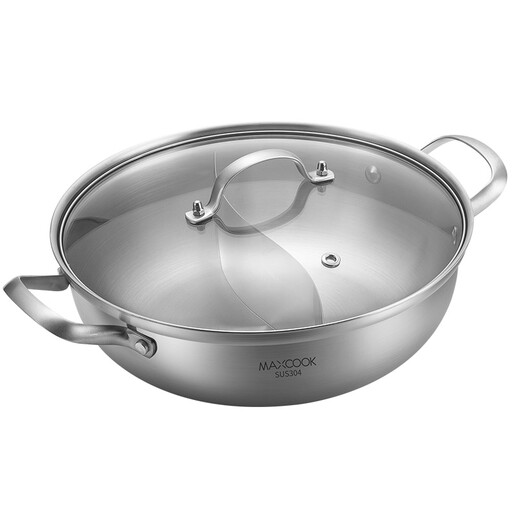
MAXCOOK 28cm Divided Hot Pot with Glass Lid
Why this product fits the profile: The divided 28 cm design is ideal for hotpot evenings where you want to cook two broths or sets of ingredients separately.
The details mention an uncoated 304 stainless steel body and compatibility with induction, gas, electric and ceramic hobs. The lid and cleaning instructions are also listed.
Tri-ply 304 stainless steel, two separate compartments, glass lid and, according to the product details, dishwasher suitability.
Care Tips for Longer-Lasting Cookware
Even high-quality cookware can wear out prematurely if handled incorrectly. For coated pans and pots, these rules are especially important:
- Do not heat empty pans on high and always observe the stated maximum temperature.
- Avoid using sharp metal objects or abrasive scouring pads.
- Do not plunge hot pans into cold water immediately.
- Allow lids, handles and coatings to dry completely after cleaning.
- Stop using the product if you notice significant damage, warping or peeling coating.
A wok with a lid is practical for large quantities but needs plenty of storage space. A saucepan is better suited to sauces and small portions, while a sauté pan with higher sides offers more volume for vegetables, meat or stews.
Looking for more options?
We’ve put together a full, regularly updated list of products that meet these strict selection criteria and comply with all EU safety regulations.
Frequently Asked Questions About Pots and Pans with Lids
Are pots and pans with lids suitable for induction hobs?
Only if the base is magnetic and explicitly approved for induction. Aluminium requires an additional stainless steel or magnetic base. Hob compatibility should be stated in the technical product details.
Is dishwasher-safe cookware always the right choice?
Dishwasher suitability makes cleaning easier, but it doesn’t guarantee the long-term durability of a coating. For non-stick pans and ceramic coatings, hand washing with a soft sponge can be gentler on the materials.
How long does a coated pan last?
This depends on temperature, utensils, cleaning and how often you use it. Low to medium heat, suitable utensils and avoiding scratches can extend its lifespan. Without knowing your individual usage, it’s impossible to give a reliable specific lifespan.