
Portable Power Buyers Guide
By: Joybuy Product Recommendation Officer Date: August 30, 2026
A reliable portable power supply has become indispensable in daily life. However, the market is flooded with products whose marketing promises often suggest more than the technology can deliver. This frequently leads to frustration and unnecessary expenses. Before making a purchase, it's crucial to understand the most common pitfalls to find a solution that is precisely tailored to your needs.
The 3 Most Common Traps When Buying a Portable Power Supply
Many consumers are guided by large numbers and promotional claims that hold little meaning in practice. Pay special attention to these three points:
- Misleading Capacity Ratings (mAh): A power bank advertised with a 10,000 mAh capacity does not deliver this full amount of energy to your device. Due to voltage conversion and energy loss, the actual usable capacity (rated capacity) is often only 60–70% of the advertised value. Products that don't clearly state the rated capacity often conceal inferior battery cells.
- Vague "Fast Charging" Claims: The term "fast charging" is not regulated. A portable charger can be marketed as a fast charger even if it doesn't support modern standards like Power Delivery (PD) or Quick Charge (QC). However, for the latest smartphones, tablets, or a laptop power bank, these protocols are crucial for rapid charging.
- Missing or Counterfeit Safety Certifications: Devices without certified protection against overheating, overvoltage, and short circuits pose a significant risk. They can not only damage the connected device but, in the worst-case scenario, also cause fires. Look for recognised certification marks like CE and RoHS.
What Really Matters: The Decisive Parameters
To make an informed decision, you should focus on objective technical specifications. The following three parameters are central to selecting a suitable portable power supply.
1. Real-World Performance: Capacity and Charging Protocols
The most important metric isn't milliamp-hours (mAh), but watt-hours (Wh), as it accounts for voltage. Even more crucial, however, is the rated capacity, which is often found in the technical specifications and describes the actual amount of energy delivered.
Equally important are the supported charging protocols. For fast charging of modern devices, the following standards are relevant:
- Power Delivery (PD): A universal standard via USB-C that enables high power output for smartphones, tablets, and laptops. A laptop power bank should deliver at least 45 watts (W) via PD.
- Quick Charge (QC): A standard developed by Qualcomm, which is particularly common in Android smartphones.
2. Battery Type: Lifespan and Use Case
The type of battery cells used has a direct impact on safety, lifespan, and efficiency.
- Rechargeable Batteries (AA/AAA): For household devices like remote controls or toys, NiMH batteries (Nickel-Metal Hydride) are a sustainable choice. They offer many charging cycles. Newer lithium-ion-based USB-C rechargeable batteries offer the advantage of a constant 1.5V voltage and can be charged directly via a cable.
- Power Banks: These typically use Lithium-ion (Li-ion) or Lithium-polymer (Li-Po) cells. Both technologies are mature, with Li-Po batteries allowing for more flexible form factors.
- Solar Storage: For larger home applications, such as storing solar power, LiFePO? (Lithium Iron Phosphate) technology has become established. It is considered particularly safe and durable.
3. Ports and Compatibility
Check which ports the device offers. A modern standard is USB-C, which serves as both an input and an output and supports high power delivery. Multiple outputs (e.g., USB-C and USB-A) allow for charging several devices simultaneously.
Products For Specific Preferences
Based on these objective criteria, we have identified several products that represent a suitable solution for specific user groups.
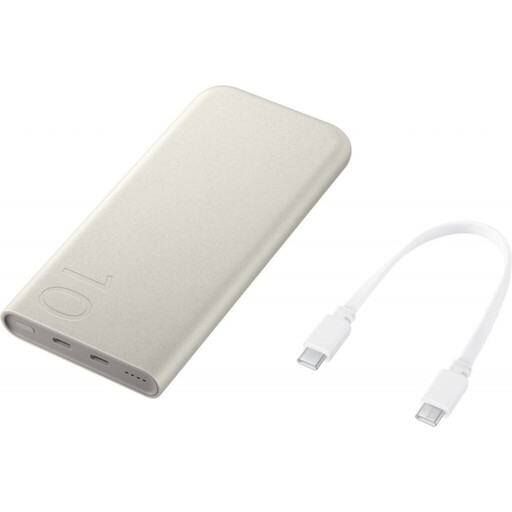
Samsung Powerbank 10000mAh 25W
Why This Fits Their Persona: Ideal for users who need a compact and reliable 10000mAh power bank for their smartphone. Its slim design fits into any bag, and its performance is tailored for the daily commute or short trips.
This model bypasses the vague "fast charging" promise by specifying a clear charging output of up to 25 watts. As a product from an established manufacturer, it also meets high safety standards.
Supports Super Fast Charging at 25W for compatible devices. The robust hard plastic casing ensures durability for mobile use.
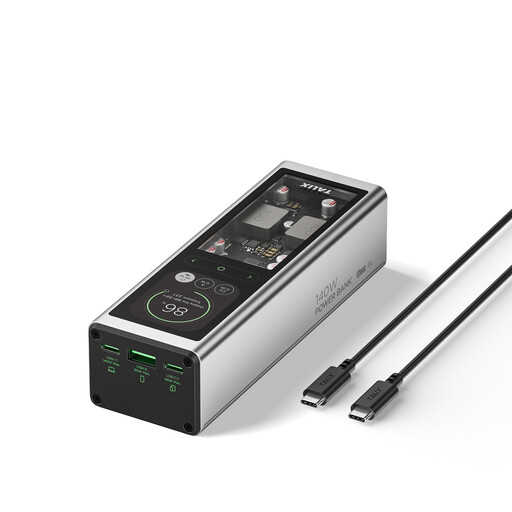
140W Power Bank, 20,000mAh, PD 3.1 Laptop Portable Charger
Why This Fits Their Persona: Designed for users who need to charge multiple devices, including a laptop, at maximum speed while on the go. Its high capacity and power output make it the ideal laptop power bank for business trips or remote work.
This model precisely specifies the PD 3.1 standard with 140W output, thus avoiding the trap of vague charging claims. The digital display shows real-time data on power and capacity, creating transparency over unrealistic manufacturer specs.
Supports the latest PD 3.1 standard for ultra-fast laptop charging. Three ports allow for simultaneous charging of multiple devices.
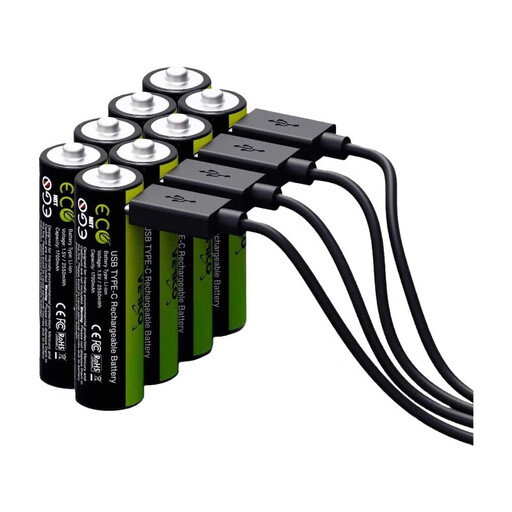
Verico LoopEnergy USB-C Li-Ion Battery AA 1700 mAh 8-Pack
Why This Fits Their Persona: A modern alternative for anyone looking to replace disposable batteries at home with a durable and practical solution. These USB-C rechargeable batteries are ideal for devices with a constant energy demand.
These batteries solve the fluctuating voltage problem of conventional NiMH batteries by delivering a constant 1.5V. Direct charging via USB-C also eliminates the need for a separate charger.
According to the manufacturer, each battery can replace up to 1,000 disposable batteries. The integrated USB-C charging function and constant voltage output offer high convenience and compatibility.
Looking for more options?
We have compiled a complete, up-to-date list of products that fully meet these strict selection criteria and all relevant safety regulations.
Frequently Asked Questions (FAQ)
How many times can I charge my smartphone with a 10,000mAh power bank?
This depends on your smartphone's battery capacity and the power bank's real capacity. As a rule of thumb: a 10,000mAh power bank with a rated capacity of about 6,500 mAh can fully charge a smartphone with a 4,000 mAh battery approximately 1.5 times.
Are rechargeable batteries suitable for all devices?
Most modern devices work perfectly with rechargeable batteries. Standard NiMH batteries have a voltage of 1.2V, while disposable batteries provide 1.5V. For some voltage-sensitive devices, this can cause issues. In this case, USB-C rechargeable batteries with a constant 1.5V output are an excellent alternative.
How can I identify a safe portable power supply?
Look for the CE mark, which confirms compliance with EU regulations. Reputable manufacturers also list the built-in safety features (e.g., protection against overcharging, deep discharge, short circuits) in the technical specifications. Avoid products without clear manufacturer information or those with unrealistically low prices.