
Portable Cooktops: A 2026 Buying Guide and Recommendations
A portable cooktop is a transportable cooking unit that offers flexibility for a variety of scenarios—from a small student flat to the office or a camping trip. Choosing the right appliance depends heavily on its technology, power output, and specific safety features. This guide breaks down the key technical parameters to help you make an informed decision.
Selection Criteria for Portable Cooktops
Your choice of model should be based on an analysis of its technical specifications and intended use. The following criteria are essential.
Technology Comparison: Induction, Electric, and Gas
The most fundamental decision concerns the heating technology. Each type has specific characteristics regarding efficiency, speed, and compatibility.
- Electric Cooktop (Cast Iron/Ceramic): These classic appliances use heating coils to warm a cast-iron or glass-ceramic plate. They are often budget-friendly and compatible with almost any type of cookware. The downsides include a relatively slow heat-up and cool-down time, as well as lower efficiency due to significant heat loss to the surroundings.
- Induction Cooktop: This technology uses an electromagnetic field to directly heat the base of the cookware. This results in a very fast response time, high energy efficiency, and precise temperature control. An induction cooktop is also safer, as the cooking surface itself only gets hot from the residual heat of the pot. It requires ferromagnetic cookware (e.g., made of cast iron or special stainless steel).
- Gas Stove: A gas stove offers maximum independence from the power grid, making it the primary choice for outdoor cooking while camping or hiking. The heat can be adjusted instantly and continuously. However, operation requires purchasing and transporting gas cartridges and, for safety reasons (risk of carbon monoxide), is only suitable for well-ventilated areas or outdoors.
Power, Size, and Design
The power, measured in watts (W), determines how quickly a cooktop reaches the desired temperature. For simple tasks like reheating food, models around 1000 W are sufficient. For searing or bringing water to a rapid boil, a power output of 2000 W or more is advantageous.
Designs primarily differ as:
- Single Burner: Compact and ideal for individuals, the office, or as a travel cooktop.
- Double Burner: Offers two cooking zones, allowing for the preparation of multiple dishes at once, which qualifies it for small kitchens or as a temporary stove replacement.
Safety Features and Materials
Modern appliances should come with essential safety features. Overheat protection automatically shuts the unit off if temperatures get too high. Pan detection on induction models prevents operation without suitable cookware. A child lock can prevent accidental setting changes on devices with touch controls.
The surface materials affect durability and ease of cleaning. Stainless steel housings are robust, while glass-ceramic surfaces allow for easy cleaning.
Our Product Selection for 2026
Based on the technical criteria mentioned, we present three models with different specialisations.
Clatronic CTC Double Hot Plate DKP3583
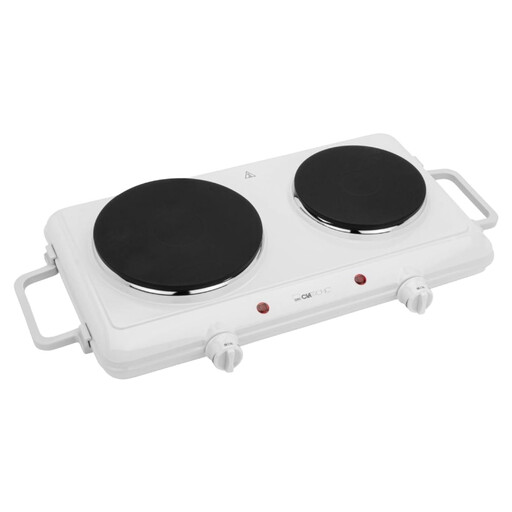
Why we recommend this product: The Clatronic DKP3583 is a functional double hot plate that stands out for its straightforward operation and versatile applications. With two cooking zones of different sizes and power levels (1500 W and 1000 W), it provides a solid foundation for cooking in small kitchens, offices, or holiday homes.
Pros:
- Two cooking zones for simultaneous cooking
- Continuously variable thermostats for precise temperature control
- Integrated overheat protection for safe operation
- Compatible with all types of cookware
Best for: Users looking for a simple, reliable, and cost-effective electric cooking solution with two burners for occasional or everyday use.
WOOX MX0237 RapidTherm Portable Induction Cooktop
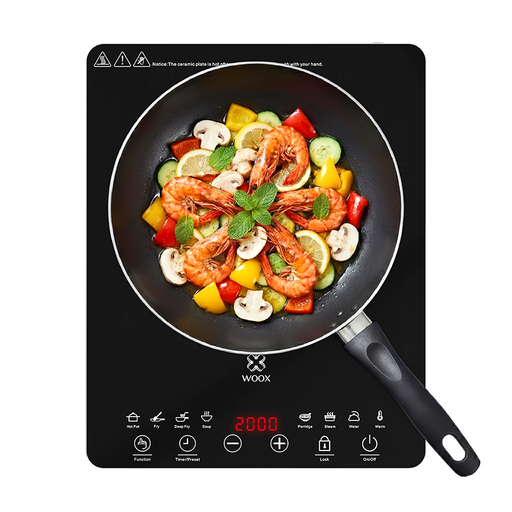
Why we recommend this product: The WOOX MX0237 is a modern single-burner cooktop featuring powerful induction technology. With 2000 W of power, 8 power and temperature levels, and four preset programs, it enables fast and precise cooking. Its safety features, including pan detection, a child lock, and a timer, make it a well-designed solution for modern households.
Pros:
- High energy efficiency and rapid heating thanks to induction
- Precise control via 8 power and temperature levels (60°C - 240°C)
- Comprehensive safety features, including automatic pan detection
- Easy-to-clean glass-ceramic surface
Best for: Individuals who value speed, energy efficiency, and precise cooking results, and need a compact solution for a modern kitchen, studio apartment, or caravan.
BRS 61-Series Camping And Backpacking Stove
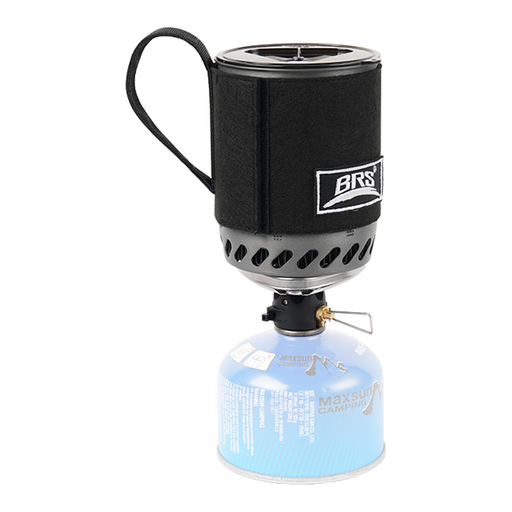
Why we recommend this product: This camping stove from BRS is purpose-built for portability and outdoor use. The entire system, consisting of the burner, pot, and lid, nests together and weighs only 0.36 kg. The pressure-regulating valve ensures a stable flame even in adverse conditions, making it a reliable companion for backpacking and camping trips.
Pros:
- Extremely lightweight and compact all-in-one design
- Precise flame control via a pressure-regulating valve
- Durable construction of aluminium alloy and stainless steel
- Quick setup and easy ignition
Best for: Backpackers, hikers, and campers for whom minimal weight and pack size, combined with reliable outdoor cooking performance, are top priorities.
Other Options and Alternatives
The models featured cover specific use cases. If you require a different configuration, higher power, or additional features, our range offers further options.
Explore our full range of Cooktops.
Frequently Asked Questions (FAQ)
1. What is the technical difference between an induction cooktop and an electric cooktop? An electric cooktop generates heat via electrical resistance in heating coils and transfers it to the pot through conduction. An induction cooktop creates a magnetic field that induces eddy currents directly in the base of ferromagnetic cookware, heating it up. This process is faster, more efficient, and the cooktop surface itself stays cooler.
2. What cookware do I need for a portable induction cooktop? You need cookware with a ferromagnetic base. This includes pots and pans made of cast iron, enamelled iron, or special induction-ready stainless steel. You can easily test if a pot is suitable with a magnet: if it sticks to the bottom of the pot, the cookware is compatible.
3. Can I use a camping gas stove indoors? No, using a gas stove in enclosed or poorly ventilated spaces is strictly prohibited. The combustion of gas produces carbon monoxide (CO), an odourless and colourless gas that can lead to severe poisoning in enclosed spaces. Gas stoves are designed exclusively for outdoor use or in very well-ventilated areas.