
Picture Frame Buying Guide 2026: Criteria for Making the Right Choice
A picture frame serves two primary purposes: protecting a picture, photo, or document from environmental damage and presenting it aesthetically as wall decor. Selecting the right model depends on objective criteria such as material, type of glazing, format, and intended use. This guide analyses the technical parameters relevant to making an informed decision.
Buying Guide: What to Look for When Choosing a Picture Frame
The decision for a photo frame should be based on an analysis of its functional properties. The following aspects are of central importance.
1. Frame Material Analysis
The frame's material determines not only its appearance but also its durability and weight.
- Wood: Wooden picture frames offer a classic aesthetic. Solid wood is robust and long-lasting, while MDF (medium-density fibreboard) provides a more cost-effective alternative with a uniform surface. Wood frames are suitable for a wide variety of interior design styles.
- Plastic (Polystyrene): Polystyrene frames are lightweight and often more affordable. They are resistant to moisture, which qualifies them for use in rooms like bathrooms or kitchens. Their surfaces can imitate a wide range of textures and colours, from a wood-grain look to smooth, modern finishes.
- Metal (Aluminium): Aluminium frames are characterised by their low weight and high stability. Their slim and minimalist profile pairs well with modern or industrial decor styles, as well as for displaying certificates or contemporary art.
2. Type of Glazing
The cover protects the image from dust, UV radiation, and mechanical damage.
- Real Glass: Offers high transparency and scratch resistance. However, it is heavier and more fragile than plastic alternatives.
- Plastic Glass (Acrylic or Polystyrene Sheets): Is lighter and more shatter-resistant, which simplifies transport and handling. However, it can be more susceptible to scratches and may offer slightly less optical clarity. Anti-reflective coatings can reduce glare.
3. Format, Passe-partout, and Frame Depth
The size and depth of the frame must be appropriate for the object being framed.
- Standard Formats: Common photo and poster sizes (e.g., 13x18 cm, 20x30 cm, DIN A4) are widely available. Choosing a standard format makes it easier to find suitable frames.
- Passe-partout: A passe-partout is a cardboard mount placed between the picture and the glass. It creates visual separation between the subject and the frame moulding, draws focus to the image, and prevents the photo from touching the glass directly.
- Frame Depth: For flat items like photos or prints, a standard frame is sufficient. If you intend to frame three-dimensional objects (e.g., medals, dried flowers), a "shadow box" or 3D frame with the necessary depth is required.
4. Hanging and Placement
The mounting options determine the flexibility you have when creating a gallery wall.
- Hanging Picture Frames: Most frames come with pre-installed hangers on the back (often sawtooth hangers or clips) for both horizontal and vertical wall mounting.
- Easel Backs: Smaller formats are frequently equipped with an additional stand, allowing them to be placed on tables, shelves, or dressers.
Our Top Picture Frame Picks for 2026
Based on the technical criteria mentioned, here are a few models with different functional strengths.
Premier Housewares Deep Red 10 Peg Washing Line Photo Frame
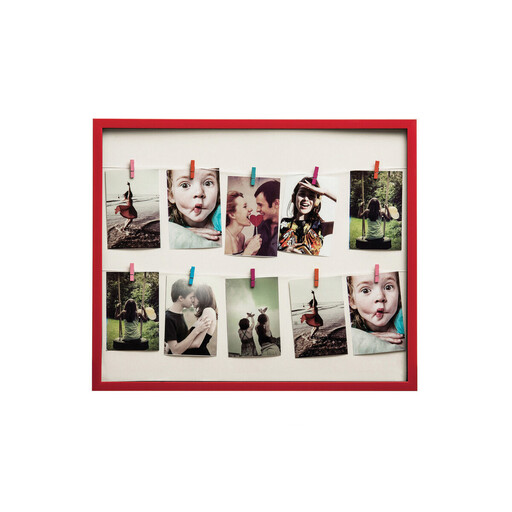
- Why we recommend this product: This model deviates from the classic single frame, functioning as a collage picture frame. The design, featuring a line and 10 pegs, allows for a flexible and unconventional arrangement of multiple photos or notes within a single frame. According to the manufacturer, the frame is made of polystyrene, making it lightweight and easy to mount.
- Pros:
- Allows for the display of up to 10 pictures in one frame.
- Flexible and interchangeable layout thanks to the peg system.
- Lightweight due to the plastic frame.
- Best for: Individuals who want to create a dynamic and playful photo wall and are looking for an alternative to rigid picture frame sets.
Woltu Picture Frame 20x30cm Set of 3
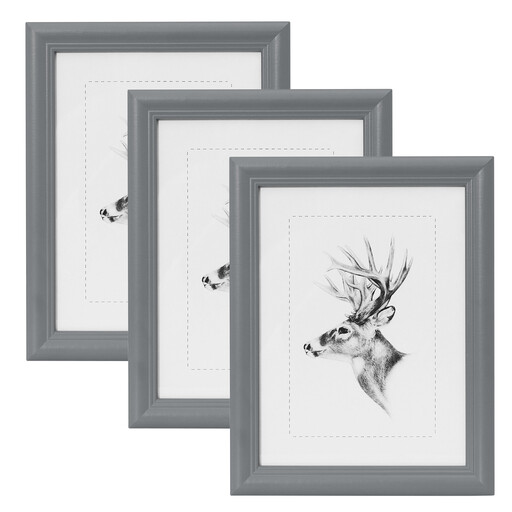
- Why we recommend this product: The picture frame set from Woltu offers a coherent solution for creating a uniform gallery wall. The manufacturer states the frames are made of solid wood, ensuring stability and a premium feel. The cover is a plastic panel that is dust- and moisture-resistant. The included passe-partout adds to the design flexibility.
- Pros:
- Set of three frames for a harmonious overall look.
- Frames made of solid wood.
- Includes a passe-partout for different image sizes.
- Suitable for both hanging and tabletop display (at this size).
- Best for: Users who prefer a structured and stylistically coordinated wall decoration with multiple pictures and value the quality of real wood.
EUGAD Set of 5 Deep Picture Frames
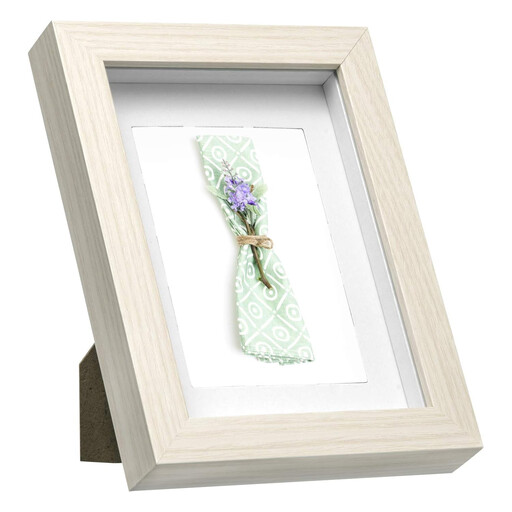
- Why we recommend this product: This 5-piece set from EUGAD stands out due to its significant depth. According to the product description, it can frame objects up to 1.5 cm thick. This makes the frames functional 3D shadow boxes. The cover is made of glass, and the frame mouldings are crafted from wood.
- Pros:
- Deep frame suitable for three-dimensional objects.
- Set of five frames in the 13x18 cm format.
- Cover made of real glass.
- Includes a paper passe-partout.
- Best for: Creatives and collectors who want to stylishly display not only flat pictures but also small mementos, crafts, or other 3D objects.
Alternative Design Options
If you are looking for other options for your wall decor, such as large-format prints or individual motifs without a frame, the Photo Posters category could be a fitting addition to your selection.
Frequently Asked Questions (FAQ)
1. What is a passe-partout and when is it useful? A passe-partout is a cardboard insert placed between the picture and the frame's glass. It creates visual separation, draws the eye to the subject, and protects the image surface from direct contact with the glass. A passe-partout is particularly useful for giving smaller pictures more prominence in larger frames or for achieving a professional, museum-quality look.
2. How do I create a harmonious gallery wall? For a harmonious gallery wall, it is advisable to choose a unifying element. This could be the use of identical frames (e.g., from a picture frame set), a consistent frame colour, or a common theme among the subjects. Arranging the frames on the floor beforehand helps in planning the spacing and overall composition before putting nails in the wall.
3. Which material is best for picture frames? The suitability of the material depends on the application and personal style. Wood has a warm and classic feel. Plastic is lightweight, easy to clean, and often budget-friendly, making it ideal for humid rooms or children's rooms. Aluminium offers a modern, minimalist aesthetic and high stability with low weight, which is well-suited for large formats.