
A Guide to Authentic Chinese Pickled Vegetables
By Joybuy Product Recommendation Officer, July 28, 2026
Finding authentic Chinese pickled vegetables can be a challenge. If you're craving the distinctive flavour of dishes like Suan Cai Yu or just a zesty side for your rice, you're often faced with a shelf full of products with confusing labels. Making the wrong choice not only leads to flavour disappointment but also wasted money.
This guide will help you avoid the most common pitfalls and find the right product for your needs—whether it's a ready-to-eat side dish or the crucial ingredient for your next culinary project.
The 3 Most Common Mistakes When Buying Pickled Vegetables
Before you add a product to your cart, you should be aware of the typical issues that can spoil an authentic experience.
- Misleading Flavour Profiles: Many products labelled "sour" or "spicy" are adapted for Western palates. They often contain excessive sugar or non-traditional spices, which distorts the original, complex flavour. The result is a one-dimensional product that has little in common with the original.
- Wrong Variety for the Recipe: The term pickled mustard greens is an umbrella term. For an authentic Suan Cai Yu (Fish with Pickled Greens), you need Suan Cai, which gets its characteristic sourness from lactic acid fermentation. If you grab Zhacai (pickled mustard stem) instead, which is usually saltier and seasoned differently, the dish won't turn out right.
- Poor Texture: Crispness is a key quality indicator. Over-cooking, improper storage, or low-quality processing can make the vegetables soft and mushy. This is especially undesirable in Asian side dishes, where texture plays a vital role.
What to Look For: The Key Parameters
To avoid these mistakes, focus on three objective criteria you can check directly on the packaging.
1. Vegetable Type and Processing Method
The foundation of any pickled vegetable is its type. The names provide clues about flavour and use:
- Zhacai (榨菜): Made from the stem of the brown mustard plant. It has a firm, crunchy texture and is often cut into strips or cubes. It's typically salty and savoury, serving as a classic side dish for rice or congee. Brands like Wu Jiang Mustard offer a wide variety.
- Suan Cai (酸菜): Literally means "sour vegetable." It's typically made from napa cabbage or mustard greens through fermentation. Its primary flavour profile is sour, making it an essential ingredient for dishes like Suan Cai Yu or Northern Chinese stews.
- Kimchi (泡菜): Although often associated with Korea, Chinese versions also exist. It's usually a spicy Chinese vegetable and is characterized by a combination of heat (chilli), sourness, and umami.
2. Flavour Profile and Ingredient List
The ingredient list is your most reliable guide. Pay attention to the order of ingredients to gauge the flavour profile.
- Sourness: Terms like acetic acid (E260), lactic acid (E270), or citric acid (E330) indicate a sour profile. A high proportion of fermented vegetables itself is an indicator of natural acidity.
- Spiciness: Ingredients like chilli, Sichuan pepper, or chilli oil point to heat. For example, a Haidilao soup base with pickled vegetables combines sourness with the typical numbing spice of Sichuan pepper.
- Salt Content: The salt content is often high, as it's used for preservation. Some products are labelled as "light-salted." If you want to reduce the saltiness, some products can be briefly rinsed before consumption.
3. Intended Use: Ready-to-Eat or Cooking Ingredient?
Check whether the product is intended for direct consumption or as a cooking ingredient.
- Ready-to-Eat Side Dishes: These are often available in small portion packs (e.g., 80g) and are already fully seasoned. They are ideal as quick Asian side dishes for noodles, rice, or as a snack.
- Cooking Ingredients: Products like seasoning pastes for Baijia Suan Cai Yu or larger cans of pickled sour vegetables are more concentrated and release their full flavour only when cooked. They form the flavour base for soups and stews.
Featured Product Recommendations
Here are some recommendations tailored to specific needs that meet the quality criteria mentioned above.
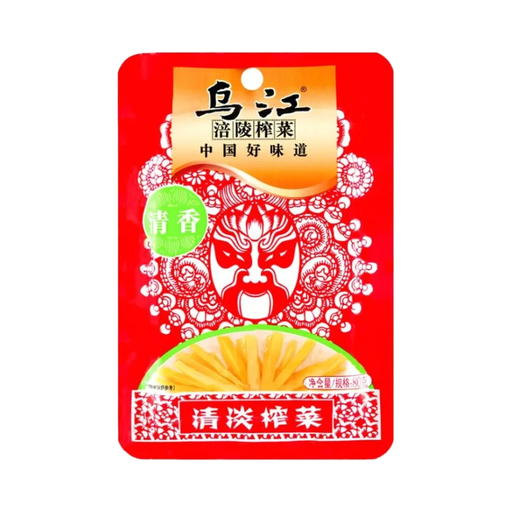
Wu Jiang Light Pickled Mustard with Sweeteners 80g
Why This Fits Their Persona: Ideal for students or busy professionals looking for a quick, uncomplicated, and flavourful side dish for rice or instant noodles. The 80g pack is perfectly portioned and ready to eat.
This product from the well-known brand Wu Jiang offers a reliable, crisp texture and a balanced, not overly salty, flavour profile. It avoids the trap of mushy or overly sweet "generic vegetables."
Ready-to-eat and convenient: No preparation required. Reliable quality: Maintains the characteristic crunch of Zhacai.
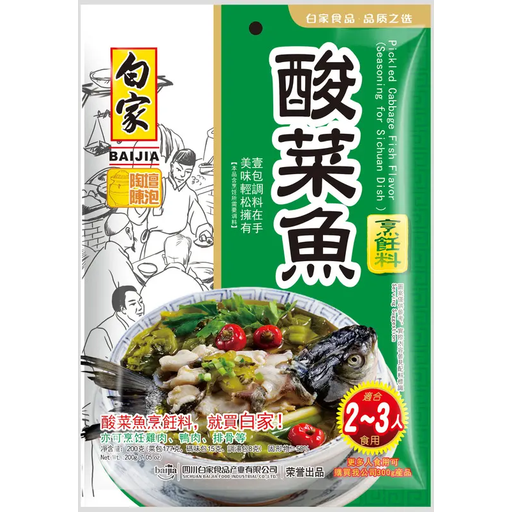
Baijia Pickled Cabbage Fish Seasoning 200g
Why This Fits Their Persona: Perfect for anyone who wants to recreate the classic Sichuan dish Suan Cai Yu at home without having to hunt for the right ingredients. This kit contains the correct type of Suan Cai and the seasoning mix.
It solves the core problem of using the wrong type of vegetable (Pitfall #2). The kit is specifically designed for Suan Cai Yu, guaranteeing the dish's authentic, sour-and-savoury flavour.
Complete seasoning pack: Includes both the correct pickled greens and the spice base. Authentic flavour: Allows you to prepare a restaurant-quality dish.
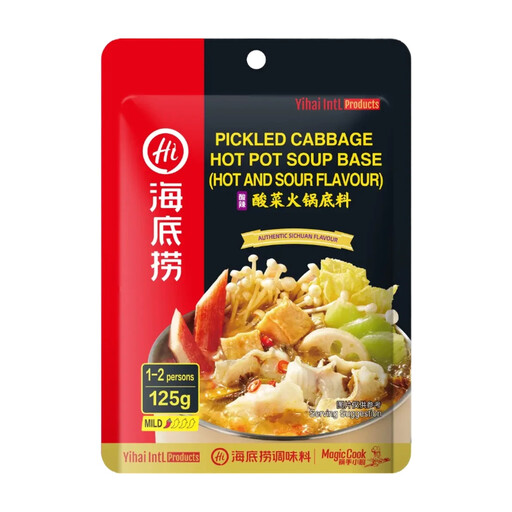
HAIDILAO Pickled Cabbage Hot Pot Soup Base 125g
Why This Fits Their Persona: For hot pot lovers seeking a sour and spicy broth as an alternative to the classic spicy or clear broths. This soup base from Haidilao offers a quick and reliable solution.
Instead of trying to create a soup base from an unsuitable pickled vegetable, this product delivers a professionally balanced flavour profile. It prevents a watery or unbalanced result.
Specialised soup base: Developed by a leading hot pot brand. Complex aroma: Combines sourness, heat, and the numbing note of Sichuan pepper.
Looking for More Options?
We have compiled a complete, real-time list of products that fully satisfy these strict selection criteria and UK safety regulations.
Frequently Asked Questions (FAQ)
What is the difference between Chinese Suan Cai and Korean Kimchi?
Although both are fermented vegetables, they are fundamentally different. Suan Cai is Chinese pickled greens, usually made from mustard greens or napa cabbage, with a primarily sour flavour profile. Kimchi is a Korean specialty, typically made from napa cabbage, which gets its complex, spicy-sour, and umami-rich aroma from ingredients like gochugaru (chilli flakes), garlic, ginger, and often fish sauce.
How long do opened pickled vegetables last?
The shelf life varies by product. Small, ready-to-eat packs are intended for immediate consumption. For larger jars or cans, any leftovers should be transferred to a non-metallic, airtight container, stored in the refrigerator, and typically consumed within a week. Always follow the specific storage instructions on the product's label.
Can I use any pickled mustard green for Suan Cai Yu?
This is not recommended. For an authentic Suan Cai Yu, you need specifically fermented Suan Cai, which has a distinct, natural sourness. Common pickled mustard greens (Zhacai) are often primarily salty and seasoned differently, and will not deliver the soup's characteristic flavour profile. To be sure, you should buy a product that is explicitly labelled as a seasoning for Suan Cai Yu.