
Buying pickled radish: how to choose varieties, ingredients and the right products
Pickled radish is a handy side dish in many Asian cuisines, served with rice, sushi, noodles, congee or kimbap. Depending on the recipe, it can taste sweet and sour, salty, savoury or spicy. The cut and pack size can also vary considerably.
If you’re buying pickled radish in the UK, don’t choose based on colour or product name alone. Terms such as pickled daikon, Japanese takuan or Korean danmuji often describe particular styles, but they don’t automatically guarantee the same recipe or origin.
Common pitfalls when buying pickled radish
1. Colour doesn’t tell you much about the flavour
Yellow radish is often associated with takuan or danmuji. However, its colour may come from colouring ingredients. For example, Obento Pickled Radish Whole lists E101, as well as sweeteners and acidity regulators. If you want to avoid certain ingredients, check the pack rather than choosing by colour alone.
2. “Mild” doesn’t necessarily mean low in salt
Asian pickled vegetables often contain salt as a preservative and flavouring. The products listed here, for example, range from 1.5 g of salt per 100 g for some yellow radish varieties to 8.75 g for Chaoshan Collection Pickled Radish Bits. These figures aren’t directly comparable, as the recipe and drained weight also make a difference.
3. Large packs aren’t right for every household
A 400 or 500 g pack is handy if you eat pickled radish regularly, but it may be too much for the occasional sushi night. Many products need to be refrigerated and used within a short time once opened. Smaller bags or multipacks of individual portions can make planning easier.
Key things to consider when choosing
Ingredients and flavour
For a sweeter option, look for products containing sugar or sweeteners. Sunlee Sweetened Radish Strips contains radish, sugar, salt and water; according to the product information, it has 21.42 g of sugar per 100 g. It goes well with rice dishes and can be served as a sweet-and-sour side.
If you’re looking for spicy pickled radish, check for chilli, garlic, ginger, vinegar or Sichuan pepper. Wu Jiang Pickled Diced Radish contains chilli, among other ingredients, and is described as mildly spicy. Jiaxingju Pickled Radish with Chili combines radish with chopped chilli, vinegar, garlic and ginger. For a bolder, oilier seasoning, FanPiXiongDi Chopped Chili Radish with tea oil is one option.
Cut and how to serve it
- Strips: Ideal for sushi, bento, salads and kimbap.
- Diced: Handy as a topping for rice, noodles, congee or stir-fried dishes.
- Whole or halved pieces: Useful if you want to choose the thickness of the slices yourself.
- Kimchi cubes: A good choice as a spicy side or an ingredient in Korean dishes.
Japanese takuan is usually served in thin slices or strips. Korean danmuji is often served with kimbap or as a side with fried dishes. Chinese pickled radish, on the other hand, can be saltier, more chilli-forward or richer in umami.
Pack size and storage
Before you buy, check:
- the net weight and, for pickled products, the drained weight where possible,
- the storage instructions before and after opening,
- the best-before date on the actual pack,
- allergens such as sesame, soya, wheat or prawns.
Use a clean spoon to serve from opened packs. Depending on the product, leftovers may need to be refrigerated and used soon. Follow instructions such as “keep in brine” if they appear on the pack.
Our picks for different shopping needs
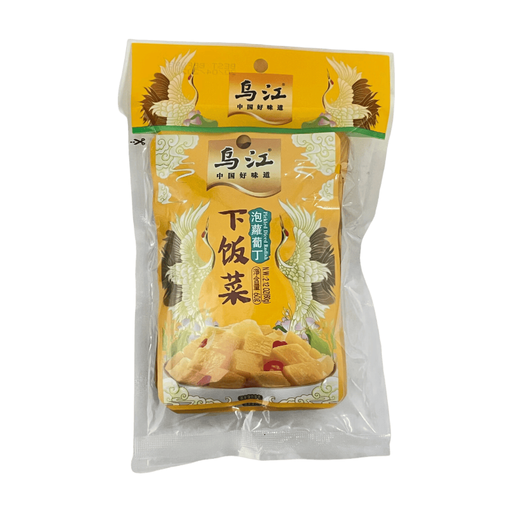
WU JIANG Pickled Diced Radish 60g*4
Why it suits this profile: The four 60 g bags are ideal for individual meals and mean you’re less likely to have to store a large opened pack for a long time. The diced radish goes well with rice, congee and mixed noodles.
The portion sizes are clearer than with one large pack. The ingredients list 93% radish, as well as chilli and salt; the salt content is 5.0 g per 100 g.
240 g total weight, pre-diced pieces and ready-to-eat convenience. Refrigerate after opening and use soon.
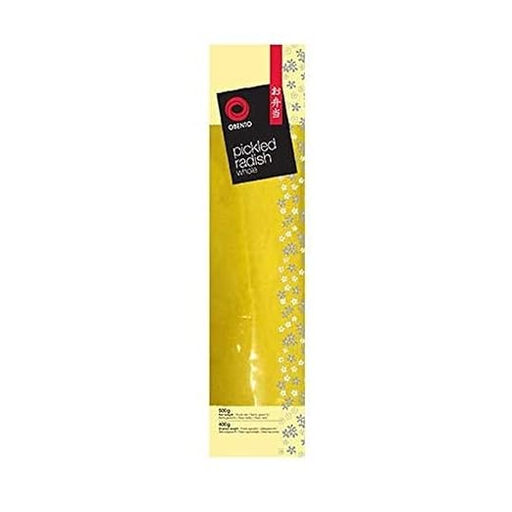
Obento Pickled Radish Whole 400-500G
Why it suits this profile: You can slice the whole radish thinly or cut it into strips to suit your dish. This gives you more control over portion sizes and how you serve it with sushi, rice bowls or salads.
The product description lists the ingredients, allergens and sweeteners, and notes that it contains aspartame. This makes it easier to check the recipe before you buy.
Whole radish, flexible slicing and suitable for serving as Japanese takuan or Korean danmuji. Refrigerate in the brine after opening.
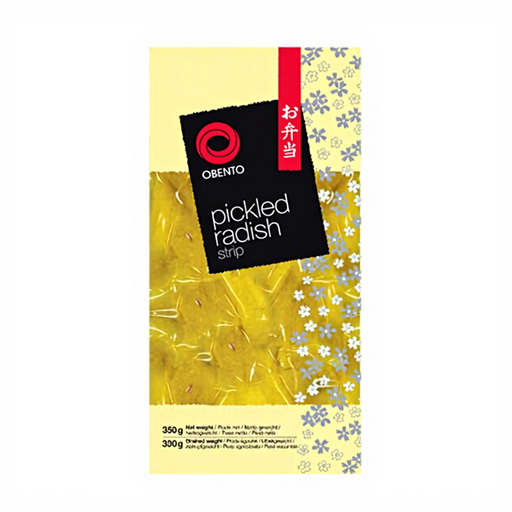
Obento Pickled Radish Strip 350g
Why it suits this profile: The pre-cut strips are ideal for regular use in sushi, bento boxes and Japanese side dishes. The multipack suits households that get through pickled radish regularly.
The pack information lists three 350 g units. This means you can open them as needed, rather than having to open one large pack all at once.
Pre-cut strips and 1.05 kg total weight. Check the sulphites, sweeteners and stated drained weight before buying.
Looking for more options?
We’ve put together a complete, regularly updated list of products that meet these strict selection criteria and fully comply with the safety regulations in force in the EU.
FAQs about pickled radish
How do you serve pickled radish?
You can eat it straight from the pack as a radish side dish. Strips go well with sushi, kimbap and bento. Diced radish is ideal with rice, congee, noodles or fried dishes. If it’s very salty, a quick rinse can mellow the flavour, although this will also affect the seasoning.
How long does pickled radish keep after opening?
It depends on the recipe and packaging. Unopened products are usually stored at room temperature, if the pack instructions allow this. Once opened, refrigeration is often required. Always follow the instructions on the relevant label; don’t assume a standard storage period applies to every product.
What’s the difference between danmuji, takuan and radish kimchi?
Danmuji is typically yellow, sweet-and-sour radish from Korean cuisine. Takuan is a Japanese style of pickled daikon, often yellow and served with sushi or rice. Radish kimchi usually contains chilli, garlic and ginger, and may be fermented and considerably spicier. Always check the ingredients list for the exact recipe.