
Buying pickled mustard greens: how to choose the right type, heat and use
Pickled mustard greens are a handy Chinese side dish to serve with rice, noodles, congee or steamed dumplings. Depending on the product, they may be made from mustard leaves, stems or roots. So products sold as Chinese pickled vegetables, Zhacai, Sichuan mustard greens or Chinese pickles can vary considerably in texture and seasoning.
If you’re shopping online, don’t rely on words such as “crunchy”, “authentic” or “traditional” alone. The key things to check are the ingredients, salt content, pack size and intended use.
Common pitfalls when buying Chinese pickles
1. “Mustard greens” doesn’t always mean the same thing
Pickled mustard leaves are usually finer, softer and more aromatic. Pickled mustard stems and Zhacai are often made from the thickened parts of the mustard plant and can be much crunchier. So a product intended for fish soup won’t necessarily make a mild, flavoursome side for breakfast congee.
Check the specific product description:
- Leaf Mustard or Mustard Greens: pickled mustard leaves, often used in soups and stir-fries
- Mustard Stem: pickled mustard stems with a firmer bite
- Mustard Tuber or Zhacai: pickled mustard root, often finely sliced and crunchy
- Dried Pickled Mustard Greens: a dried product that needs soaking before cooking
2. “Mild” doesn’t tell you much about the salt content
Pickled vegetables are often preserved with salt, acid or fermentation. They may taste mild even when their salt content is relatively high. The product information available here, for example, ranges from 4.5 g to 12 g of salt per 100 g.
This is particularly important if you’re planning to serve the vegetables regularly as a ready-to-eat side with rice or noodles. A quick look at the nutrition table can stop a seemingly small sachet from dominating the meal in flavour and quantity.
3. “Crunchy” doesn’t tell you how much you’ll get
Crunchy mustard greens may come in individual portions, multipacks or larger packs. A 70 to 80 g pack is handy for a single meal. If you regularly cook for several people, 280 to 400 g is usually easier to plan around. For larger packs, check the storage instructions after opening.
What to check before you buy
Ingredients, seasoning and allergens
Start by checking the main ingredient, then look at the seasoning. Products with chilli oil, garlic and ginger taste different from sweetly seasoned mustard stems or mildly sour mustard leaves.
Look out for the following on the label:
- Heat: Chilli, chilli oil or pepper suggest a spicy recipe.
- Sweetness: Sugar or sweeteners such as E955 will change the flavour profile.
- Strength of seasoning: Soy sauce, sesame oil, fermented black beans and spices can strongly influence the overall flavour.
- Allergens: Commonly listed allergens include mustard, soya, sesame, wheat and sulphites.
- Additives: Acidity regulators, preservatives and flavour enhancers should be clearly identifiable from the ingredients list.
Ready to eat or does it need cooking?
Products labelled “ready to eat” are a good choice for a quick side. Serve them straight from the packet or stir them into rice, noodles or congee.
Dried pickled mustard leaves need preparation first. According to the product information, Fangjia Puzi should be soaked in water for 5 to 10 minutes and then rinsed. It must then be cooked. This option is better suited to soups, fillings and stir-fries than to eating straight away.
Pack size and storage
Individual portions are handy for eating on the go or packing in a lunchbox. With multipacks, each unopened portion stays sealed separately. Many products need to be refrigerated once opened; some should be eaten within a few days.
Also check the net weight and, for pickled vegetables, the drained weight if one is given. For products packed in brine, the amount of vegetables you actually get may be considerably less than the total weight.
Our picks for different needs
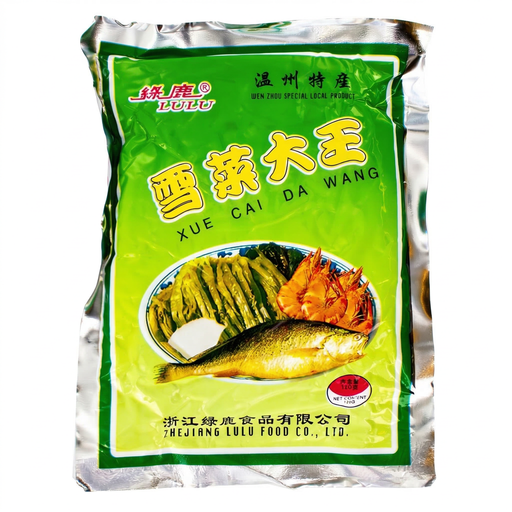
Green Deer King Pickled Mustard Greens 150g
Why it suits this profile: The 150 g pack is a good fit for smaller households and anyone who wants to try a smaller amount of Chinese pickled vegetables first. The product is finely chopped and ready to eat.
The manageable pack size reduces the risk of buying more than you need. According to the product information, you can briefly rinse the vegetables to reduce the saltiness if you prefer.
Finely chopped and ready to eat, with a clearly stated salt content of 12 g per 100 g.
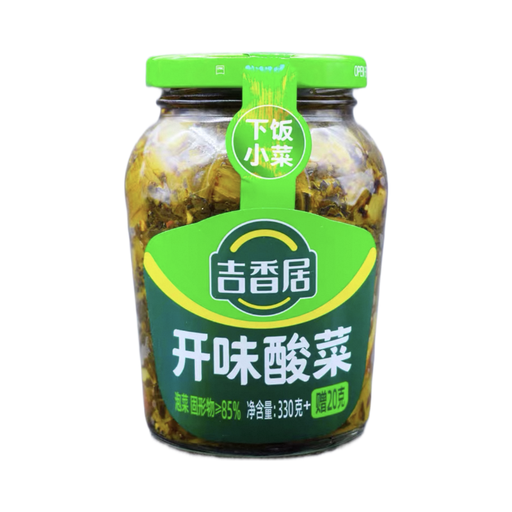
Jixiangju Open-Flavor Pickled Mustard (330+20g)
Why it suits this profile: This recipe combines pickled mustard leaves with chilli oil, ginger, garlic and spices. It’s a good match for rice, steamed dumplings and noodles when you’re after a sour, spicy kick.
The product information clearly lists the ingredients, allergens, net weight and storage instructions. That makes it easier to judge how spicy the seasoning will be before you buy.
350 g net weight, ready to eat and with a clearly described sour, spicy flavour profile.
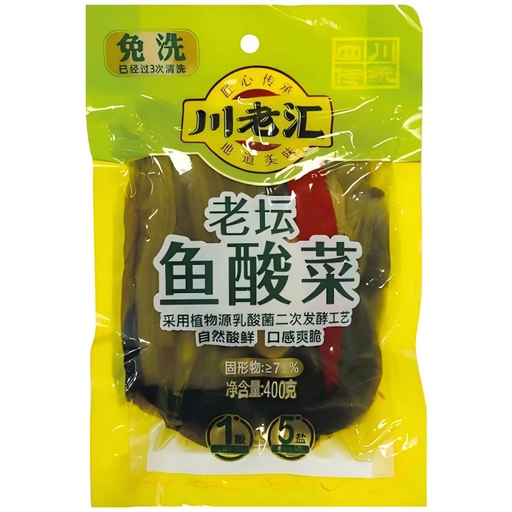
Chuan Lao Hui Aged Pickled Mustard Greens for Fish Dishes 400g
Why it suits this profile: The 400 g pack is designed for Sichuan fish dishes such as Suan Cai Yu. You can also chop the vegetables and serve them with rice or congee.
Its stated use in fish dishes makes it clear that this specially seasoned product shouldn’t be mistaken for a mild everyday side.
400 g net weight, specifically described for Suan Cai Yu, with sodium clearly listed as 3.628 mg per 100 g.
Looking for more options?
We’ve put together a complete, regularly updated list of products that meet these strict selection criteria and fully comply with the safety regulations in force in the EU.
FAQs about pickled mustard greens
Do you need to rinse pickled mustard greens before eating them?
Ready-to-eat products can generally be served straight from the pack if the packaging says so. Briefly rinsing very salty varieties can change the flavour. Dried pickled vegetables, on the other hand, usually need to be soaked and then cooked.
How long does pickled mustard greens last once opened?
It depends on the instructions on the individual pack. Opened products often need to be refrigerated and eaten within a few days. Products in brine should be transferred to a suitable container after opening. Always follow the instructions from the manufacturer.
Which goes better with rice: mustard leaves or Zhacai?
Both make good finely chopped, flavoursome sides. Zhacai, or pickled mustard root, is often crunchier and available in small individual portions. Pickled mustard leaves can be softer and are often a better fit for soups, fish dishes or stir-fries. Check the ingredients list before buying to find out about the specific recipe and level of heat.