
Pencil Leads for Mechanical Pencils 2026: Diameter, Hardness Grade and Suitable Recommendations
The right lead determines whether a mechanical pencil writes cleanly, draws precisely, or snaps at the slightest pressure. Yet many shoppers only look at the hardness grade or a well-known brand. This can lead to the wrong purchase: a 0.7 mm lead won't fit a mechanical pencil designed for 0.9 mm, and a soft 4B lead isn't automatically suitable for technical drawings.
This buying guide from the Joybuy Product Recommendation Officer shows what school pupils, university students, office workers, technical draughtsmen, architects, artists and hobby sketchers should look for when choosing pencil leads for mechanical pencils.
Common Mistakes When Buying Mechanical Pencil Leads
1. Guessing the Diameter
Mechanical pencils use different leads depending on the model. Common sizes are 0.3 mm leads, 0.5 mm, 0.7 mm or 0.9 mm. There are also thicker systems such as 1.3 mm, 1.8 mm and 3.15 mm for special clutch pencils or artist pencils.
A lead with the wrong diameter can jam in the lead channel, slip through or block the feed mechanism. So check the markings on the pencil, the packaging or the instruction manual. The visible diameter of your old lead is also a useful clue, but it doesn't always replace the manufacturer's specification.
2. Confusing "Break-Resistant" with "Unbreakable"
Terms like break-resistant pencil leads describe a lower tendency to break under certain conditions. No graphite lead is unbreakable. A lead that's extended too far, sideways pressure or dropping the pencil can damage even flexible leads.
According to the product information for the STAEDTLER Mars Micro Carbon series, the flexibility is based on a graphite-polymer formula. This can be practical when you write with more pressure, but it shouldn't be taken as a guarantee against any breakage.
3. Choosing the Wrong Hardness Grade for Your Use
The designations H, HB, B, 2B and 4B give you guidance on hardness and line effect:
- H leads: harder, lighter and suitable for fine, controlled lines.
- HB leads: a middle grade for everyday writing, notes and simple drawings.
- B leads: softer and darker, often pleasant for bold notes or sketches.
- 2B leads: noticeably softer, darker drawing leads for sketches and shading.
- 4B leads: very soft and dark; for expressive hatching, but with a higher tendency to smudge.
Hardness grades aren't always completely identical between brands. For technical construction work, it's not just the designation that matters, but also the desired line width, erasability and surface effect.
The Three Most Important Buying Criteria
1. Lead Diameter and Pencil Compatibility
The diameter must match your mechanical pencil exactly. 0.7 mm mechanical pencil leads are widely available and suitable for writing, mathematical notes and many drawing tasks. 0.9 mm leads offer a more stable tip and can be useful when you apply more pressure. For very fine technical details, 0.3 mm leads are an option, but they need a compatible pencil and careful handling.
With special formats like 1.3 mm or 1.8 mm, you should only use a lead holder designed for them. According to the product description, the M&G Mechanical Pencil Set works with a 1.8 mm lead holder and includes 2B replacement leads. So it's best categorised as a set for drawing and sketching, not as a refill for classic 0.5 mm or 0.7 mm mechanical pencils.
2. Hardness Grade and Writing Purpose
For daily note-taking at school, university or the office, HB leads are usually a balanced choice. If you prefer darker lines with less pressure, you can choose B or 2B leads. For technical drawings and fine contours, H or HB leads are often easier to control, while sketching leads with B or 2B hardness offer more tonal value.
Also consider the paper: on rough paper, a soft lead can wear down more quickly; on smooth paper, a hard lead often produces a more even line.
3. Length, Pack Size and Storage
Check how many leads your pencil can hold and what length the manufacturer recommends. According to the information for STAEDTLER Mars Micro Carbon, the leads are loaded in short portions so that the feed mechanism doesn't jam. However, the exact filling capacity depends on the specific model.
Store replacement leads in a dry place and in their closed packaging. These small parts are not suitable for children under three years old and should not be swallowed.
Our Selection for Different User Profiles
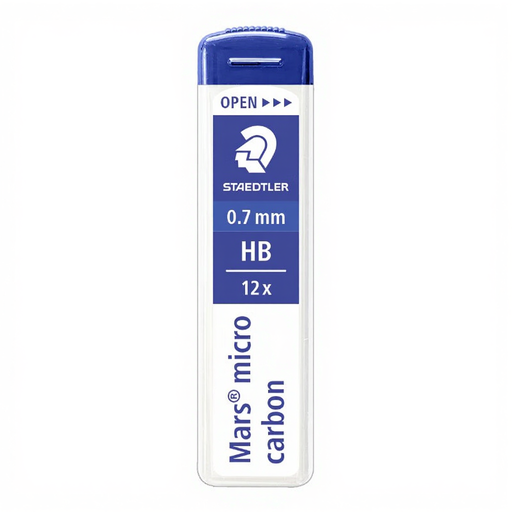
STAEDTLER Mars Micro Carbon 0.7 mm HB
Why it fits: An everyday size suitable for school, university, office and general writing tasks.
The stated diameter of 0.7 mm reduces the risk of accidentally ordering a lead that's too thick or too thin.
HB hardness, 12 leads per pack and, according to the product information, suitable for paper and card.
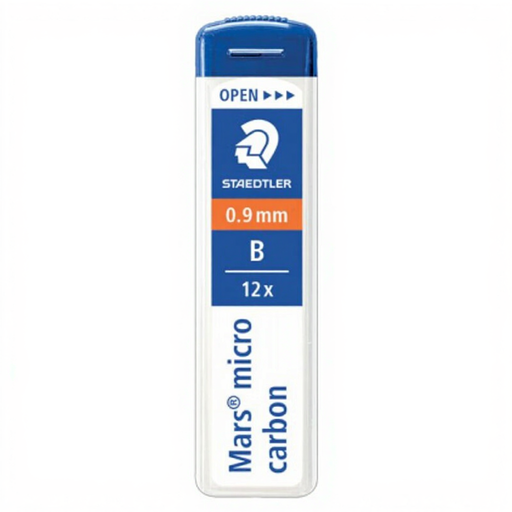
STAEDTLER Mars Micro Carbon 0.9 mm B
Why it fits: The larger diameter and softer B grade appeal to users who prefer darker lines.
The product name states both the diameter and the hardness grade, making it easier to check compatibility before buying.
12 leads per tube; according to the product information, B hardness, graphite colour and suitability for paper, card and drawing boards.
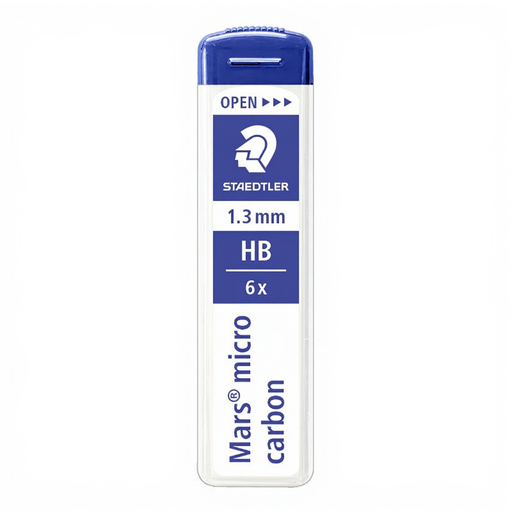
STAEDTLER Mars Micro Carbon 1.3 mm HB
Why it fits: For special lead holders, bold sketches and markings where a thicker lead is intended.
The 1.3 mm marking makes it clear that these replacement leads are not intended for standard pencils with 0.5 or 0.7 mm.
HB hardness, 6 leads per pack and, according to the product information, suitable for paper, card and sketching.
LAMY M43 Graphite Leads 3.15 mm 4B
Why it fits: For users of a compatible LAMY scribble system who want soft leads for shading and expressive sketches.
The 3.15 mm diameter and the explicitly stated LAMY compatibility prevent confusion with 1.8 mm or 0.9 mm leads.
3 pieces per pack, 4B hardness and, according to the product information, suitable for sketching, architectural drawings and shading.
Looking for More Pencil Lead Options?
In our category you'll find various diameters, hardness grades and refill packs for different mechanical pencils.
FAQ About Pencil Leads for Mechanical Pencils
Which pencil leads are suitable for everyday use?
For notes, homework and office work, 0.5 or 0.7 mm HB leads are often a practical starting choice. What matters most is that your mechanical pencil supports the same diameter. If you write with more pressure, a 0.9 mm system can be a suitable alternative.
How can I stop mechanical pencil leads from breaking?
Only extend a short section of lead from the pencil, avoid sideways pressure and always use the correct diameter. With break-resistant graphite leads, flexible formulas can reduce the tendency to break, but they don't replace careful handling.
How long do replacement leads last?
How long they last depends on the diameter, hardness grade, writing pressure, paper and how far the lead is extended. Soft B, 2B or 4B leads usually wear down faster than H leads. A larger pack, for example 40 pieces with selected 0.7 mm HB products, can reduce how often you need to buy more if you write regularly.